Description
- Model: GE IS200TRLYH1BGF
- Brand: GE (General Electric)
- Series: Mark VIe Control System
- Core Function: Relay Output Termination (Terminal Board)
- Type: TRLY (Relay Termination) with “H1BGF” specific revision
- Key Specs: 12 magnetic relay outputs, supports both solenoid and dry contact control
- Relay Count: 12 Form-C magnetic relays
- Contact Rating: Typically 125 V DC @ 0.5 A or 120 V AC @ 1.0 A (Resistive)
- Input Interface: Connects to the I/O Pack (e.g., PDOA) via high-density cables
- Diagnostics: On-board contact monitoring and coil health checks
- Isolation: Galvanic isolation between control logic and field circuits
- Fusing: Individual or group fusing depending on the specific H1B configuration
- Operating Temp: -30°C to +65°C (-22°F to +149°F)
- Coating: Conformal coating (G3 rated) for protection against corrosive gases
- Configuration: “H1BGF” indicates specific hardware Rev and Group (GF = Gold Flash or specialized contact plating)
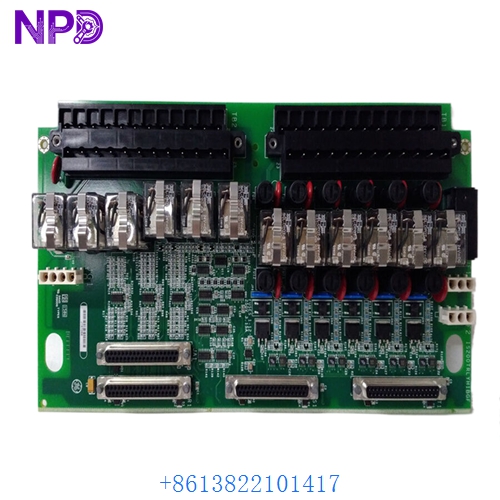
GE IS200TRLYH1BGF
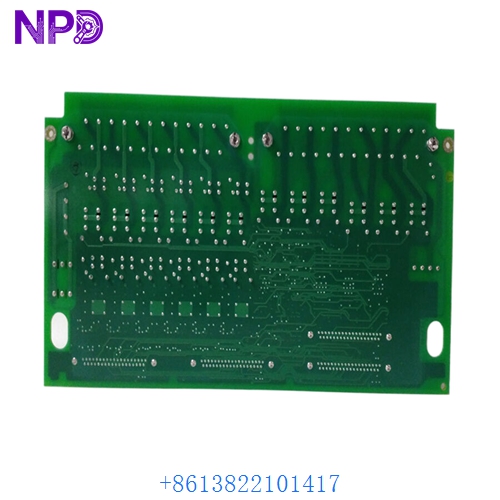
GE IS200TRLYH1BGF
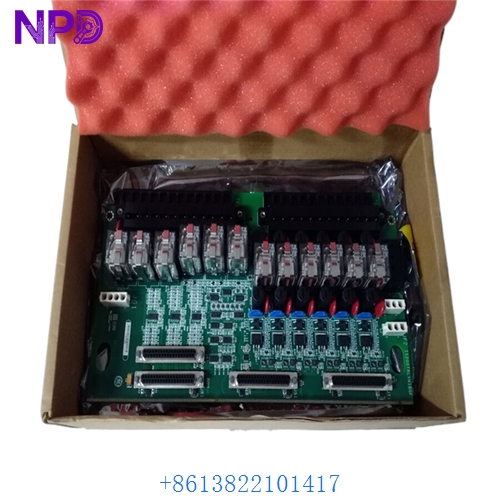
GE IS200TRLYH1BGF
Installation & Configuration Guide
Phase 1: Preparation (15 minutes)
⚠️ Safety Warning: The IS200TRLYH1BGF often controls critical solenoids (e.g., fuel gas trip valves). Removing this board while the turbine is running will result in an immediate unit trip. Ensure the system is in a “Safe State” or the specific I/O pack is inhibited before swapping.
Required Items:
- Grounded anti-static wrist strap.
- 3mm and 5mm flat-head screwdrivers.
- Digital Multimeter (to verify field voltage is absent before disconnection).
Phase 2: Hardware Swapping (15 minutes)
Steps:
- Label Wiring: Mark every wire connected to the terminal blocks. Even though they are numbered, mistakes during a high-pressure outage are common.
- Disconnect I/O Pack: Unplug the cables leading to the Mark VIe I/O packs (e.g., the Ionnet or PDOA packs).
- Removal: Loosen the mounting screws on the DIN rail or standoff frame. Carefully pull the GE IS200TRLYH1BGF away.
- Inspection: Check the mounting base for any signs of heat discoloration or carbon tracking from previous relay arcing.
Phase 3: Commissioning (20 minutes)
Validation:
- Reseating: Slide the new board into place and secure the mounting hardware.
- Reconnect: Plug in the I/O packs. The I/O pack LEDs should transition from “Searching” to “Green” (Healthy).
- Forcing Test: Use the ToolboxST software to “Force” each relay one by one. Listen for the physical “click” of the magnetic relay and verify the continuity at the field terminals.
- Check Feedback: Verify that the “Contact State” feedback in the software matches the physical position of the relay.
Customer Cases & Industry Applications
Case 1: Gas Turbine Fuel Control Reliability
Situation: A power plant in Southeast Asia experienced intermittent “Relay Feedback Mismatch” alarms on their Mark VIe system. The existing TRLY board had pitted contacts due to millions of switching cycles. Task: Replace the board during a 4-hour scheduled maintenance window. Action: We provided a New Surplus IS200TRLYH1BGF module. Result: The alarms disappeared immediately. The plant avoided a potential “Uncommanded Trip” during a peak demand period, saving an estimated $120,000 in restart and penalty costs.
Case 2: Desalination Plant Infrastructure
Situation: A large-scale desalination plant used GE IS200TRLYH1BGF boards to control high-pressure pump solenoids. The humid, salty air had caused corrosion on the terminal blocks of their older cards. Task: Refresh the termination assemblies to ensure long-term availability. Action: The customer purchased our remaining New Surplus stock, as these boards feature the G3 conformal coating necessary for harsh environments. Result: The maintenance lead reported that the “New Surplus” boards were indistinguishable from factory-direct units and performed perfectly during the high-load summer season.
Frequently Asked Questions (FAQ)
Q: What does the “BGF” suffix mean in IS200TRLYH1BGF? A: In the GE Mark VIe nomenclature, “H1” is the hardware group, “B” is the revision, and “GF” typically refers to specific functional variations, such as gold-flashed contacts for low-energy signals or specific fuse ratings. Always match the full suffix to ensure the relay contact ratings are identical.
Q: Can I replace an H1A with an H1BGF? A: Generally, GE makes these boards backward compatible. However, you must check the “Control Signal Definition” in your ToolboxST configuration. If the new board has different relay response times or feedback logic, you may need to update the I/O configuration.
Q: Why choose “New Surplus” for a relay board? A: Relays are mechanical components with a finite “Number of Operations.” A “Used” relay board has already consumed part of its mechanical life. A New Surplus IS200TRLYH1BGF has zero operations, ensuring the maximum possible life for your critical trip circuits.
Q: Does this board come with the I/O Pack? A: No. The IS200TRLYH1BGF is the termination board (passive/relay hardware). The I/O Pack (e.g., PDOA or similar) is the “active” electronic brain that plugs into this board and must be purchased separately if needed.
Q: Are the terminal blocks removable? A: Yes, most Mark VIe TRLY boards feature “Plug-in” terminal blocks, allowing you to swap the board without unscrewing every individual field wire. Check your current board; if it has the orange or green removable headers, the swap will be much faster.