Description
The GE IS200TTURH1CFD is a specialized Turbine Terminal Board (TTUR) designed for the Mark VIe control system. It serves as the physical interface for turbine-specific signals, including speed sensing, synchronization, and shaft monitoring, connecting field instrumentation to the I/O packs.
Product Parameters (Datasheet)
- Model Number: IS200TTURH1CFD
- System Series: Mark VIe
- Board Type: Turbine Termination Board (TTUR)
- Channels: * 8 Passive pulse rate inputs (Magnetic Pickups)
- 2 Active pulse rate inputs
- Shaft voltage and current monitoring inputs
- Redundancy: Supports Simplex, Dual, and TMR (Triple Modular Redundant) configurations
- Voltage Rating: 24V DC (nominal for I/O pack logic)
- Revision: H1CFD (Specific hardware assembly and coating version)
Country of Origin
This board is manufactured by General Electric (GE) in the United States, specifically designed for heavy-duty gas and steam turbine control applications.
Application Fields
The IS200TTURH1CFD is a critical interface for the following systems:
- Speed Protection: Capturing magnetic pickup signals for overspeed and underspeed protection.
- Generator Synchronization: Monitoring phase and voltage signals for safe grid connection.
- Shaft Monitoring: Measuring shaft voltage and grounding current to prevent bearing damage.
- GE Frame Turbines: Standard equipment for Frame 6, 7, and 9 gas turbine control upgrades.
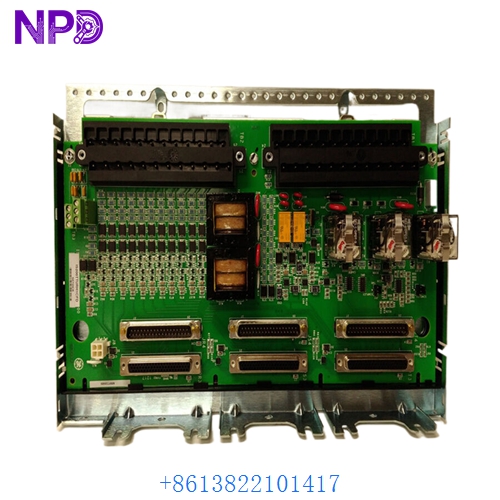
GE IS200TTURH1CFD IS230TNTRHIC
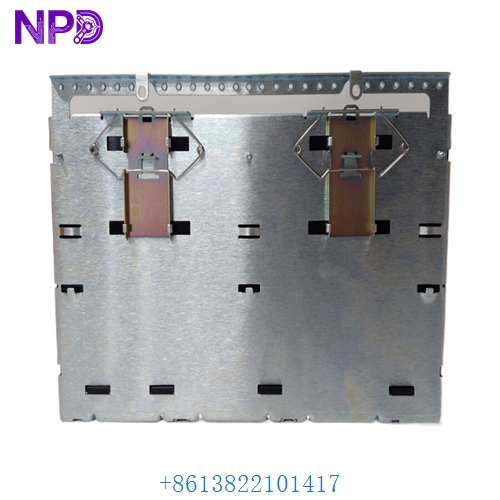
GE IS200TTURH1CFD IS230TNTRHIC
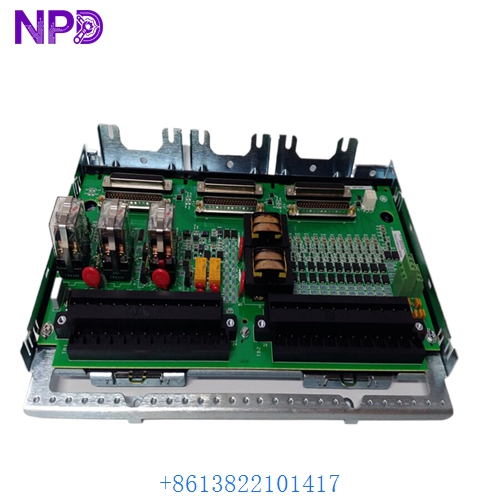
GE IS200TTURH1CFD IS230TNTRHIC
GE IS230TNTRH1C | Turbine Network Terminal Board
The GE IS230TNTRH1C is a Turbine Network Terminal Board (TNTR) that acts as an interface for the Mark VIe I/O packs. It is often paired with the TTUR board to handle specific pulse and digital signal distribution across the IONet (the Mark VIe internal Ethernet-based communication network).
Product Parameters (Datasheet)
- Model Number: IS230TNTRH1C
- Board Type: Turbine Network Termination (TNTR)
- Network Interface: IONet (High-speed 100 Mbps Ethernet)
- Mounting: Typically DIN-rail or rack-mounted via a plastic carrier
- Compatibility: Compatible with VTUR and PTUR I/O packs
- I/O Support: Specialized for speed monitoring and high-speed pulse processing
Product Technical Description
These two boards often work in tandem within the Mark VIe architecture. The TTURH1C provides the rugged terminal points for high-voltage and high-frequency field wiring (like magnetic speed pickups), while the TNTRH1C facilitates the connection of the digital I/O packs that process these signals. The “IS230” designation for the TNTR indicates it is a more modern, compact hardware assembly compared to legacy IS200 series boards, optimized for the high-speed IONet environment.
Product Usage Instructions
- Installation: Mount the boards on a standard 35mm DIN rail using the provided carrier. Ensure the TTUR is positioned to minimize the length of sensitive speed sensor cables.
- I/O Pack Seating: Carefully plug the appropriate I/O packs (e.g., VTUR) directly onto the terminal board connectors. Ensure the pins are aligned to avoid bending.
- Wiring: Use shielded twisted-pair cables for all speed sensor (magnetic pickup) inputs to prevent electromagnetic interference (EMI) from inducing false speed signals.
- Grounding: Ensure the shield drain wires are connected to the designated ground bar on the terminal board to ensure signal integrity.
- Configuration: Use GE ControlST software to configure the scaling factors for the pulse rate inputs and the threshold levels for overspeed protection.
Q&A (Common Questions)
Q: Can I use the TTURH1CFD in a TMR system? A: Yes, the “H1C” revision is designed to support Simplex, Dual, and Triple Modular Redundant (TMR) configurations by branching the signals to three separate I/O packs.
Q: What is the significance of the “FD” suffix on the IS200 board? A: This suffix refers to specific manufacturing revisions, often involving conformal coating for protection against moisture and contaminants or updated component selections.
Q: Does the IS230TNTRH1C require its own power supply? A: No, it typically draws power from the 24V DC IONet connection provided by the I/O pack or the system power distribution module.
Similar Model Recommendations
- GE IS200TTURH1B (Earlier revision)
- GE IS200VTURH1B (Turbine Specific I/O Pack)
- GE IS230VTURH1A (Networked Turbine I/O Pack)
- GE IS200TRLYH1B (Relay Termination Board)
- GE IS200TBCIH1B (Contact Input Terminal Board)
For more information on the GE IS200TTURH1CFD and IS230TNTRH1C, please contact our turbine control technical team.