
Description
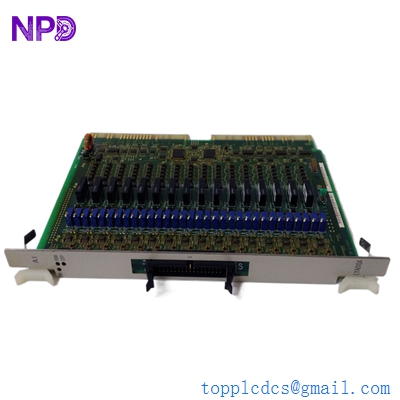
The GE IS200XDIAG1ADD (often referred to by the XDIAG prefix) is a Diagnostic Input/Output (I/O) PCB designed for the GE Mark VI Turbine Control System. This module is a critical component for monitoring the health and operational status of the control system itself. Its primary function is to collect diagnostic data from various segments of the turbine control network, process these inputs, and relay them to the main controller (typically the Mark VI Controller rack) to facilitate alarm management and system-wide health monitoring.

Key Technical Specifications
| Parameter | Value/Description |
| Part Number | IS200XDIAG1ADD |
| Series | Mark VI / Mark VIe Turbine Control |
| Component Type | Diagnostic I/O Card |
| Function | System health monitoring & diagnostic data collection |
| Interface | VME-bus or proprietary Mark VI I/O bus interface |
| Inputs | System status signals, power supply health, bus status |
| Output | Diagnostic alarm signals to the central controller |
| Operating Voltage | 24V DC / 5V DC (Internal logic) |
| Mounting | Mark VI Control Rack |
| Environment | Industrial/Turbine Control Grade |
Recommended Related Models
These components are frequently used within the same Mark VI control rack to ensure full system functionality:
- IS200VPROG1A: Processor Interface Module
- IS200TBCI: Terminal Board for Diagnostic Inputs
- IS200STAI: Analog Input Module
- IS200STCI: Analog Input/Output Module
- IS200SRLY: Relay Output Module
- IS200TRLY: Terminal Board for Relays
- IS200JPDG: Power Distribution/Diagnostic Bridge Card
- DS200TCQBG: Bridge interface for I/O
- IS200VVCX: VME Controller Card
- IS200TBAA: Terminal Board for Analog Input signals
Important Implementation Note: The IS200XDIAG1ADD module performs “heartbeat” monitoring of the rack. When replacing this board, ensure the Jumper (JP) settings are verified against the original unit’s configuration. Because this card communicates with the central Mark VI processor to report diagnostics, incorrect hardware settings may trigger a “Rack Comms Fail” or “Diagnostic I/O Mismatch” alarm, which can potentially force a turbine trip if the controller views the diagnostic loss as a critical safety failure.