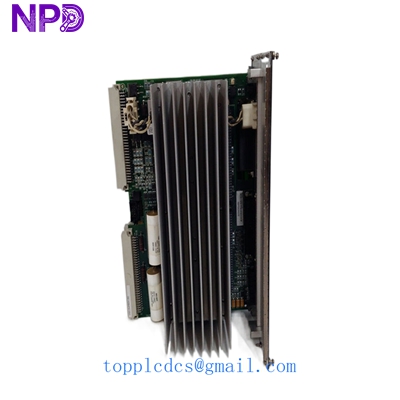

Description
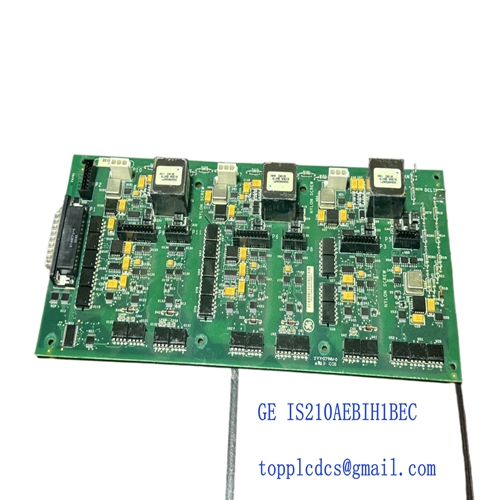
- Model: GE IS215VPROH1BD (Revision D)
- Brand: General Electric (GE)
- Series: Mark VIe Control System
- Core Function: Provides independent emergency turbine protection and overspeed detection.
- Product Type: Protection Terminal Board / Processor Card
- Key Specs: Triple Redundant Capability | 3 Magnetic Pickup Inputs | 9 Relay Outputs
- Input Triple Redundancy: Support for R, S, and T protection lanes
- Speed Sensing: 3 Magnetic Pickup (MPU) inputs for passive/active sensors
- Trip Relays: 9 Total (Typically 3 for Emergency Trip, 3 for Primary, 3 Auxiliary)
- Flame Detection: Integrated interface for SFI (Signal Frequency Input)
- Ethernet Ports: Dual 10/100 Mbps (IONet) for redundant control communication
- Input Voltage: 28 V DC (nominal) from power distribution
- Response Time: Emergency trip execution in < 20 ms
- Temperature Rating: -30°C to +65°C operating range
- Diagnostics: Comprehensive LED array for Sync, Link, and Hardware Status
- Isolation: 1500 V RMS isolation on Ethernet ports
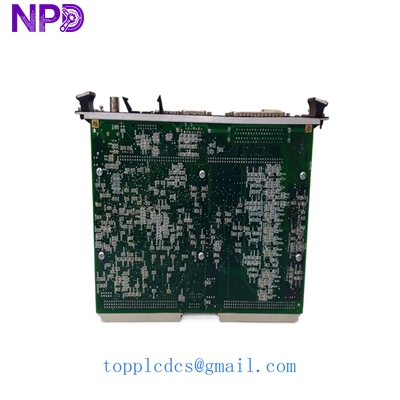
GE IS215VPROH1BD
Application Scenarios & Pain Points
In a Mark VIe architecture, the IS215VPROH1BD is the ultimate “safety net.” While the main controllers handle the day-to-day governor logic, the VPRO is designed to shut the turbine down if things go south—specifically in overspeed or loss of flame scenarios. The biggest headache for engineers? A “VPRO Not Synced” alarm. If this card isn’t talking perfectly to the rest of the protection circuit board lineup, the system won’t allow a turbine start, leading to costly delays in returning to the grid.
Typical Application Scenarios:
- Emergency Overspeed Protection Independently calculates shaft speed from MPUs and triggers the trip string if limits are exceeded, bypassing the main application code.
- Generator Breaker Monitoring Manages the “Anti-pumping” logic and synchronization check contacts during breaker closure.
- Flame Monitoring Processes frequency signals from flame scanners to ensure fuel is cut immediately upon flame-out.
- Nuclear & Thermal Plant Safety Used as the safety-grade layer in Triple Modular Redundant (TMR) systems where hardware diversity is required.
Case Study: The “Ghost” Trip in South America
Background: A combined-cycle plant in Brazil was experiencing intermittent “Emergency Trip” alarms that reset themselves, but occasionally caused a full unit shutdown during load ramps.
Problem: The site team suspected the MPU sensors. However, after swapping sensors, the issue persisted. Our analysis of the trip logs showed the IS215VPROH1B in the “R” core was reporting an internal voting mismatch. The Rev B card was struggling with a failing optocoupler that became unstable when the cabinet reached 50°C.
Solution: We supplied a newer IS215VPROH1BD (Revision D), which features improved thermal management. We guided the customer through the IONet IP configuration to ensure the new card was recognized by the SMR (Software Mid-layer).
Result:
- Stability: The internal voting errors disappeared immediately.
- Reliability: The plant has maintained a 100% availability factor through the peak summer season.
- Outcome: The customer decided to proactive replace the “S” and “T” cores with Rev D cards to match the hardware baseline.
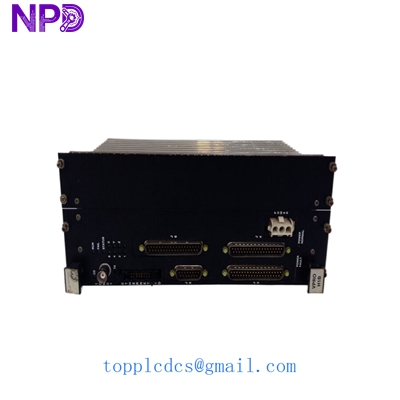
GE IS215VPROH1BD
Compatible Replacement Models
| Original Model | Replacement Model | Compatibility | Main Difference | Change Required | Cost Impact |
| IS215VPROH1B | IS215VPROH1BD | ✅ Direct | Rev D has updated FPGA & caps | Firmware update in ToolboxST | Baseline |
| IS215VPROH1A | IS215VPROH1BD | ✅ Direct | Significant board layout cleanup | Update I/O configuration | +5% |
| IS215VPROH2B | IS215VPROH1B | ⚠️ Software | H2 is typically for Aero-derivatives | Configuration change | -10% |
Technical Maintenance Guide: Avoiding the “Brick”
As a systems integrator, I’ve seen too many VPRO cards get “bricked” during a simple firmware push. Here is the ritual you should follow:
- Version Check: Before pulling the old card, go into ToolboxST and document the exact firmware build. If you’re jumping from an old Rev A to a Rev D, you might need a staged update.
- Jumper Matching: Check the jumpers on the circuit board. Even if it’s “plug and play,” some factory defaults for MPU excitation might differ.
- The “Slow” Power-up: When you slide the new IS215VPROH1BD into the rack, wait. Let the IONet LEDs stabilize (usually green/amber flickering) before you try to download the application.
- Voting Verification: Once online, verify that all three cores (R, S, T) see the same speed values. If one is off by more than 2 RPM, check your terminal board seating.
❗ CRITICAL WARNING: Never hot-swap this card while the turbine is running if you are in a simplex configuration. Even in TMR, it’s a high-risk move that requires a specific “Maintenance Mode” override in the logic.
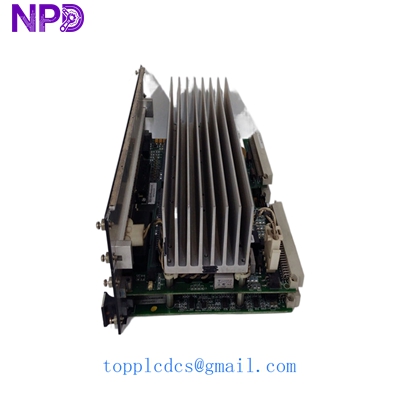
GE IS215VPROH1BD
Warehouse Featured Inventory (10 Items)
- GE IS215VPROH1BD
- ABB PM866K01
- Honeywell CC-PAIH01
- Bently Nevada 3500/25 149369-01
- Siemens 6ES7417-4XT05-0AB0
- Triconex 3008 Main Processor
- Allen-Bradley 1756-L83E
- Emerson VE3008 MQ Controller
- Schneider Electric 140CPU65150
- Yokogawa AAI543-S50