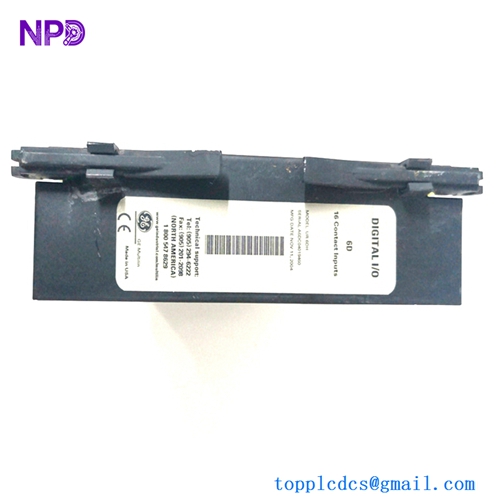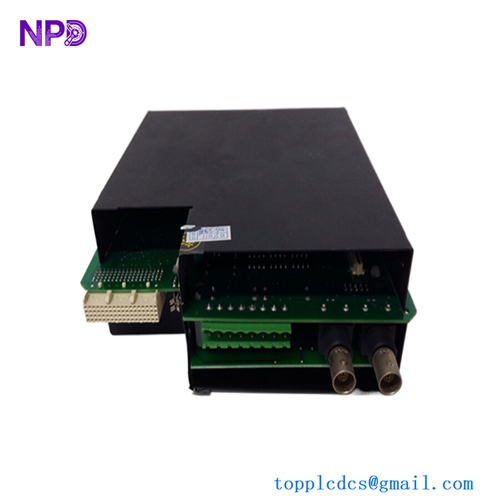

Description
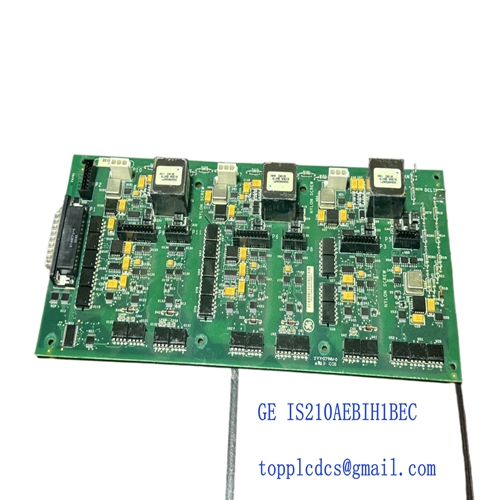
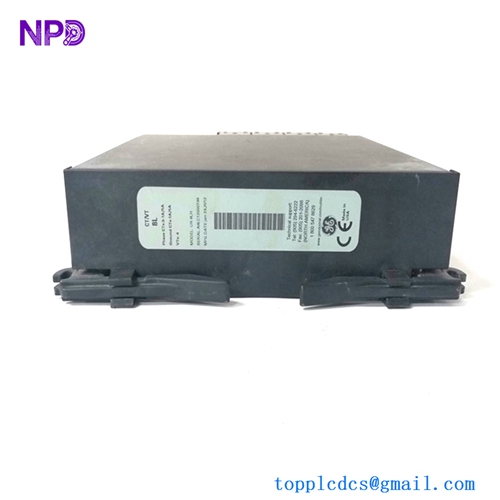
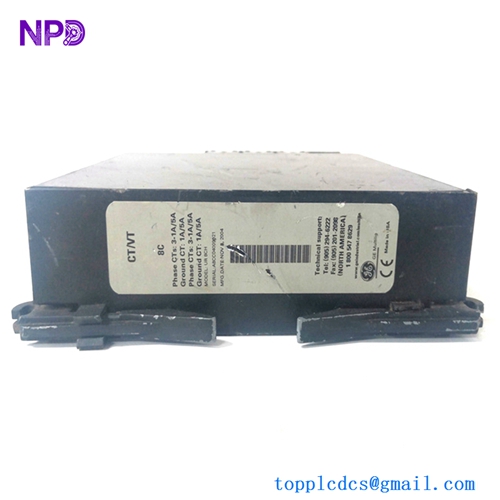
The GE Multilin UR9EV is a high-performance Digital Input/Output Module designed for the Universal Relay (UR) family of protection and control devices. It serves as a hardware expansion module that allows the relay to interface with external field equipment, providing 32 total channels (typically 16 digital inputs and 16 digital outputs) for monitoring status and executing control commands.
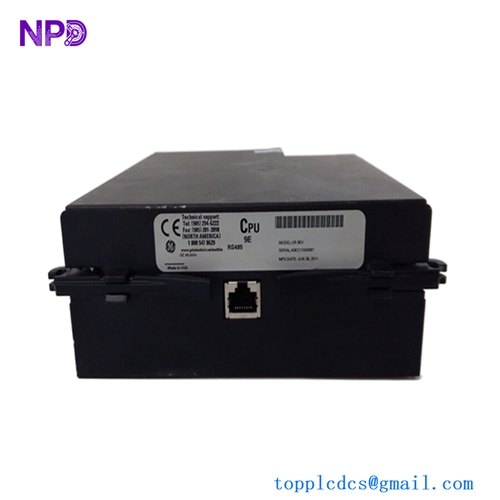
GE UR9EV
Technical Specifications (Datasheet Summary)
The UR9EV module is engineered for high-speed deterministic processing within substation and industrial power systems.
| Parameter | Specification |
| Model Number | UR9EV (Standard Digital I/O Module) |
| Total Channels | 32 Channels |
| Digital Inputs | 16 High-Speed Channels |
| Digital Outputs | 16 Form-A (Latching or Non-Latching) or Form-C Contacts |
| Input Voltage Range | 24V DC to 250V DC (Software configurable thresholds) |
| Output Contact Rating | 5A Continuous / 30A Make (per IEEE/ANSI standards) |
| Isolation | 2kV AC dielectric strength for 1 minute |
| Processing Speed | Sub-cycle scanning (typically < 1ms response) |
| Module Slot | Fits standard UR series chassis (Slots F through T) |
| Configuration Software | EnerVista UR Setup |
Key Hardware Features
- Programmable Thresholds: The digital inputs can be software-configured to recognize different voltage levels, reducing the need for multiple physical module types.
- Time Tagging: All digital input status changes are time-stamped with 1ms resolution, facilitating accurate Sequence of Events (SOE) recording.
- Solid-State or Mechanical Relay: Depending on the specific ordering code, the outputs are optimized for either high-speed tripping or heavy-duty signaling.
- Redundancy Compatibility: Supports dual-breaker control logic and redundant signaling paths within the UR platform.

GE UR9EV
Country of Origin
The GE Multilin UR series, including the UR9EV module, is primarily designed and manufactured in Ontario, Canada.
Application Areas
As a part of the Universal Relay platform, the UR9EV module is deployed in the following critical environments:
- Substation Automation: Controlling breakers, switches, and disconnectors via digital commands.
- Generator Protection: Monitoring auxiliary contacts of turbine controls and field breakers.
- Feeder Management: Integrated into F35 or F60 relays to provide extensive I/O for complex feeder protection schemes.
- Industrial Plants: Managing large motor control centers (MCC) and synchronous motor excitation status.
Product Usage Instructions
1. Installation
- Chassis Insertion: Power down the UR relay before inserting the module. Align the UR9EV with the guide rails in the designated slot (e.g., Slot F). Slide the module firmly until the backplane connector is seated and tighten the front-panel thumb screws.
- ESD Safety: Always wear an anti-static wrist strap when handling the module to prevent damage to CMOS components.
2. Wiring
- Terminal Blocks: Use the provided Phoenix-style compression terminal blocks.
- Shielding: For inputs traveling long distances, use shielded twisted pair (STP) cabling to minimize electromagnetic interference (EMI).
3. Software Configuration
- Open EnerVista UR Setup and navigate to “Hardware Configuration.”
- Assign the UR9EV to the correct slot.
- Define the “Contact Input” logic (Normally Open/Normally Closed) and set the “Debounce Time” (standard is 2ms to 4ms) to filter out mechanical contact bounce.
Recommended Related GE Multilin Products
If you are expanding or maintaining a UR-series system, these related modules and relays are frequently used alongside the UR9EV:
- GE UR-9TH: The CPU module, which acts as the main processor for the entire relay.
- GE UR-8NH: A CT/VT (Current/Voltage Transformer) module for analog power measurements.
- GE F35 / F60: The Multiple Feeder and Feeder Protection relays which utilize UR9EV modules for high I/O counts.
- GE G60: The Generator Protection System, often paired with extensive digital I/O for interlocking.
- GE L90: Line Differential Protection relay, often used in conjunction with UR-series communication modules.