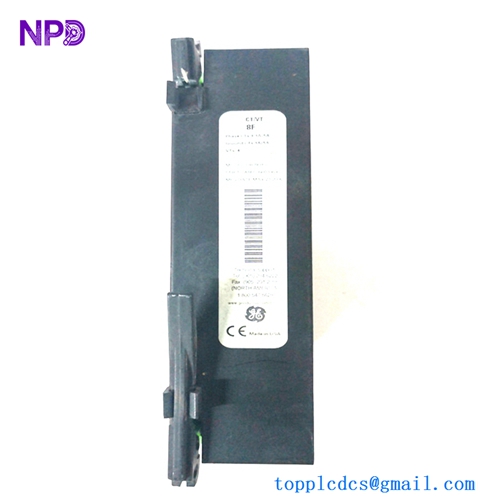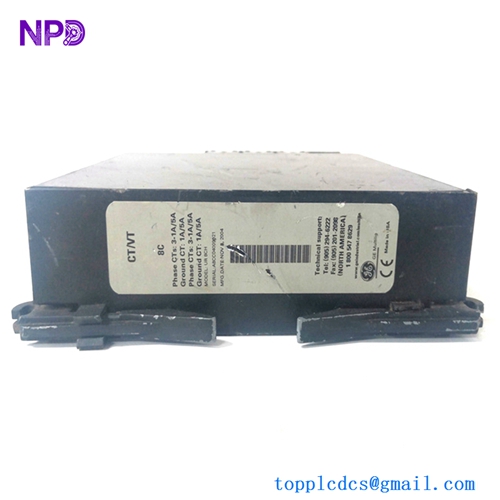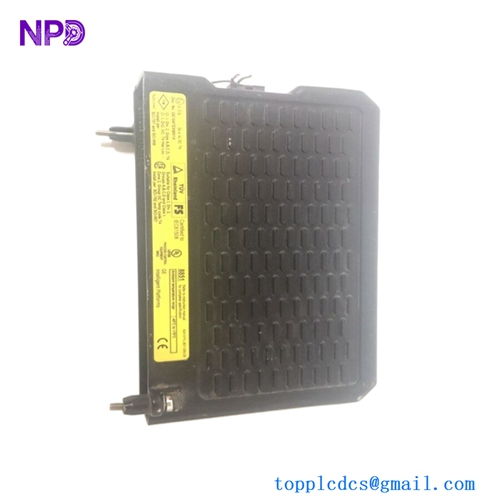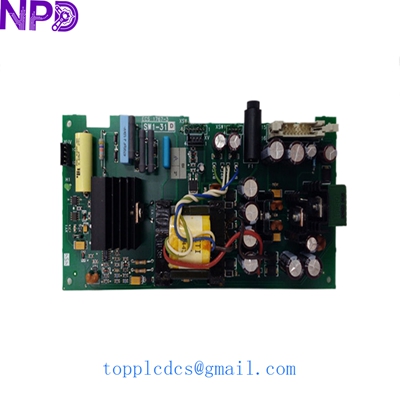

Description
- Model: SW1-31 (Part Number: ECS1737-3)
- Brand: GE (General Electric – USA)
- Series: Speedtronic Mark VI / Mark VIe Control Systems
- Core Function: Managed Industrial Ethernet Switch for UDH/IONet communication
- Type: Network Switch Module (Rack Mounted)
- Key Specs: 10/100 Mbps copper ports | Fiber Optic Uplink Capability | 24 V DC Power
- Input Voltage: 24 V DC Nominal (Range 18-30 V DC)
- Port Count: 8-Port configuration (standard for SW1-31 variants)
- Media Type: RJ45 Copper and ST/SC Fiber options (specific to ECS1737-3 revision)
- Data Rate: 10/100 Base-T Auto-sensing
- Topology Support: Star, Ring, and Redundant Mesh
- Diagnostic LEDs: Link/Activity, Speed, and Module Status indicators
- Protocol Support: Ethernet Global Data (EGD), Modbus TCP, and TCP/IP
- Mounting: Integrated into the Mark VI/VIe control cabinet backplane or DIN rail
- Operating Temp: -30 to +65 °C (Industrial Grade)
- Isolation: 1,500 V RMS port-to-port isolation
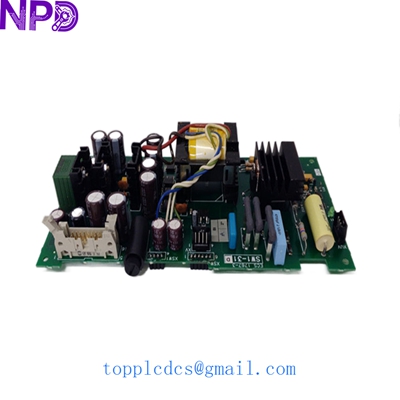
GE SW1-31 ECS1737-3
Application Scenarios & Pain Points
In a power plant running on GE Mark VIe architecture, the Unit Data Highway (UDH) is the nervous system of the turbine. If a switch like the SW1-31 fails, the HMI loses data from the controllers, or worse, the peer-to-peer communication between controllers is severed. While the system is designed with redundancy, running on a single “leg” of the network is like flying a plane with one engine—you’re one more fault away from a total blackout.
Typical Application Scenarios:
- Gas Turbine Control (Mark VIe) Provides the high-speed link between the UCVM/UCCB controllers and the local operator interface.
- Steam Turbine Modernization Used in “Retrofit” projects where older analog controls are replaced with digital Ethernet-based systems.
- BOP (Balance of Plant) Integration Linking auxiliary systems like fuel treatment or cooling towers back to the central Mark VIe controller.
- Data Logging & Historian Links Ensuring deterministic delivery of millisecond-level data to the GE OSM (On-Site Monitor).
Case Study: The “Ghost” Alarm Incident
Background: A combined-cycle plant in Southeast Asia reported “Communication Loss” alarms that would appear for 2 seconds and then clear. Problem: The intermittent nature made it hard to trace. Using a network sniffer, we found the ECS1737-3 switch was dropping packets when the cabinet temperature rose above 50°C. The internal ASICs were failing under thermal stress. Solution: We swapped the aging SW1-31 with a tested “New Surplus” unit from our inventory. Result: – Latency: Dropped from 45ms (with retries) to a stable <2ms.
- Reliability: The “Ghost” alarms vanished completely.
- Observation: In my experience, these switches often fail slowly rather than all at once. If you see rising “CRC Errors” in your HMI diagnostics, the switch is likely on its way out.
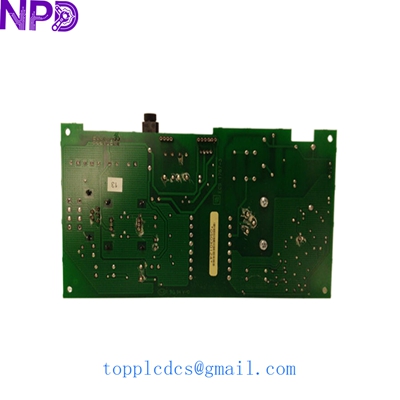
GE SW1-31 ECS1737-3
Compatible Replacement Models
| Original Model | Replacement Model | Compatibility | Key Difference | Modification | Cost Impact |
| SW1-31 (ECS1737-3) | ESWA | ⚠️ Software Compatible | Newer Mark VIeS series | Requires I/O configuration update | +40% |
| ECS1737-3 | ECS1737-1 | ❌ Incompatible | Fewer ports / No Fiber | Physical port mismatch | -20% |
| SW1-31 | Stratix 5700 (Custom) | ❌ Not Recommended | Non-GE firmware | Loss of integrated EGD diagnostics | -50% |
❗ Technical Note: The ECS1737-3 is specifically tuned for GE’s deterministic Ethernet protocols. Using a standard commercial switch in its place often leads to “Jitter” in turbine control loops, which can cause mechanical vibration due to delayed valve positioning commands.
Troubleshooting Quick Reference
| Symptom | Possible Cause | Part Relevance | Quick Check | Action |
| Link LED Off | Cable/Port failure | ⚠️ Medium | Swap cable to a known good port | Replace cable or move port |
| “Collision” LED Yellow | Duplex Mismatch | ✅ High | Check HMI Network settings (Auto vs Full) | Match settings to 100/Full |
| All LEDs Flashing | Broadcast Storm | ❌ Low | Unplug non-essential network legs | Check for circular loops in wiring |
| Module Status Red | Internal Power Fail | ✅ High | Measure 24V input at the terminal | Replace SW1-31 module |
| Fiber Link “No Signal” | Dirty ST Connector | ⚠️ Medium | Clean fiber tips with click-cleaner | Clean or replace fiber patch lead |
Quality Assurance SOP
- Visual Integrity: We check the RJ45 pins for corrosion (common in coastal plants) and ensure the ECS1737-3 label matches the firmware revision required for Mark VI/VIe.
- Port Stress Test: We perform a 24-hour “Ping Test” on all ports simultaneously to ensure no packet loss under load.
- Voltage Range Verification: Using a variable DC supply, we verify the switch maintains a stable link from 18 V up to 30 V DC.
- Thermal Stability: We use a thermal camera to monitor the main processor heat dissipation during high-traffic throughput tests.
- Final Clean & Pack: Ports are capped with dust covers, and the unit is sealed in an anti-static shield bag.
Other Available Models in Stock:
- GE IS200STCIH1A
- GE IS200TRLYH1B
- GE IS215UCVEM1A
- GE newplcdcs IS200DSVCH1A
- Bently Nevada 3500/42M
- Honeywell CC-PAIH01
- ABB CI867 3BSE043660R1
- Invensys Triconex 3625