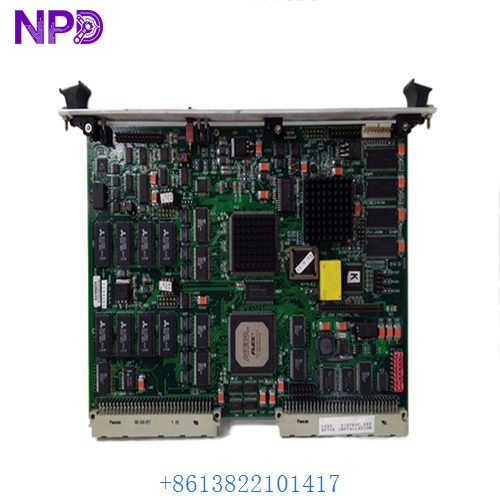

Description
- Model: GE VMIC ASSY 11993R2 (Revision 2)
- Brand: GE / VMIC (VME Microsystems)
- Series: VMEbus Industrial I/O & Control
- Core Function: High-speed VMEbus interface and signal processing
- Product Type: VME Printed Circuit Board (PCB)
- Key Specs: 6U VMEform factor Multi-layer PCB High-reliability industrial grade
- Bus Architecture: VMEbus (Standard 6U height)
- Revision: R2 (Revision 2 – specific logic updates over R1)
- Input Voltage: +5 V DC and ±12 V DC (via VME backplane)
- Operating Temp: 0°C to +55°C (Standard industrial range)
- Connectors: Dual 96-pin DIN connectors (P1/P2)
- On-board Memory: Non-volatile storage for board ID and configuration
- Signal Processing: High-speed logic gates for real-time data throughput
- Addressing: Jumper or software-selectable VME address space
- Status Indicators: Front panel LEDs for “Active,” “Fail,” and “Status”
- Isolation: Galvanic isolation for protection against backplane noise
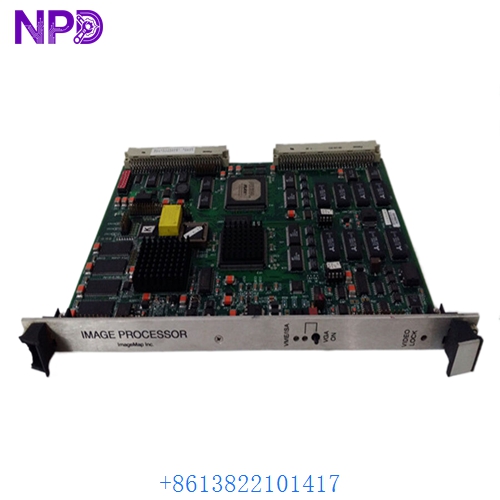
GE VMIC ASSY 11993R2
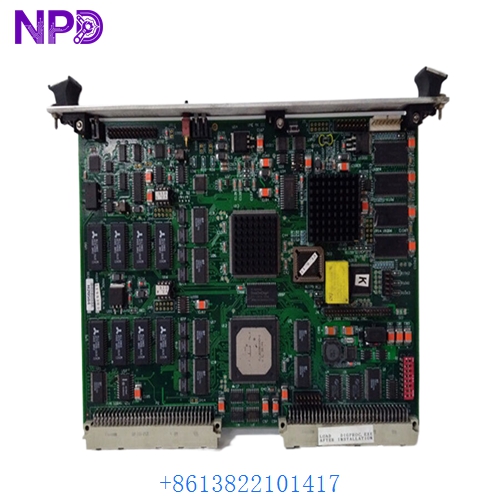
GE VMIC ASSY 11993R2
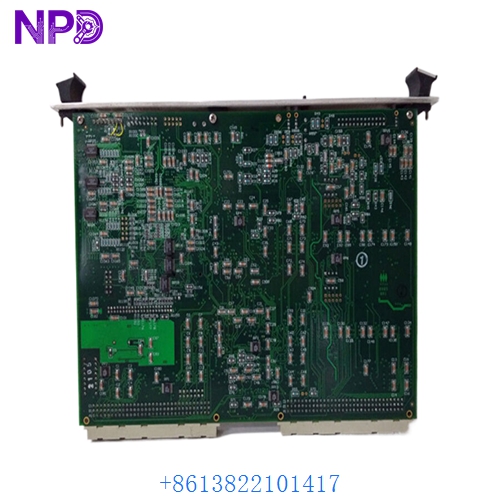
GE VMIC ASSY 11993R2
Application Scenarios & Pain Points
In the world of VME-based systems, the GE VMIC 11993R2 is often found in the heart of GE Mark V or Mark VI control racks, or in legacy CNC machinery. These boards are built like tanks, but after 20+ years of continuous operation, the solder joints and electrolytic capacitors reach their limit. The main pain point is that when a VMIC board fails, it often pulls down the entire VME bus, causing a “Bus Error” (BERR) that freezes every other module in the rack.
Typical Application Scenarios:
- Power Generation – Mark V/VI Control Systems Managing high-speed data transfer between the main CPU and auxiliary I/O racks in gas turbine plants.
- Industrial Robotics & CNC Acting as a communication interface in high-precision manufacturing cells using the VME architecture.
- Research & Defense Simulations Used in legacy real-time simulation hardware where high-bandwidth VME data exchange is required.
Case Study: The “VME Bus Freeze” at a Steel Mill
Background: A steel rolling mill in Ohio was using a VME-based controller to manage high-speed tensioning rollers. During a shift change, the entire line went into an emergency stop with a “VME Bus Parity Error.”
The Problem: The maintenance team couldn’t identify which board was the culprit. After 4 hours of swapping modules, they found that the GE VMIC 11993R2 had an internal short that was “screaming” noise onto the data lines, effectively jamming all other communications.
The Solution: The mill didn’t have a spare R2 revision; they only had an R1, which caused a firmware mismatch. We provided a tested R2 assembly and overnighted it to the site.
The Result: – Resolution: The board was installed by 6:00 AM the next morning.
- Outcome: The mill resumed production within 30 minutes of the swap.
- Total Savings: Avoided an estimated $85,000 in lost production and specialized labor costs.
Compatible Replacement Models
| Original Model | Replacement Model | Compatibility | Main Difference | Effort Level |
|---|---|---|---|---|
| 11993R2 | 11993R1 | ⚠️ Limited | Different logic timing / Rev 1 | Might require older firmware |
| 11993R2 | 11993R3 | ✅ Direct Replace | Improved component life | Drop-in; usually no issues |
| 11993R2 | VMIVME series | ❌ Incompatible | Different pinout/logic | Requires full software rewrite |
Troubleshooting Quick Reference
| Symptom | Likely Cause | Board Related? | Quick Check | Action |
|---|---|---|---|---|
| FAIL LED (Red) | Self-test failure | ✅ High | Power cycle the rack. | If LED stays red, the board logic is dead. |
| VME Bus Error (BERR) | Addressing Conflict | ⚠️ Medium | Check the DIP switch settings on the side. | Ensure no two boards share the same address. |
| No “Active” LED | Backplane Power Fault | ❌ Low | Measure +5V at the backplane pins. | If power is okay, the board fuse may be blown. |
| Intermittent Data Loss | Connector Oxidation | ⚠️ Medium | Inspect P1/P2 pins for “dust bunnies” or corrosion. | Clean with compressed air and contact cleaner. |
Integrator’s “Field Tips”:
- Revision Matters: In my experience with VMIC, the “R2” suffix is there for a reason. GE often updated the FPGA or PLD logic between revisions. If your system was tuned for R2, using an R1 might lead to “Race Conditions” where data arrives just a few milliseconds too late.
- Handling the P1/P2 Pins: These 96-pin connectors are fragile. If you’re struggling to seat the GE VMIC 11993R2 into the rack, do not force it. Pull it out and check for a single bent pin. One bent pin can short out the +5V rail and fry the whole backplane.
- Firmware Chips: If your failed board has custom-labeled EPROMs (stickers with handwritten numbers), you might need to move those chips over to the replacement board to keep your specific site configuration.