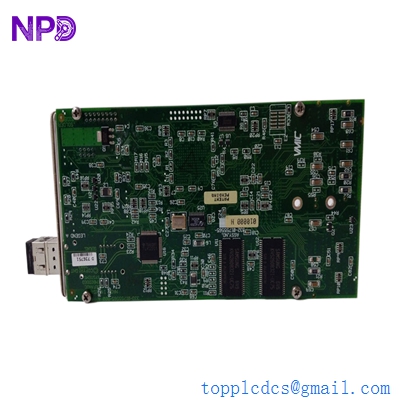

Description
Product Core Brief
- Model: GE VMIPMC-5565
- Brand: GE (General Electric / GE Fanuc Embedded Systems)
- Series: 5565 Reflective Memory Family
- Core Function: Real-time shared memory interface node for distributed systems
- Type: Reflective Memory PMC (PCI Mezzanine Card) module
- Key Specs: 64 MB/128 MB SDRAM Up to 174 MB/s data rate Support up to 256 nodes in network
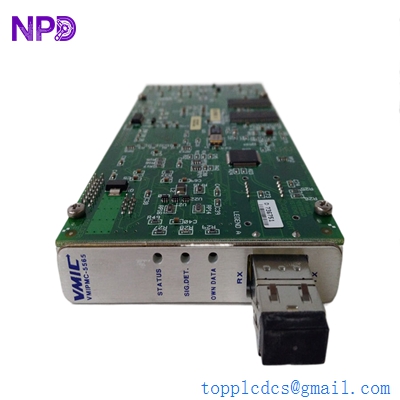
GE VMIPMC-5565
Key Technical Specifications
- Memory Type: Reflective memory SDRAM (64 MB or 128 MB)
- Data Transfer Rate: 43 MB/s (4-byte packets) up to 174 MB/s (64-byte packets)
- Network Topology: Fiber-optic ring or star, deterministic sync
- Supported Nodes: Up to 256 independent nodes
- Optical Link Speed: Approx. 2.12 Gbaud serial connection
- Fiber Distance: Multimode up to ~300 m; Single-mode up to ~10 km
- Bus Interface: PMC (PCI Mezzanine Card) standard
- DMA Channels: Two independent DMA channels
- Interrupt Support: Any node can trigger interrupts in others
- Latency: Extremely low, hardware mirrored memory sync
- Operating Temp: Typically 0 °C to +65 °C industrial range
Installation & Configuration Guide
Phase 1: Pre-Installation (≈10 min)
⚠️ Safety First
- Coordinate maintenance window; ensure host system is in a safe state.
- Power down host chassis and remove AC/DC supplies (lockout/tagout).
- Prepare ESD wrist strap, static mat, insulated screwdrivers, labels, and camera for documentation.
Documentation & Photos
- Photograph existing module arrangement and cabling.
- Record current network configuration and node IDs.
Phase 2: Removal of Old Module (≈5 min)
- Confirm all power is off before touching internal boards.
- Label and disconnect any optical fiber connectors and PMC carrier pins.
- Release retention hardware and carefully remove old PMC card.
- Inspect the PMC socket/backplane for bent pins or contaminants.
In my experience, carefully noting fiber connectors and their labeling prevents reinstall errors.
Phase 3: Install New GE VMIPMC-5565 (≈10 min)
- Apply ESD protection before handling the new module.
- Match the exact part number; ensure PMC connector orientation is correct.
- Insert into the PMC carrier or carrier board and seat fully.
- Tighten any retention screws/clips.
- Reconnect fiber-optic links to each port according to network layout.
Checklist
- Correct module installed
- PMC seated solidly
- Fiber optics securely connected
- Labels match network diagram
Phase 4: Power-On & Testing (≈15–20 min)
- Restore power to the host chassis.
- Observe module and host system LEDs for normal status.
- Launch the reflective memory network diagnostic tool.
- Confirm node presence, memory sync, and zero link errors.
- Monitor for 20–30 min to confirm stable real-time data sharing.
Functional Checks
- Node participation in network
- Zero dropped frames
- Consistent memory mirroring across nodes
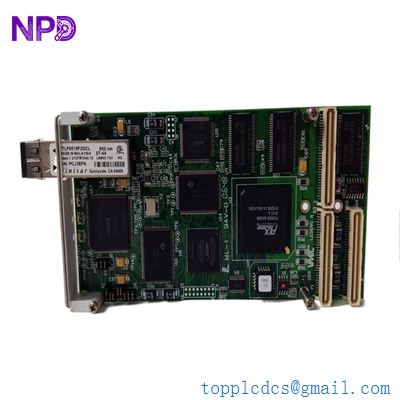
GE VMIPMC-5565
Customer Cases & Industry Applications
Case 1: Real-Time Simulation Network Synchronization
Situation:
A major industrial simulator for turbine control needed deterministic data sharing across compute nodes. Legacy PMC communication nodes failed intermittently, causing synchronization drift.
Task:
Operations required a low latency, real-time shared memory replacement to maintain simulator integrity.
Action:
A GE VMIPMC-5565 reflective memory PMC was installed from buffer stock. Fiber topology was preserved during swap, and node IDs were validated.
Result:
Simulator nodes reacquired deterministic sync, reducing test cycle variance significantly. Engineering staff adjusted reorder points after noticing lead time variability.
Case 2: Distributed Control in Factory Automation
Situation:
A factory automation system integrated multiple controllers and workstations requiring shared state data updates with microsecond precision.
Task:
Existing reflective memory interface was becoming a reliability risk; downtime had measurable production impact.
Action:
From strategic inventory, a VMIPMC-5565 was swapped in and tested. Network architecture used fiber-optic ring topology with redundant links.
Result:
System run cycles showed no link errors over a shift. Maintenance teams used this event to set a min/max range for future stocking.
Frequently Asked Questions (FAQ)
Q1: What is GE VMIPMC-5565?
A: It’s a reflective memory PMC module that enables real-time data sharing with deterministic performance over fiber-optic networks in distributed control systems.
Q2: What are typical applications?
A: Distributed control, simulation networks, real-time signal sharing between controllers, and any system needing synchronized memory across multiple nodes.
Q3: How does reflective memory help?
A: When one node writes data, the hardware automatically mirrors it to memory on all other nodes with minimal latency, bypassing CPU overhead.
Q4: Is this a legacy part?
A: Yes; the VMIPMC-5565 and related 5565 family are typically used in legacy systems and may have longer lead times, so buffer stock is prudent.
Q5: What network topologies are supported?
A: Fiber-optic ring, star, or other scalable architectures with up to 256 nodes.
Q6: What fiber distances are typical?
A: Multimode up to ~300 m and single-mode up to ~10 km.