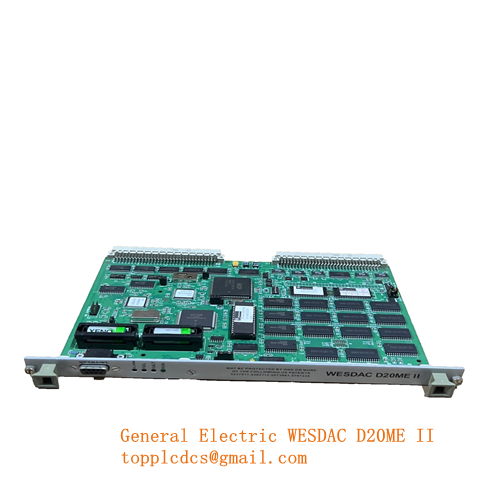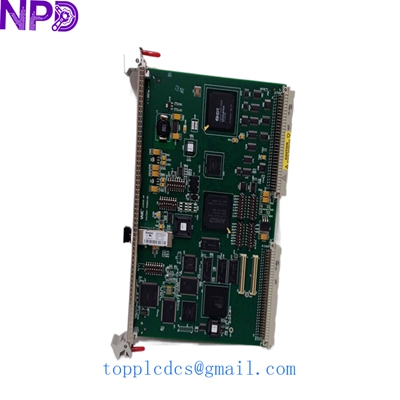

Description
- Model: GE VMIVME-5565 (often labeled as 350-005565-000)
- Brand: GE Fanuc / Abaco Systems
- Series: Reflective Memory (RFM) 5565 Family
- Core Function: Ultra-high-speed real-time data sharing between VMEbus systems
- Product Type: Reflective Memory Node Card
- Key Specs: 64MB / 128MB SDRAM | 2.12 Gbps transfer rate | Fiber optic interface
- Data Transfer Rate: 2.12 Gbps (Raw)
- Memory Size: 64 MB or 128 MB onboard SDRAM
- Network Topology: Ring or Star (via Hub)
- Node Latency: Typically < 1 microsecond between nodes
- Form Factor: Standard 6U VMEbus single-slot
- Communication Interface: Multimode or Singlemode LC Fiber Optic
- Nodes per Network: Up to 256 nodes
- Operating Systems: Supported by VxWorks, Linux, Windows, and Solaris
- Interrupts: Dynamic packet-based interrupts for real-time synchronization
- Power Requirements: +5V DC, approx. 3.5A
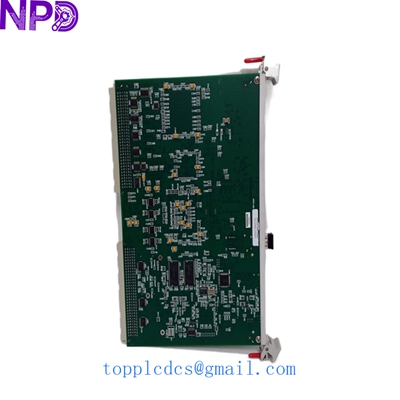
GE VMIVME-5565-110000 VMIVME-5565
Application Scenarios & Pain Points
In high-fidelity simulation or aerospace testing, the biggest challenge isn’t data volume—it’s determinism. Standard Ethernet introduces “jitter” (varying latency) that can ruin a real-time control loop. The VMIVME-5565 solves this by creating a “shared memory” space across multiple VME chassis. When one CPU writes to its local 5565 card, that data is automatically replicated in the memory of every other node on the fiber ring in under a microsecond.
If one card in the ring fails or the fiber is kinked, the “Reflective Memory” stops reflecting. For an old flight simulator or a power plant turbine controller, this means a total system crash. Because these 5565 series cards are legacy components, finding a replacement that hasn’t been “beaten up” in a salvage yard is getting harder every year.
Typical Application Scenarios:
- Flight & Mission Simulation Synchronizing cockpit controls, visual systems, and flight dynamics engines across different VME racks.
- High-Speed Data Acquisition Aggregating sensor data from multiple high-speed front-ends into a central processing node.
- Industrial Turbine Control Providing redundant, deterministic communication for massive power generation equipment.
The “Sim-Down” Case Study:
Background: A research lab was running a hardware-in-the-loop (HIL) simulation for a new satellite deployment system. They relied on a 4-node Reflective Memory ring using VMIVME-5565 cards.
Problem: One node started throwing “Memory Parity Errors.” The simulation would run for 20 minutes and then desynchronize. They checked the fiber, but the issue was the SDRAM on the 5565 card itself—likely due to years of heat in a poorly ventilated VME rack.
Solution: They couldn’t upgrade to the newer PCIe-5565 because their base system was strictly VMEbus. We provided a tested VMIVME-5565 with matching memory density (128MB).
Result: After swapping the card and verifying the node ID via the DIP switches, the simulation resumed.
- Pro-Tip: I told the customer to check the cooling fans at the bottom of the rack. High-speed RFM cards like the 5565 pull a lot of current and generate significant heat. If your rack is hot, these cards won’t last.
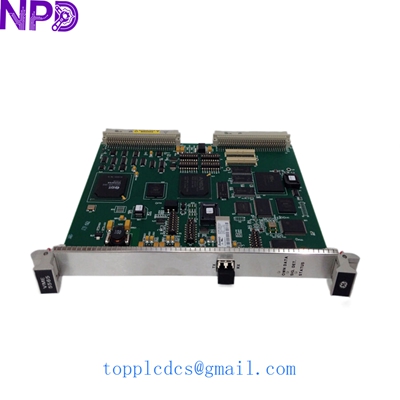
GE VMIVME-5565-110000 VMIVME-5565
Compatible Replacement Models
| Original Model | Replacement Model | Compatibility | Key Difference | Price Impact |
| VMIVME-5565 | VMIVME-5565 (Different RAM) | ⚠️ Software Compatible | Ensure 64MB vs 128MB matches your software map. | Neutral |
| VMIVME-5565 | PCI-5565 / PCIe-5565 | ✅ Network Compatible | Can talk to VME nodes, but fits in a PC/Server slot. | Variable |
| VMIVME-5565 | VMIVME-5550 | ❌ Incompatible | Older 5550 series uses different protocols/speeds. | – |
Engineer’s Note: If you are mixing VME cards with PCIe cards in the same fiber ring, make sure all nodes are set to the same speed (2.12 Gbps). The 5565 series is very “picky” about ring speed consistency.
Troubleshooting Quick Reference
| Symptom | Possible Cause | Part Relevance | Quick Check | Action |
| “Signal Loss” LED on | Broken Fiber / TX failure | ✅ High | Use a fiber power meter or visual fault locator. | Replace fiber or the SFP/Transceiver. |
| Data not updating on Node B | ID Conflict / Speed Mismatch | ⚠️ Medium | Check DIP switch settings for Node ID. | Ensure each node has a unique ID (0-255). |
| VMEbus System Hangs | Address Conflict | ✅ High | Check VME Base Address jumpers. | Verify the A24/A32 address space isn’t overlapping. |
| Intermittent Parity Errors | Excessive Heat | ✅ High | Measure exhaust temp from the VME rack. | Improve cooling or replace the card. |
Technical Pitfalls to Avoid:
- ❗ Optical Transceivers: The 5565 uses specific LC-style fiber connectors. Don’t force an old SC-style connector in there with an adapter if you can avoid it; the signal loss can cause intermittent packet drops.
- ❗ Node ID 0: In a Reflective Memory ring, Node ID 0 is often the “master” for certain interrupt functions. If you have two Node 0s, your board communication will absolutely collapse.
- ❗ VME Backplane Power: These cards pull a lot of amps from the +5V rail. If your VME power supply is old, adding a 5565 might be the “straw that breaks the camel’s back.” Measure your rail voltage!
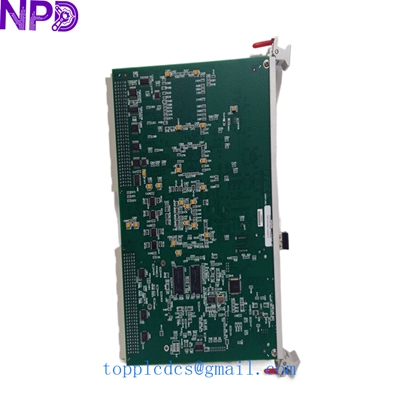
GE VMIVME-5565-110000
SOP Quality & Testing Process
Because Reflective Memory is used in “mission-critical” environments, our testing is exhaustive:
- SFP Loopback Test: We run the card in a loopback configuration to ensure the optical transmitter and receiver are hitting full 2.12 Gbps speeds without bit errors.
- Memory Stress Test: We perform a full write/read/verify on the entire 64MB/128MB SDRAM space to ensure no parity errors exist.
- VME Interface Validation: Tested in a standard VME chassis to ensure the A32/D32 data cycles are clean and the interrupts trigger correctly.
- Fiber Power Level Check: We measure the light output (dBm) to ensure the transceiver isn’t “dimming,” which would lead to future failures.
Related Inventory (Available Now)
- GE VMIVME-5565 (4 Units)
- GE PCI-5565 | Reflective Memory for PC
- GE VMIVME-7750 | VME CPU Board
- GE VMIVME-7807 | VME Single Board Computer
- GE VMIVME-2534 | Digital I/O
- GE VMIVME-4140 | Analog Output
- GE VME-9505 | VME Hub for Star Topology
- GE VMIVME-5532 | Older RFM Generation
- GE VMIVME-1182 | Counter/Timer Module
- GE VMIVME-3122 | High-Resolution Analog Input