Description
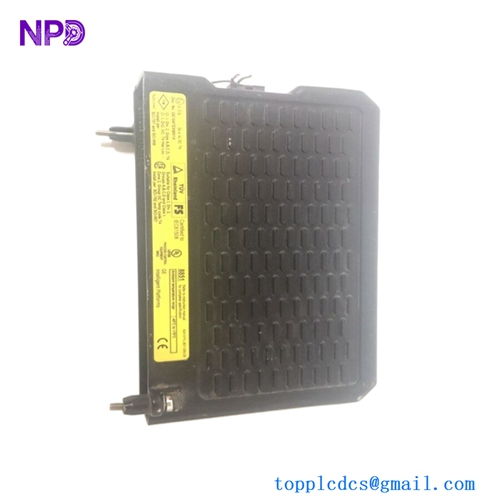
General Electric Hydran S2 Gas System
The GE Hydran S2 is a continuous, online transformer monitoring device designed to provide early warning of potential failures. It functions as a “gas-in-oil” sensor that monitors composite fault gases, primarily Hydrogen (H_2), which is generated during various thermal and electrical faults within a transformer’s insulation system.
Product Introduction
The Hydran S2 is an evolution of the industry-standard Hydran technology. It is a compact, cost-effective solution for monitoring the health of a transformer fleet. By detecting a broad range of fault gases (including H_2, CO, C_2H_2, and C_2H_4), the device provides a composite value in ppm (parts per million), allowing asset managers to track the evolution of faults in real-time and avoid catastrophic equipment failure.
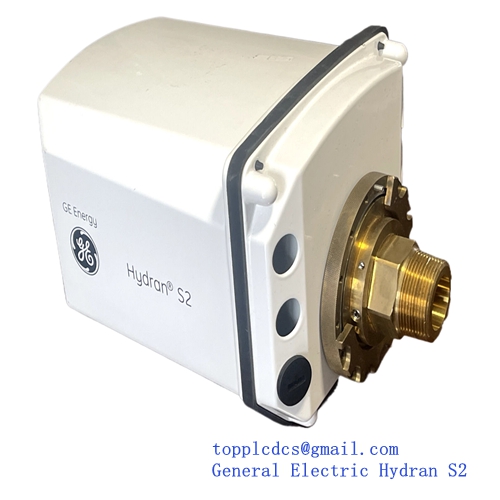
General Electric Hydran S2
Product Parameters (Datasheet)
| Parameter | Specification |
| Detected Gases | Hydrogen (100% response), Carbon Monoxide, Acetylene, Ethylene |
| Measurement Range | 0 to 2000 ppm (composite gas-in-oil) |
| Accuracy | ±10% of reading or ±25 ppm (whichever is greater) |
| Response Time | 10 minutes (90% of step change) |
| Operating Temp | -40°C to +55°C (Ambient); Up to +105°C (Oil) |
| Communication | 4-20 mA output, RS-485 (Modbus), RS-232 |
| Relay Outputs | 5 Configurable alarms (Hi, Hi-Hi, Service, etc.) |
| Power Supply | 100-240 Vac (50/60 Hz) or 100-300 Vdc |
| Enclosure Rating | IP66 / NEMA 4X |
Country of Origin
- Origin: Canada / USA
Usage Instructions
- Installation: Mount the Hydran sensor on a standard 1.5-inch NPT valve on the transformer tank (typically on the radiator header or the drain valve).
- Oil Flow: Ensure there is sufficient natural or forced convection of oil across the sensor’s membrane for accurate real-time readings.
- Commissioning: Connect the power and communication cables. Use the local display or a PC-based interface to set the “Baseline” ppm value based on an initial DGA (Dissolved Gas Analysis) lab test.
- Monitoring: Set alarm thresholds for both the absolute ppm level and the “Hourly Rate of Change” (ROC) to detect rapidly developing faults.
- Maintenance: Periodically check the sensor membrane and perform a field calibration check as recommended by the manufacturer’s schedule.
Product Q&A
- Q: Does the Hydran S2 detect individual gas levels like Acetylene separately?
- A: No, it provides a composite value. While it is most sensitive to Hydrogen, other combustible gases contribute to the total ppm reading. For individual gas breakdown, a multi-gas DGA unit (like the Kelman series) is required.
- Q: Can it be installed on a live transformer?
- A: Yes, as long as the transformer valve is accessible and safe to operate, the S2 can be installed without taking the unit offline.
- Q: How does the membrane work?
- A: It uses a semi-permeable fuel-cell membrane that allows dissolved gases to pass through while keeping the transformer oil out.
Recommended Similar Models
- GE Hydran M2: An advanced version that supports additional sensors for moisture-in-oil.
- GE Hydran 201Ti: The legacy intelligent transmitter version used for basic monitoring.
- GE Kelman Transport X: A portable DGA lab for individual gas analysis.
- GE Kelman DGA 900: A multi-gas online monitoring platform for critical transformers.
- Qualitrol 509 ITM: A competitive intelligent transformer monitor with multi-input capabilities.
Product Manual & Documentation
For detailed mounting instructions and Modbus register maps, please refer to the technical datasheet:
Download GE Hydran S2 MANUAL datasheet
Would you like me to help you interpret a specific Rate-of-Change (ROC) alarm setting for your transformer’s capacity?