
Description
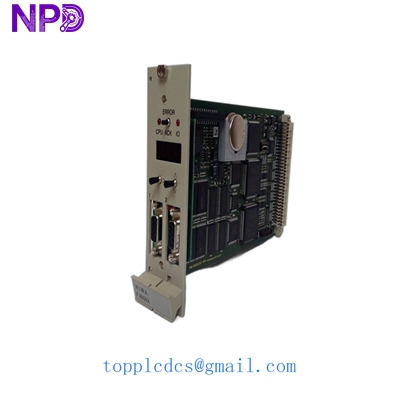
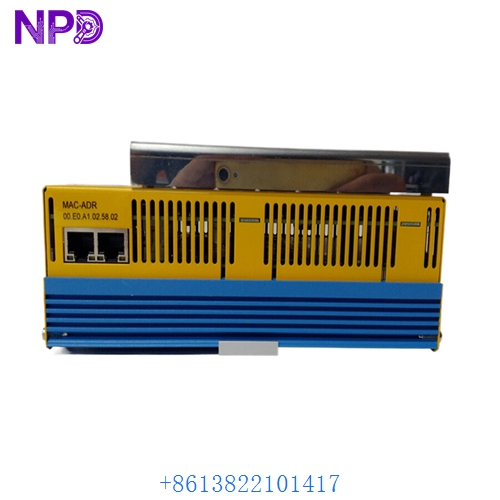
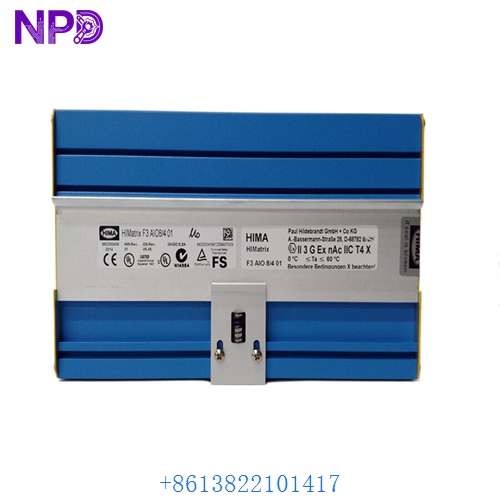
The HIMA F3 DIO 88 01 is a safety-related digital input/output module designed for use in HIMA HIMatrix and HIMax systems. It provides 8 safety-related digital inputs and 8 safety-related digital outputs, commonly utilized in SIL 3 rated Emergency Shutdown (ESD) and Fire & Gas (F&G) systems.
Product Parameters (Datasheet)
- Model Number: F3 DIO 8/8 01
- Part Number: 981000216
- Inputs: 8 Digital Inputs (Type 1 or 3 per IEC 61131-2)
- Outputs: 8 Digital Outputs (up to 0.5 A per channel, short-circuit proof)
- Operating Voltage: 24V DC (-15% to +20%)
- Safety Integrity Level: SIL 3 (IEC 61508)
- Performance Level: PL e (EN ISO 13849-1)
- Communication: SafeEthernet via HIMA controller backplane
- Power Dissipation: Max 5 Watts
- Response Time: < 10 ms
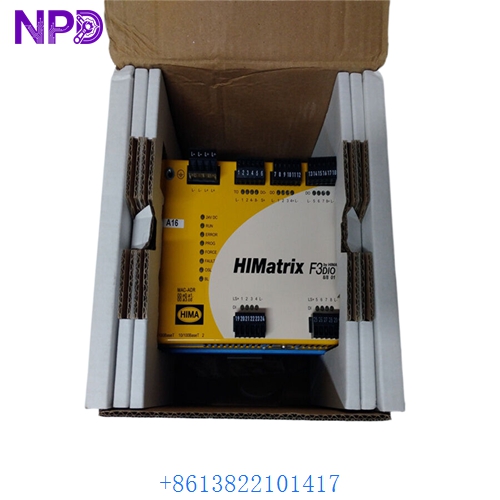
HIMA F3 DIO 88 01
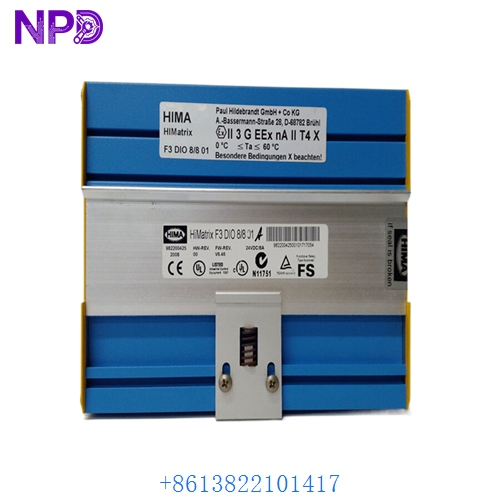
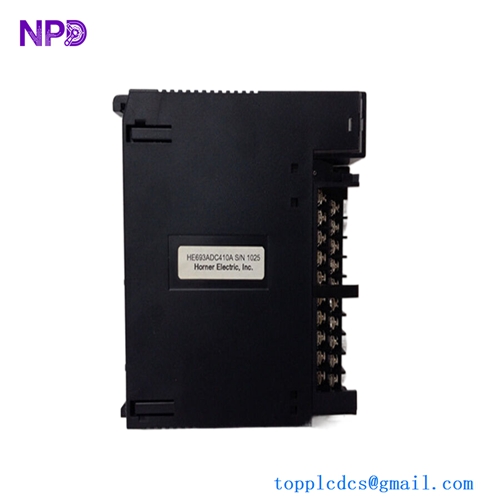
HIMA F3 DIO 88 01
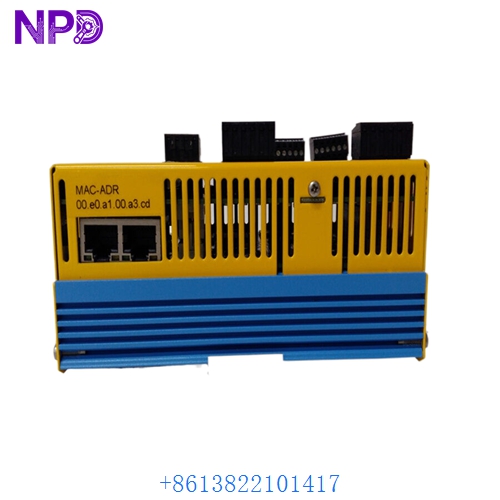
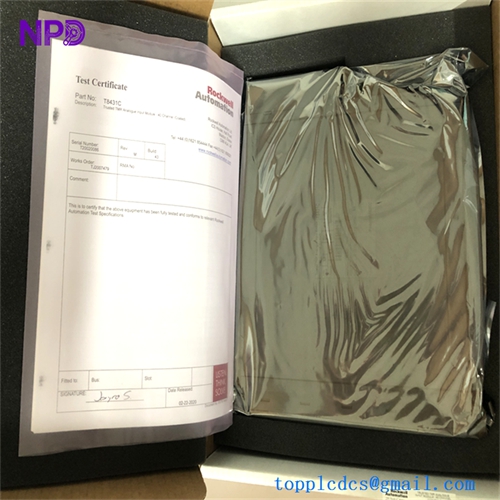
HIMA F3 DIO 88 01
Country of Origin
This safety module is manufactured by HIMA Paul Hildebrandt GmbH in Germany, ensuring the highest level of engineering precision required for global safety standards.
Application Fields
The F3 DIO 8/8 01 is essential for safety-critical monitoring and control:
- Emergency Shutdown (ESD): Controlling isolation valves and power-cut mechanisms in refineries.
- Fire & Gas (F&G): Interfacing with gas detectors and activating fire suppression sirens or sprinklers.
- Burner Management Systems (BMS): Safe sequencing of fuel valves and ignition systems for industrial heaters.
- Critical Turbomachinery: Monitoring Overspeed protection and vibration trips.
Product Usage Instructions
- Installation: Insert the module into a compatible HIMA subrack. Ensure the mechanical coding pins align correctly to prevent inserting the wrong module type into the slot.
- Field Wiring: Connect digital inputs (switches, sensors) and outputs (solenoids, relays) to the terminal block. Use shielded cables if operating in environments with high electromagnetic interference.
- Configuration: Use HIMA SILworX software to configure the channel parameters, such as pulse testing for short-circuit detection and line monitoring for open-circuit detection.
- Safety Logic: Assign the I/O points within the safety program logic. Ensure that the “De-energize to Trip” or “Energize to Trip” logic matches your plant’s safety manual requirements.
- Testing: Perform a loop test after installation to verify that the physical state of the field device matches the value in the SILworX diagnostic monitor.
Product Technical Description
The F3 DIO 8/8 01 acts as a “Fail-Safe” interface. Technically, it employs a 1-out-of-2 (1oo2) or 2-out-of-4 internal microprocessor architecture to ensure that no single hardware failure results in the loss of the safety function. The module continuously performs self-diagnostics, including “Stuck-At” tests on outputs and input consistency checks. If a critical internal fault is detected, the module automatically transitions to a defined “Safe State” (typically all outputs OFF).
Q&A (Common Questions)
Q: Does this module support line monitoring? A: Yes, the digital inputs can be configured to detect both short circuits and wire breaks when used with appropriate end-of-line resistors.
Q: Can I use this for non-safety related tasks? A: While possible, it is not cost-effective. These modules are specifically designed and certified for SIL 3 safety loops.
Q: What is the maximum current for the outputs? A: Each output is rated for 0.5 A at 24V DC. For higher current loads, an external safety relay or interposing relay should be used.
Q: Is the F3 DIO 8/8 01 hot-swappable? A: Yes, HIMA HIMatrix systems generally support hot-swapping of I/O modules, provided the system configuration allows for it without interrupting the safety loop.
Similar Model Recommendations
- HIMA F3 DIO 16/0 01 (16-channel Input variant)
- HIMA F3 AI 8 01 (Analog Input variant)
- HIMA F30 (HIMatrix Compact System controller)
- HIMA F60 (HIMatrix Redundant System controller)
- HIMA F8650X (HIMax Processor Module)
For more information on the HIMA F3 DIO 88 01 and other HIMA safety solutions, please contact our certified safety instrumentation team.