
Description
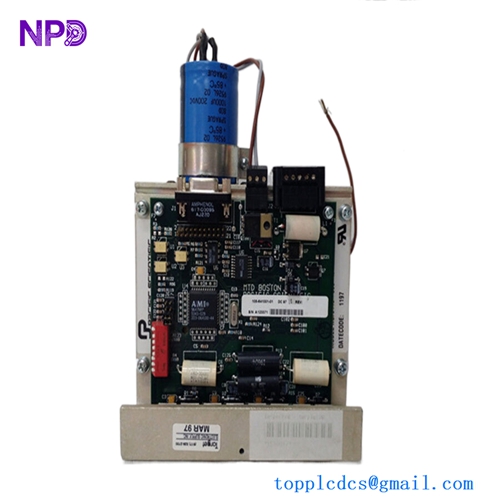
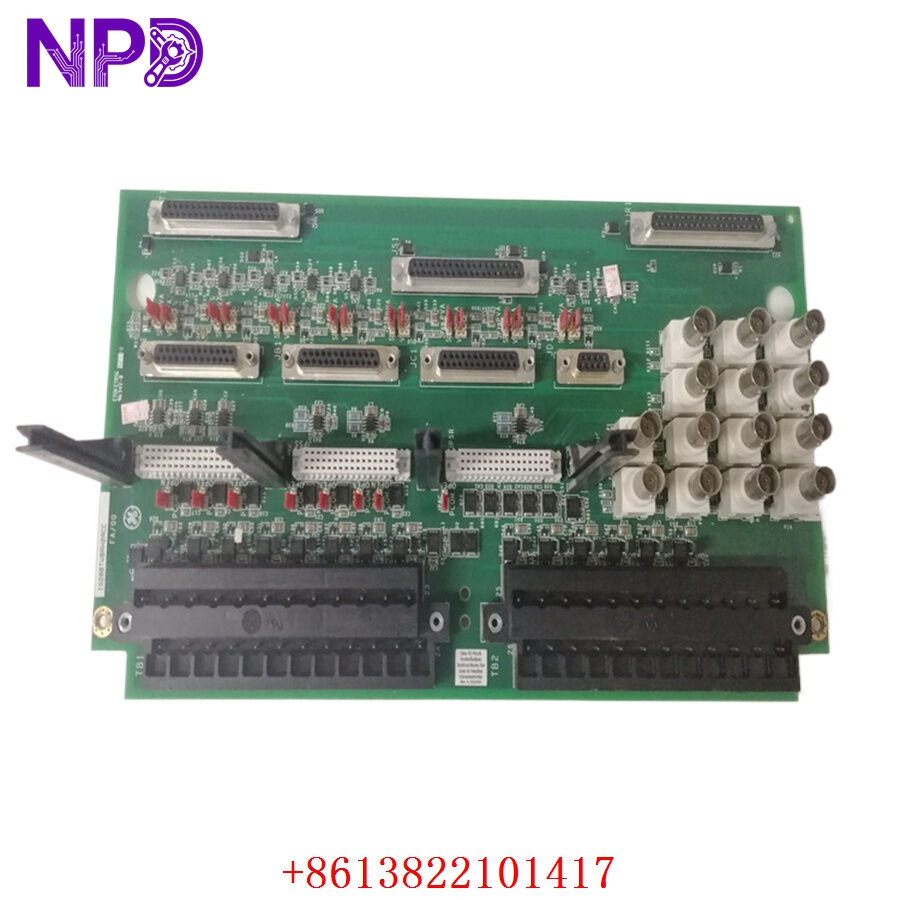
The Hirp Controls 73.00.0143.00 (Revision E) is an industrial control PCB used primarily in specialized manufacturing and climate-control automation systems. Hirp Controls components are often found in niche industrial equipment, including air handling units, process cooling systems, and customized thermal regulation skids.
This board serves as the “brain” of the specific equipment it controls, managing sensor inputs (such as temperature or pressure transducers), executing programmed logic, and driving outputs (relays or solenoids) to maintain the desired process variables.

Key Technical Specifications
| Parameter | Value/Description |
| Part Number | 73.00.0143.00 |
| Revision | E |
| Component Type | Central Control/Logic PCB |
| System Compatibility | Hirp Automation / Climate Control Systems |
| Function | Logic execution, sensor data processing, I/O management |
| Mounting | Cabinet-mounted (typically DIN-rail or standoff) |
| Operating Voltage | 24V AC/DC (standard for this series) |
| Environment | Industrial grade (dust/temperature resistant) |
Understanding Industrial Controller Logic
If you are working with this card to resolve a process issue, it is helpful to visualize how this controller integrates into your equipment. The board essentially functions as a feedback loop controller.
In this configuration, the Control PCB constantly receives data from sensors, calculates the error against your setpoint, and adjusts the output (e.g., motor speed or valve position) to correct the process.
Maintenance & Troubleshooting Notes
- Revision Compatibility: The transition to “Rev E” often includes updates to internal component tolerances or firmware stability. Ensure that if you are replacing an older revision (e.g., Rev A-D) with a Rev E, you verify if the peripheral device drivers or sensor mapping requirements have changed in the manual.
- Voltage Sensitivity: These cards are highly sensitive to “dirty” power. If you are experiencing repeated board failures, check the stability of your 24V supply and ensure that there are no high-inductive loads (like large contactors) sharing the same power supply line without proper suppression (RC filters/diodes).
- Status Indicators: Look for status LEDs on the board. A flashing “System Ready” or “Heartbeat” light is usually the primary indicator of successful logic execution. If the status light is solid or off, the board is likely failing to boot or has suffered a logic-level failure.
Important Technical Note: As a specialized industrial controller, this card likely contains non-volatile memory that stores your system’s operating setpoints. Before swapping out the board, ensure you have documented all user-defined parameters (e.g., setpoints, hysteresis values, and alarm limits) from the current controller’s HMI or configuration menu.