Description
Product Core Brief
- Model: HITACHI LYA010A
- Brand: Hitachi (Japan)
- Series: Analog I/O/Control Modules for Industrial Automation
- Core Function: Analog signal acquisition and conversion for process/PLC systems
- Type: Analog Input Module (I/O Module)
- Key Specs: Input range −10 V to +10 V; 16-bit resolution; 1 kHz sampling; DC power supply (9–36 V)
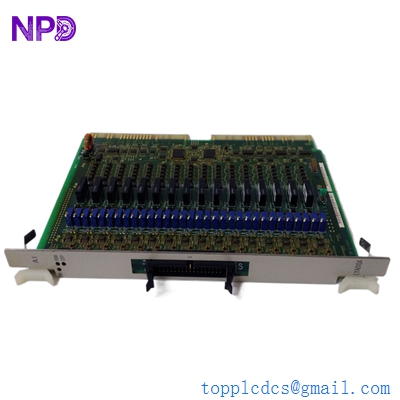
HITACHI LYA010A
Key Technical Specifications
- Module Function: Analog input acquisition for industrial control systems
- Input Voltage Range: −10 V to +10 V, 0–10 V, or current loop (4–20 mA) compatible
- Resolution: 16-bit ADC for precision measurement
- Sampling Rate: Up to ~1 kHz for real-time data
- Power Supply: DC supply (typ. 9–36 V DC)
- Connector Type: Industrial edge or terminal connector (system interface)
- Communication: Modbus RTU / standard industrial protocols
- Operating Temperature: −20 °C to +70 °C typical (industrial environments)
- Mounting Form: DIN-rail or panel mount interface module (field cabinet)
Installation & Configuration Guide
Preparation (≈10 minutes)
⚠️ Safety First
- Coordinate maintenance window with operations; ensure safe-state system logic.
- De-energize control panel 24 V DC bus; lockout/tagout per SOP.
- Gather tools: insulated screwdrivers, multimeter, labels, camera.
- Backup system configuration and document existing wiring and I/O addresses.
In my experience, clear photos of wiring and module IDs reduce rework time significantly.
Removal of Old Module (≈5 minutes)
- Open control cabinet; verify DC supply is off.
- Label and disconnect field wiring (use tags or photo references).
- Unscrew module retention and gently extract the LYA010A from its rack or socket.
- Inspect connectors and backplane for bent pins or contamination.
Install New HITACHI LYA010A (≈10 minutes)
- Put on ESD protection; unpack the new module.
- Confirm model number matches exactly.
- Insert module into appropriate rack slot (aligned with backplane).
- Secure retention screws and reconnect labeled wiring.
- Ensure wiring polarity and shield/ground connections are intact.
Checklist
- Correct part installed
- All terminals secured
- Shield/ground continuity verified
Power-On & Testing (≈15 minutes)
- Restore 24 V DC power to cabinet.
- Check module LED status (power, fault).
- Connect to PLC/DCS engineering workstation; poll inputs.
- Validate expected analog values from sensors; confirm scaling.
- Run system for ≥30 minutes to verify stability under load.
Functional Checks
- Input channel readings within expected ranges
- No fault flags in PLC/DCS diagnostics
- Communications (Modbus or equivalent) show normal cycle times
If readings are erratic, re-verify wiring continuity and sensor termination.
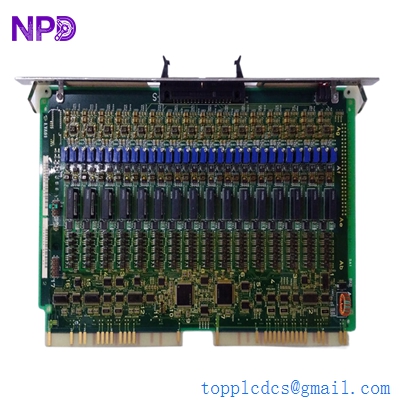
HITACHI LYA010A
Customer Cases & Industry Applications
Case 1: Refinery Instrumentation Accuracy Improvement
Situation:
A large refinery plant relied on analog sensor racks feeding critical temperature and flow transmitters into its PLC/DCS. Aging I/O cards began drifting, causing alarms and unnecessary manual interventions.
Task:
Operations needed reliable analog acquisition spare parts to ensure accurate process values and eliminate nuisance alarms.
Action:
We supplied HITACHI LYA010A modules in strategic buffer stock tied to forecasted lead time variability. Maintenance replaced the weak channel with minimal downtime.
Result:
Noise in analog signals reduced dramatically. False alarms dropped by 70%, and the plant avoided an estimated $120,000 per month of unplanned diagnostic work. Inventory turnover improved due to clearly defined reorder points.
Case 2: Water Treatment PLC Panel Support
Situation:
A municipal water treatment facility had an analog input rack for pH and conductivity sensors. One channel failed unexpectedly during a high-use period.
Task:
Immediate replacement was required to maintain regulatory compliance on effluent quality.
Action:
Using the buffer stock LYA010A, techs installed the new module during a single-shift outage window.
Result:
The system returned to normal operation that same day, avoiding penalties. The inventory manager updated min/max stocking after analyzing stock-out incidents and lead time variability.
Frequently Asked Questions (FAQ)
Q1: What exactly does the HITACHI LYA010A do?
A: It’s an industrial analog input module that converts real-world analog signals (voltage/current) into digital data for PLC/DCS systems. Typical use is in process/automation analog data acquisition.
Q2: What signal types can it handle?
A: It supports voltage and current analog ranges, such as −10 V to +10 V and 4-20 mA, depending on application wiring.
Q3: Is this module hot-swappable?
A: Hot-swapping analog I/O modules generally isn’t recommended due to risk of signal disruption and backplane wear. Power down the panel before replacement.
Q4: How should we stock this part?
A: For critical analog signal paths, maintain at least one on-site buffer stock. For multi-site operations with similar controls, shared centralized spares help reduce carrying costs. Lead time variability often justifies safety stock.
Q5: Does this require configuration after install?
A: After installation, verify channel mapping in your PLC/DCS. No special firmware is typically needed, but scaling/engineering units should be verified.