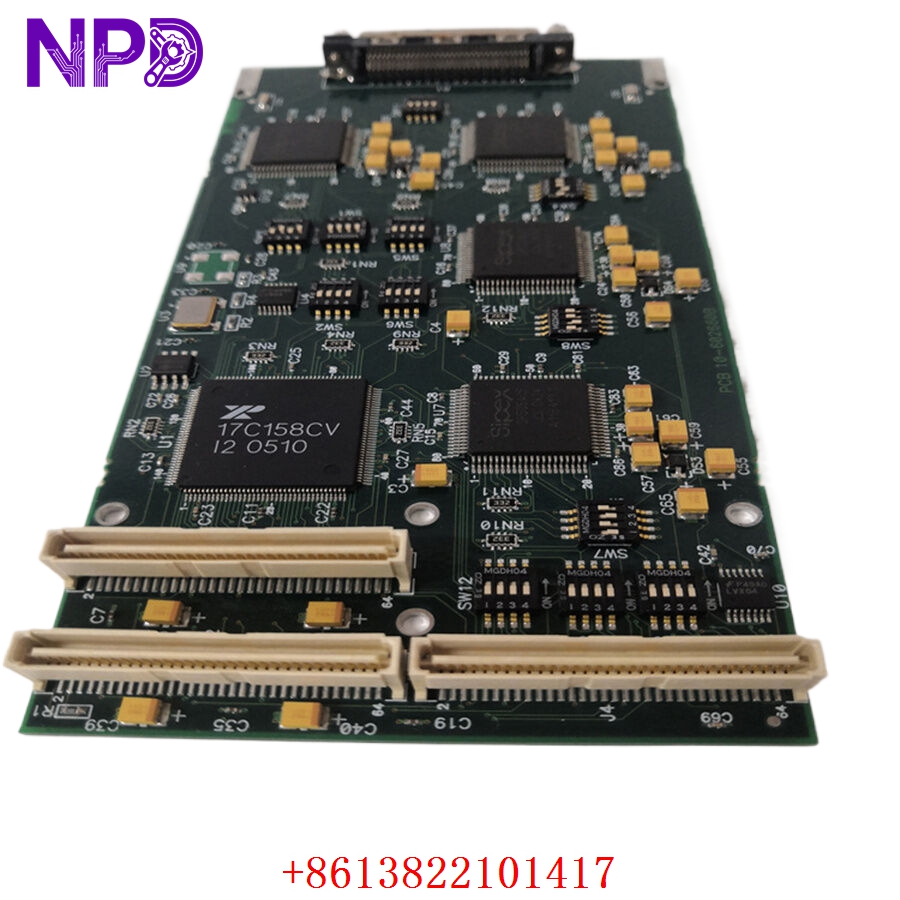

Description
The HONEYWELL 05701-A-0501 (ISS 08) is a 16-way front-access rack assembly, a foundational component in Honeywell’s distributed control systems (DCS) and industrial safety logic racks. This rack is designed to house and interconnect multiple I/O or controller modules, providing a robust, organized, and scalable infrastructure for process control environments. Its “front-access” design is specifically engineered for high-density cabinets where rear access is restricted, allowing technicians to install, maintain, and troubleshoot modules entirely from the front of the enclosure.

Technical Specifications
| Parameter | Description |
| Model | 16-Way Rack Assembly |
| Part Number | 05701-A-0501 |
| Issue/Revision | ISS 08 |
| Manufacturer | Honeywell |
| Capacity | 16 Slots (Modules) |
| Access Type | Front Access |
| Application | DCS / PLC / Safety Systems |
| Origin | USA / Global Manufacturing |
Operational Guidelines & Usage
🔹 Startup Sequence
- Ensure the rack is securely mounted in the control cabinet and verified for chassis grounding.
- Inspect the backplane connectors for any debris or bent pins.
- Insert the required control or I/O modules into the appropriate slots until the locking mechanism clicks.
- Connect the power distribution cables and the communication/bus cables (typically at the top or side of the rack).
- Energize the system and confirm the “Power” status LED (if applicable to the specific backplane configuration) is illuminated.
🔹 Shutdown Sequence
- Place all modules housed in the rack into their “Safe” or “Standby” state using the control software.
- Power down the rack’s primary and redundant power supplies.
- Utilize an ESD-safe mat and wrist strap before performing any module extraction.
- To remove a module, release the front-facing locking levers; pull straight out to avoid stressing the backplane connector pins.
🔹 Normal Operational Flow
- The rack provides a common backplane bus that allows all inserted modules to communicate with each other.
- It facilitates the distribution of system power across all 16 slots.
- Modules installed in the rack continuously poll field devices, performing data conversion and logic execution.
- The rack acts as the mechanical “spine” of the control system, ensuring stable electrical contact and alignment for high-speed data signals.
🔹 Maintenance Guidelines
- Periodic Inspection: Check the front-panel connections for signs of corrosion, especially in humid or corrosive industrial environments.
- Thermal Management: Ensure the cabinet’s ventilation system maintains an airflow path across the rack; blocked airflow through a 16-way populated rack can lead to premature component failure.
- Firmware/Revision Check: Since this is “ISS 08,” ensure that all modules installed are compatible with this revision level, as backplane signal characteristics can evolve across issues.
Common Questions & Answers (Q&A)
💡 Q: Can I mix different types of modules in this 16-way rack?
A: Generally, yes, provided the backplane power distribution is not exceeded. Always refer to the Honeywell system planning guide to ensure the total power consumption of 16 modules does not exceed the rack’s rating.
💡 Q: Why is “Front Access” an important feature?
A: In complex industrial facilities, control cabinets are often placed back-to-back or against walls. Front-access racks allow for “hot-swapping” or maintenance without the need to enter the back of the cabinet, significantly reducing downtime during troubleshooting.
💡 Q: What should I do if a slot in the rack stops communicating?
A: First, try reseating the module. If it still fails, use a multimeter to check the backplane pins of the affected slot against a known working slot. If the pins are physically damaged or loose, the rack backplane may need repair or replacement.
💡 Q: Is the 05701-A-0501 compatible with modern Honeywell modules?
A: Compatibility depends on your specific system series (e.g., TDC 3000, Experion PKS). Always verify the module part numbers against the rack’s revision-specific compatibility matrix to avoid communication mismatches.