
Description
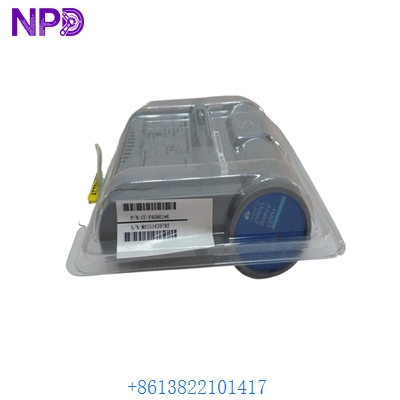
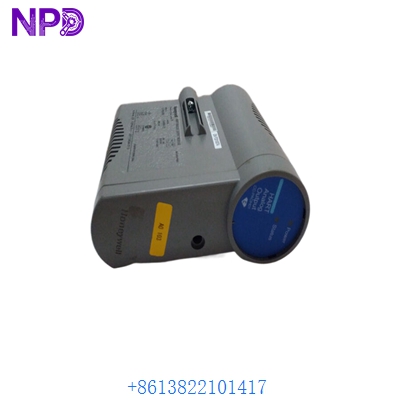
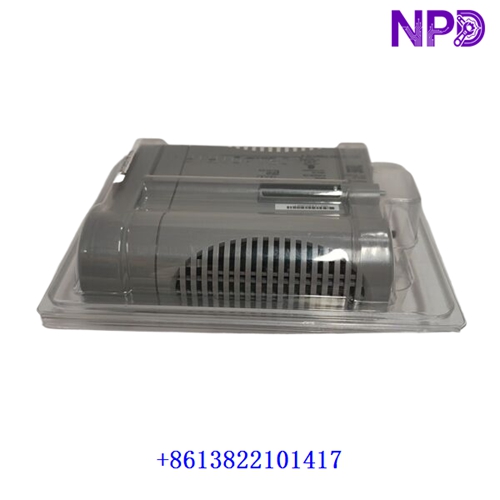
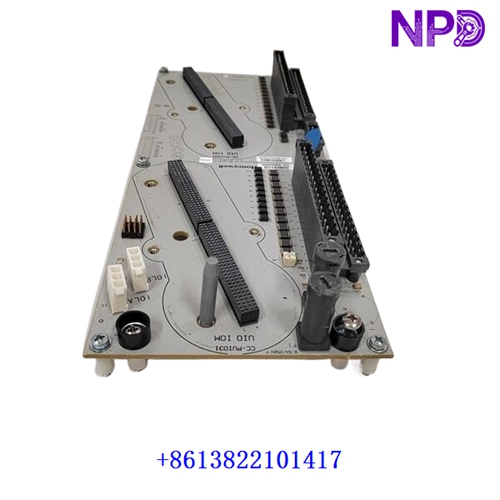
The Honeywell CC-TAID11 is an advanced differential analog input module and redundant Input/Output Termination Assembly (IOTA) engineered specifically for Honeywell’s flagship Experion Series C Distributed Control System (DCS) architecture. Designed for high-accuracy and noise-sensitive data acquisition, this module allows differential signal measurements to eliminate common-mode voltage interference from field sensors. Supporting dual-module redundancy on a single base, it ensures superior signal integrity and high availability for critical process measurement loops in heavy industrial environments.
📊 Product Datasheet & Technical Parameters
| Parameter Name | Technical Specification Value |
| Model Designation | Honeywell CC-TAID11 |
| Manufacturer | Honeywell Process Solutions |
| System Platform | Experion Series C Architecture |
| Module Category | Differential Analog Input Redundant IOTA |
| Number of Input Channels | 16 Differential Analog Input Channels |
| Supported Signal Types | 0 to 5V, 1 to 5V, 4-20mA with HART support |
| A/D Converter Resolution | 16-bit Analog-to-Digital Conversion |
| Redundancy Support | Yes (Dual redundant IOM slots on a single IOTA) |
| Operating Temperature Range | 0°C to +60°C (+32°F to +140°F) |
| Origin of Manufacture | United States / USA |
⚙️ Product Usage Instructions
🔌 Secure Chassis Mounting: Install and secure the CC-TAID11 redundant IOTA assembly firmly into its designated slot within the Series C cabinet chassis, ensuring proper alignment with backplane power and communication rails.
🔗 Field Wiring Installation: Connect differential field sensor lines and transmitter signal wires directly to the integrated terminal blocks, utilizing proper twisted-pair shielded cabling to maintain high common-mode rejection.
⚡ Redundancy and Power Verification: Insert matching primary and secondary analog input modules into the redundant IOTA slots, and check front-panel diagnostic indicators to verify stable loop power and active communication before startup.
💻 Software Configuration: Map channel addresses, configure differential scaling parameters, and establish HART communication variables using the Experion engineering software suite.
❓ Frequently Asked Questions (Q&A)
❓ Q1: What is the primary advantage of using a differential analog input like the CC-TAID11?
✅ A1: Differential inputs reject common-mode electrical noise and voltage differences between the field device ground and system ground, ensuring much higher measurement accuracy in electrically noisy plants.
❓ Q2: Does the CC-TAID11 support module-level redundancy?
✅ A2: Yes, the IOTA is engineered to accommodate two matching analog input modules simultaneously, providing full fault tolerance without requiring separate marshalling hardware.
❓ Q3: Are HART-compatible transmitters supported on this module?
✅ A3: Yes, the module supports standard 4-20mA loops with HART protocol transparency, allowing digital variables to pass alongside analog process values.
🔍 Recommended Alternative Series and Models
- Honeywell CC-TAIX11 (Series C 12-inch Redundant Analog Input IOTA)
- Honeywell CC-TAIX01 (Series C 16-Channel HART Analog Input Module)
- Honeywell CC-PAIH01 (Series C Analog Input Module with HART)
- Honeywell CC-TAOX11 (Series C 16-Channel Redundant Analog Output IOTA)
- Honeywell CC-TDIL11 (Series C 32-Channel Redundant Digital Input IOTA)
- Honeywell CC-TDOB11 (Series C 32-Channel Redundant Digital Output IOTA)
- Honeywell CC-PWRR01 (Series C Redundant Power Supply Module)
- Honeywell TC-IDD321 (Experion LS 32-Channel Digital Input Module)
- Honeywell ControlEdge C300 Controller Unit
- Honeywell Experion Process Knowledge System (PKS) Hardware Architecture