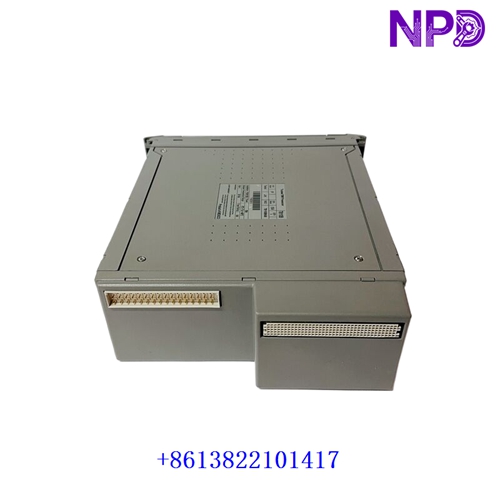
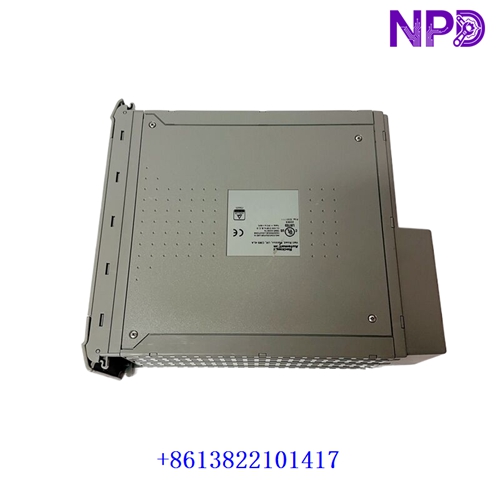

Description
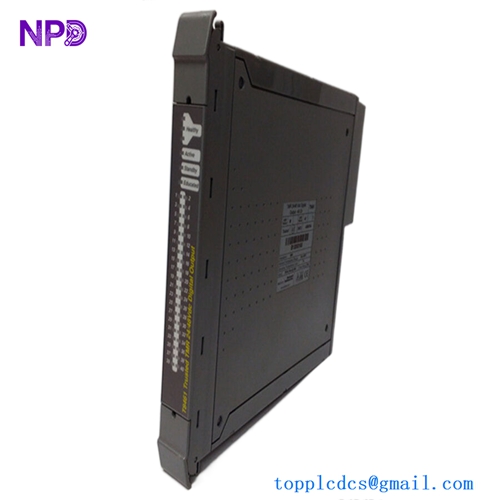
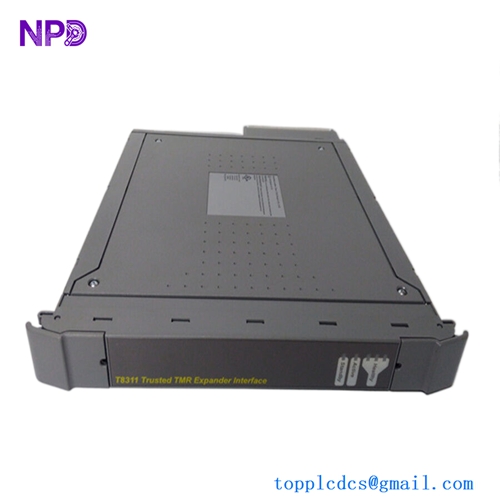
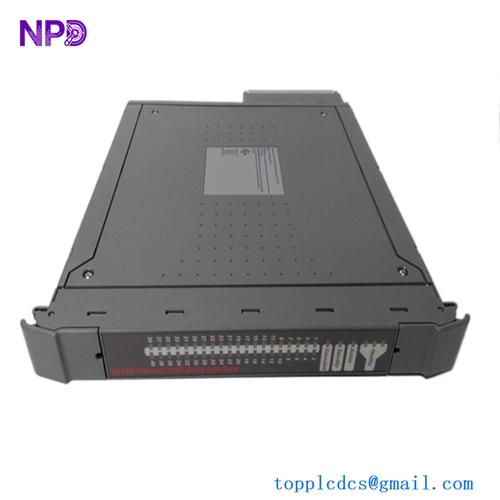
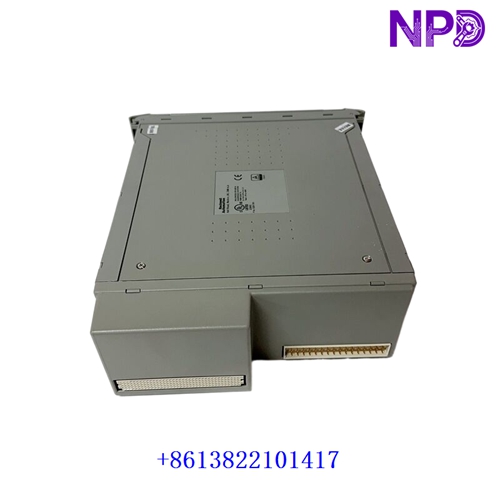
The ICS Triplex T8110B is a high-integrity Trusted Triple Modular Redundant (TMR) processor module engineered for critical safety-instrumented systems (SIS) such as emergency shutdown (ESD) and fire and gas (F&G) applications. Below are the core technical parameters governing its physical and operational characteristics:
- Brand: ICS Triplex (Rockwell Automation)
- Model: T8110B
- Series: Trusted TMR Industrial Control System
- Product Name: Trusted TMR Processor Module
- Origin Country: United States
- Physical State: Solid State Electronic Module (Triple Modular Redundant Architecture)
- Dimensions: 241 mm x 90 mm x 300 mm (Height x Width x Depth)
- Weight: Approx. 2.71 kg
- Place of Manufacture: ICS Triplex / Rockwell Automation Facilities
- Power Parameters: 20 to 32 VDC input voltage range (Dual-redundant backplane power feeds); Maximum load 75W–80W
► Operation Specifications & Usage Methods
Proper initialization and system setup ensure fault-tolerant processing and reliable execution of safety-critical control algorithms:
- Insert the processor module securely into the designated left-slot position of a T8100 controller chassis backplane.
- Configure system functions, communication ports, and time synchronization options using the System Configurator tool (Trusted Toolset Suite) via the front-panel RS232 serial diagnostic port.
- Ensure application programs developed in compliance with IEC 61131-3 standards are loaded safely into non-volatile memory utilizing the front-panel maintenance enable keyswitch.
⚠ Emergency Shutdown Operation
Designed explicitly for safety systems, the module governs high-risk processes and handles emergency interventions:
- The processor continuously executes two-out-of-three (2oo3) hardware voting across its three independent slices to instantly detect discrepancies and prevent false trips or unmanaged hazards.
- In an emergency condition, active safety routines command connected output modules to transition field actuators, valves, and fuel lines into a pre-configured safe state.
- Manual safety shutdowns can be triggered via hardwired safety loops monitored directly by the safety-instrumented architecture.
⚙ Troubleshooting & Common Issues
System diagnostics and hardware status registers allow operators to isolate faults efficiently:
- If module initialization fails, verify input power stability across the dual 24 VDC backplane supply rails and check terminal connections.
- For communication errors on the serial or inter-module bus (IMB) lines, inspect cable shielding, pin assignments, and configuration parameters.
- If transient faults occur, the internal diagnostics log the event with a time-stamp and clear automatically without causing nuisance alarms; permanent faults trigger front-panel LED indicators.
🛠 Routine Maintenance & Servicing
Preventative maintenance ensures prolonged equipment reliability in demanding industrial settings:
- Conduct periodic visual inspections of enclosure conditions, chassis terminal blocks, and mounting security to guard against continuous industrial vibration.
- Leverage hot-replacement capabilities to swap out a failed processor slice or module without shutting down the system or reloading control logic.
- Back up configuration files and application software revisions regularly to ensure rapid recovery during lifecycle maintenance windows.
❓ Frequently Asked Questions (Q&A)
- Q1: What safety integrity level (SIL) rating does the T8110B processor hold?
- A1: The module is TUV certified for use in safety-critical applications up to Safety Integrity Level 3 (SIL 3) in compliance with IEC 61508.
- Q2: Can the T8110B module be replaced while the system is powered on?
- A2: Yes, it supports hot-replacement (hot-swapping); a failed module can be replaced during active operation without interrupting ongoing processing on the remaining channels or requiring external software loaders.
- Q3: What time synchronization features are unique to the T8110B variant?
- A3: The T8110B natively supports IRIG-B002 and IRIG-B122 time synchronization signals alongside sub-millisecond sequence-of-events (SOE) fault time-stamping.