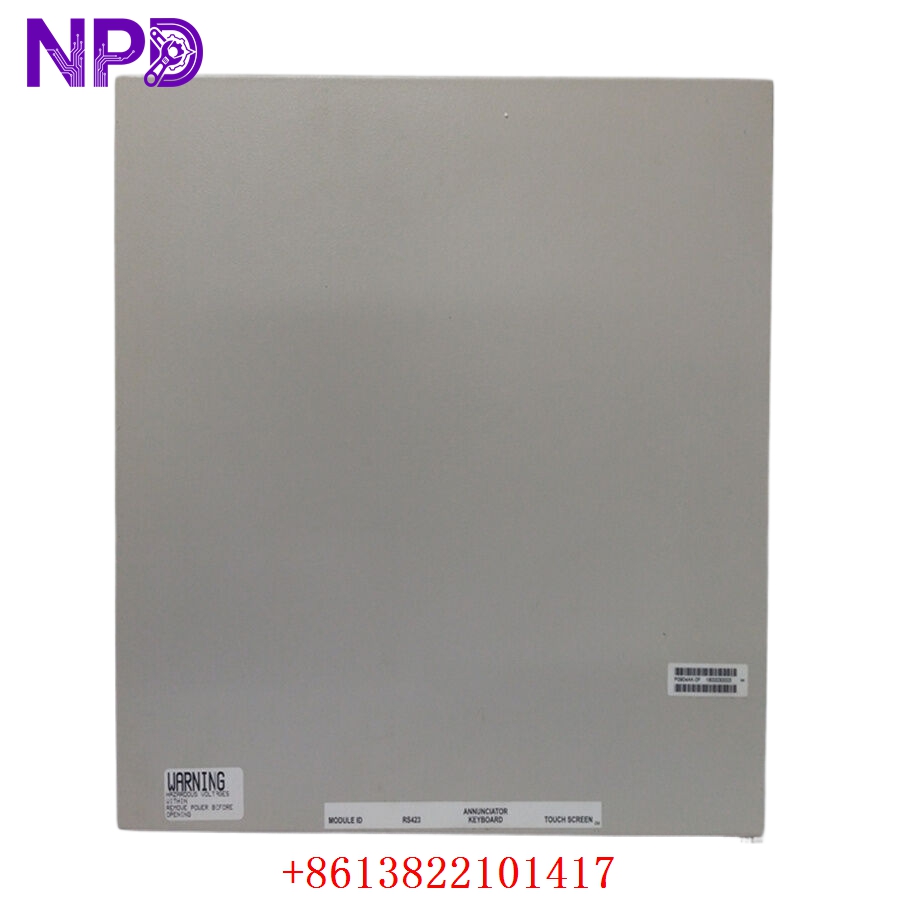

Description
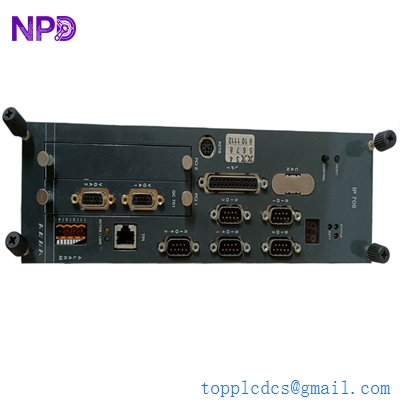
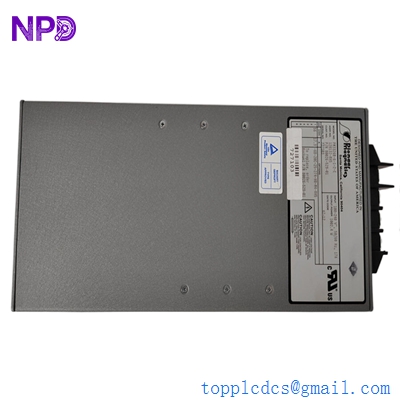
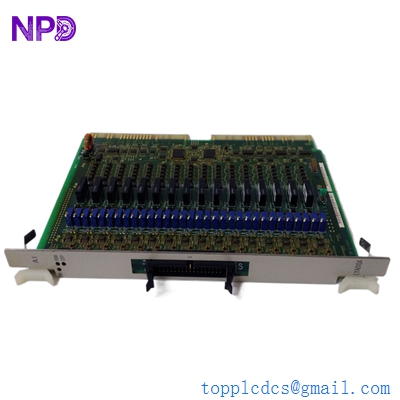
The KONGSBERG AL-100B/RPEX is a specialized industrial module engineered for maritime automation, specifically within EX-LON fieldbus architectures. This unit functions as a high-reliability repeater and power source, designed to provide intrinsically safe energy to field instruments while simultaneously regenerating communication signals. Its robust construction ensures optimal data integrity and power distribution for deck machinery and monitoring systems operating in demanding offshore environments.

Technical Specifications
| Parameter | Description |
| Model | AL-100B/RPEX |
| Manufacturer | KONGSBERG MARITIME |
| Safety Rating | [EEx ia] IIC |
| Power Output (Uo) | 13V / 1.18A |
| Signal Output (Uo) | 6V / 0.22A |
| Operating Temp | -20°C to +60°C |
| L/R Ratio | 9.25 μH/Ω |
Operational Guidelines & Usage
🔹 Startup Sequence
- Inspect all fieldbus wiring to ensure secure termination at the module’s rear terminals.
- Verify that the incoming supply voltage aligns with the module’s rated input.
- Energize the main power supply rack to engage the unit.
- Verify the front-panel status indicators; ensure the power-on LED is steady and no fault alerts are active.
- Confirm that the master controller successfully detects the fieldbus segment.
🔹 Shutdown Sequence
- Use the central control software to put the corresponding fieldbus segment into maintenance or inactive mode.
- Disconnect the power supply to the module.
- Wait for all internal capacitive discharge (indicator lights will fade) before attempting to remove or service the unit.
- Ensure the module is stored in an anti-static environment to protect its internal circuitry.
🔹 Normal Operational Flow
- The unit continuously receives data frames from the primary control bus.
- It processes and regenerates these signals to maintain integrity across the vessel’s cabling infrastructure.
- It provides a constant, intrinsically safe voltage output to field-based sensors or actuators.
- If a communication error occurs on the local loop, the unit’s internal logic attempts a signal handshake reset to preserve link stability.
🔹 Parameter Configuration
- The unit is designed for integration into managed fieldbus networks.
- Configuration is typically handled remotely via the centralized control software rather than through physical switches on the module.
- System engineers can update bus address mapping and communication timing through the main interface to match specific operational requirements.
🔹 Mode Switching
- Active/Bus Mode: The standard state where the unit facilitates communication and provides power to the field.
- Service/Standby Mode: Triggered via the control interface during routine maintenance, allowing technicians to work on field devices without inducing system-wide faults.
Common Questions & Answers (Q&A)
💡 Q: How does the unit maintain intrinsic safety?
A: The [EEx ia] IIC rating signifies that the unit is engineered to limit electrical energy and thermal output to levels that cannot ignite a flammable atmosphere, even under fault conditions.
💡 Q: Can this unit replace a standard power supply?
A: No, the AL-100B/RPEX is purpose-built for EX-LON fieldbus systems. Using it as a general power supply for non-compatible hardware will lead to communication failures or damage to the unit.
💡 Q: What is the recommended action if the repeater signal fails?
A: First, inspect the integrity of the fieldbus cable for breaks or loose terminals. If the physical connection is sound, verify that the master controller is not in an error state. If other units on the segment are functioning but this one is not, the module may have an internal hardware failure.
💡 Q: Is it safe to remove the unit while the system is running?
A: To prevent electrical surges from affecting the rest of the fieldbus segment, always de-energize the unit or set it to an inhibited state within the control software before removing it from the rack.