
Description
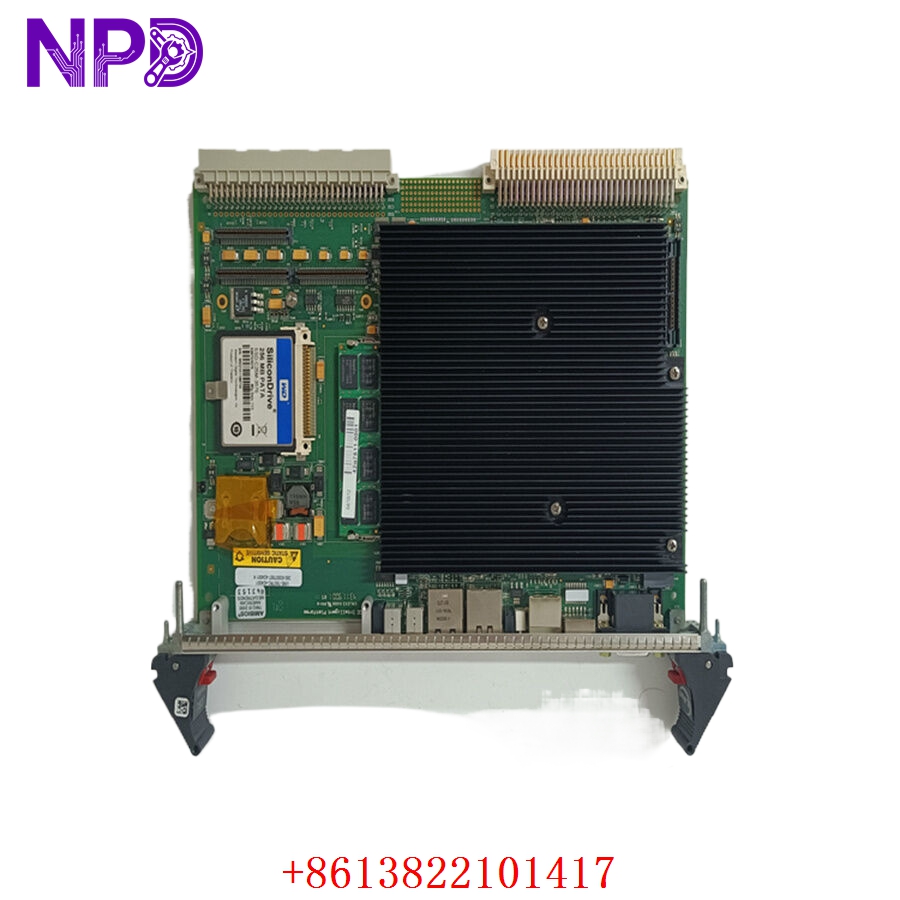
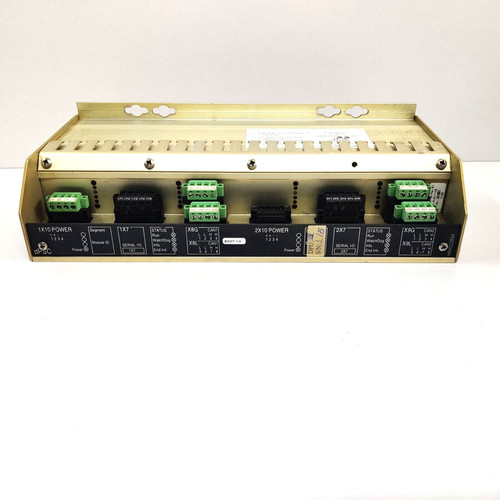
The Kongsberg Maritime RAI-12TC (Part No: 8100161) is a specialized Remote Analogue Input module designed for high-precision temperature monitoring. The “TC” designation signifies its specific application for Thermocouple inputs. This unit is a vital component of the Kongsberg Distributed Processing Unit (DPU) architecture, enabling the acquisition of critical temperature data from engine components, exhaust gas systems, and other heat-sensitive machinery across the vessel.
📋 Technical Specifications
🔹 Part Number: 8100161 🔹 Module Type: RAI-12TC (Remote Analogue Input – Thermocouple) 🔹 Series: Kongsberg Maritime DPU / Automation Series 🔹 Function: Thermocouple Signal Conditioning and A/D Conversion 🔹 Input Type: Multi-channel Thermocouple inputs (Type K, J, T, etc.) 🔹 Operating Voltage: 24V DC 🔹 Weight: Approximately 0.55 kg 🔹 Origin: Norway
🚀 Application Fields
⚡ Marine Engine Exhaust Temperature Monitoring ⚓ Bearing and Lubrication Oil Temperature Sensing 🌊 Process Temperature Control for Auxiliary Machinery ⚙️ Condition-based Monitoring Systems
🛠️ Product Instructions
The RAI-12TC module is installed on DIN rails within Kongsberg-compliant DPU cabinets. To ensure measurement accuracy, ensure the module is protected from direct heat sources. When wiring, use thermocouple-grade extension wire that matches the sensor type to prevent “Cold Junction” compensation errors. All wiring must be shielded and grounded correctly to prevent electromagnetic interference (EMI) from the ship’s heavy power cabling, which can cause temperature fluctuations in the readings.
⚙️ Communication & Configuration Steps
⚙️ Address Mapping: The module’s identity is configured via the central Kongsberg engineering station. Each input channel must be mapped to the correct register in the DPU based on the vessel’s I/O list. ⚙️ Station Number: The station ID must be unique within the DPU network segment to ensure data packets are routed to the correct processing unit. ⚙️ Cold Junction Compensation: This module performs automatic Cold Junction Compensation (CJC). Ensure the module is installed in an environment where ambient temperature does not fluctuate rapidly, as this can briefly affect the CJC accuracy until the module reaches thermal equilibrium.
🔋 Power-up Debugging Process
✅ Step 1: Verify the 24V DC power supply to the module terminal block. ✅ Step 2: Check the “Power” and “Data” LEDs. A steady green power light and a flashing data light indicate the module is initialized and communicating with the DPU. ✅ Step 3: Use the central CMS (Control and Monitoring System) to observe the input values. If a channel displays “Open Circuit” or “Maximum Value,” check the thermocouple sensor and its wiring continuity. ✅ Step 4: Compare the reading with a calibrated handheld thermocouple probe at the source to verify the module’s accuracy.
📋 First-time Operation Checklist
✔️ Confirm the part number (8100161) is the correct version for your specific thermocouple type. ✔️ Verify that the input channels are correctly configured for the specific thermocouple type (e.g., K-type vs. J-type) in the software. ✔️ Ensure the shield drain wire is connected only at one end (typically at the cabinet ground bar) to prevent ground loops. ✔️ Perform a system-wide diagnostic scan to ensure the module is correctly recognized as an “Online” node.
❓ Frequently Asked Questions (Q&A)
❓ Q: Why are my temperature readings fluctuating sporadically? 💡 A: Fluctuations are almost always caused by electrical noise (EMI) or a poor connection in the thermocouple junction. Check the terminal block for loose wires and ensure your signal cables are physically separated from high-voltage motor cables.
❓ Q: Can I use this for RTD sensors? 💡 A: No. The RAI-12TC is specifically designed for Thermocouple (mV-level) inputs. Using an RTD sensor with this module will result in incorrect readings and may damage the input stage. Use an RTD-specific module (like the RAI-12RTD) for those sensors.
❓ Q: What is the benefit of the DPU architecture? 💡 A: The DPU architecture allows for “Distributed Processing,” meaning the I/O modules can be placed closer to the physical sensors. This reduces the amount of expensive, specialized thermocouple extension wiring needed and minimizes the impact of noise.