
Description
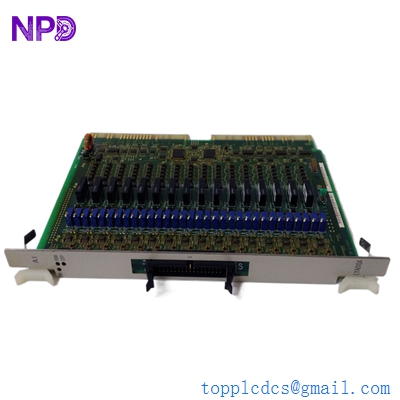
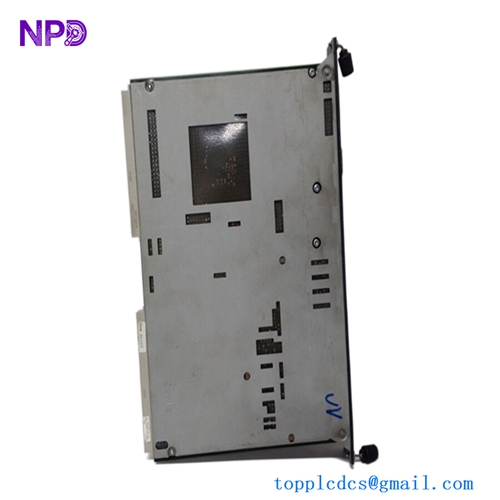
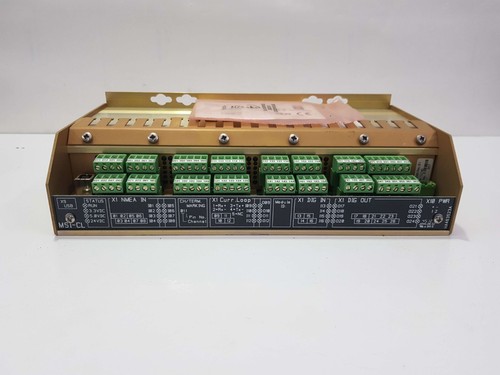
The KONGSBERG MSI-CL (Current Loop Module, Part Number 339369) is a specialized I/O interface module designed for Kongsberg’s marine automation and control platforms. It functions as a precision signal conditioner that converts analog current loop signals (typically 4-20mA) from field instrumentation into digital data for the vessel’s monitoring and control system. Its robust construction ensures high fidelity and signal integrity in the high-interference environments of shipboard engine rooms and navigation bridges.
⚙️ Technical Specifications
- Dimensions: 220 mm x 150 mm x 75 mm
- Weight: 0.85 kg
- Country of Origin: Norway
- Input Signal: 4–20 mA (Industry standard current loop)
- Supply Voltage: 24V DC
- Operating Temperature: -20°C to +70°C
- Housing: Industrial-grade modular casing with vibration resistance
- Protection Class: IP20 (Requires cabinet mounting)
🏗️ Application Areas
- Analog Sensor Integration (Pressure, Temp, Level)
- Engine Performance Monitoring
- Marine Propulsion and Auxiliary Control
- Thruster and Steering Feedback Loops
- Industrial Process Automation Integration
📖 Product Usage Instructions
This module must be mounted in a standard control cabinet. Connect the field instrumentation (sensors) to the module’s terminal blocks, ensuring that the polarity is correct for the 4-20mA loop. To maintain high signal accuracy, utilize shielded, twisted-pair cabling for all analog inputs. The cable shields should be grounded at the cabinet entrance to mitigate electromagnetic interference (EMI) prevalent in maritime power systems.
🌐 Communication Configuration Steps
- IP Address: As an analog I/O module, the MSI-CL is managed by the host controller; IP/node parameters are assigned to the parent rack or gateway.
- Station Number: Configure the channel address through the Kongsberg configuration utility to map the input to the correct software register.
- Baud Rate: Communication timing is handled via the internal high-speed backplane bus; no manual baud rate adjustment is required for the module.
⚡ Power-Up Debugging Flow
- Verify 24V DC supply voltage at the module terminals using a multimeter.
- Confirm the presence of a loop current (measure 4-20mA) on the active field input channels.
- Power on the module and observe the “Channel Status” LEDs; they should indicate normal activity.
- If an LED is off or flashes red, verify the loop continuity; a 0mA reading typically indicates an open circuit.
- Check the system HMI to ensure the analog value is displayed correctly within the expected range.
✅ Initial Run Checklist
- Perform a “Loop Calibration” check by injecting a 4mA (0%) and 20mA (100%) signal to confirm accurate mapping in the system.
- Inspect the terminal block wiring for any signs of corrosion or looseness.
- Check the diagnostic logs for any “Over-range” or “Signal Out of Bounds” alarms.
- Back up the I/O channel configuration file as part of the vessel’s system commissioning records.
- Ensure all cable glands are tightened to maintain the enclosure’s environmental protection integrity.
❓ Frequently Asked Questions (Q&A)
Q: What is the benefit of the Current Loop (4-20mA) compared to voltage signals? A: Current loops are significantly more resistant to signal degradation and electromagnetic noise over long cable runs, making them the standard for critical marine automation.
Q: Can I use this module for sensors that require external loop power? A: The MSI-CL is designed to support standard 2-wire loops. If your sensor is 4-wire or requires additional power, ensure the wiring scheme matches the technical manual’s power requirements.
Q: How do I identify a failed input channel? A: A failed channel is usually indicated by a lack of activity LED on the module faceplate or a sustained 0mA/invalid value on the HMI. Ensure the loop is closed before declaring the module faulty.
Q: Is the 339369 module hot-swappable? A: While designed for reliability, it is best practice to power down the specific rack slot or the entire module before extraction to avoid transient electrical shocks to the backplane communication pins.