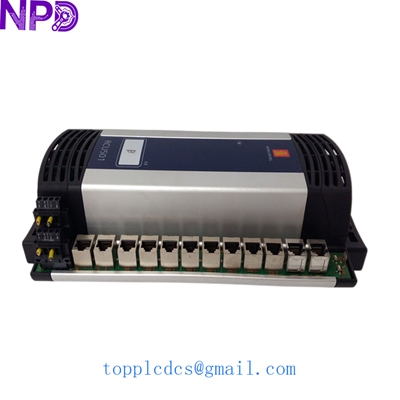

Description
- Model: Kongsberg RCU501
- Brand: Kongsberg Maritime
- Part Number: 603439
- Series: K-Chief / K-Pos / K-Safe Systems
- Core Function: Real-time process control and I/O bus driving for maritime automation.
- Product Type: Remote Controller Unit (RCU)
- Processor: Embedded PowerPC Architecture (MPC 8245) @ 400 MHz (Some variants 667 MHz)
- Memory: 64 MB RAM | 16 MB Flash (Up to 512 MB Flash in newer revisions)
- Communication Interfaces:
- Dual Ethernet: LAN process networks (Net A / Net B)
- Dual RedundancyNet: For RCU-to-RCU synchronization
- Dual RBUS: Remote I/O process Bus
- Serial: 32 Serial lines for 3rd party integration
- Fieldbus: 2 x PROFIBUS channels | 2 x CANBUS channels
- Onboard I/O:
- 4 x Opto-isolated Digital Inputs
- 4 x Opto-isolated Digital Outputs
- Watchdog timer with fail-safe function
- Update Frequency: Max 50 Hz
- Power: 24 V DC (Nominal 0.8 A, Max 20 W)
- Certification: Ex nA II T4 (Zone 2), SIL 2/3 (in redundant topology), DNV, ABS, CE
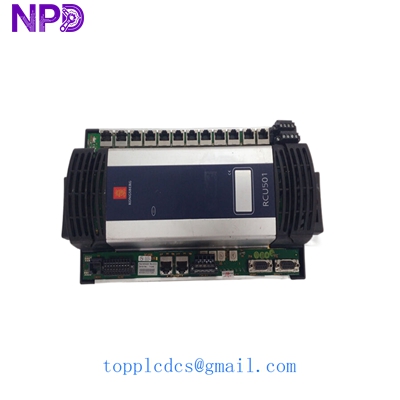
KONGSBERG RCU501
Installation & Configuration Guide
Phase 1: Hardware Setup
- Mounting: The unit utilizes standard DIN Rail T35 mounting. Ensure there is at least 50mm of clearance for heat dissipation.
- Addressing: Locate the 3-digit hexadecimal address switches (S5, S6, S7). These must be set to match the specific Station (PS) address defined in your system topology.
- Mode Switch: Ensure the Mode Switch (S4) is set to 0 (Zero) for normal operation. Other settings are typically for advanced debugging only.
Phase 2: Connections
- Power (X2): Connect dual 24 V DC inputs for redundancy.
- Ethernet (P8, P9): Connect to the Net A and Net B process networks.
- Redundancy (P10, P11): If using a redundant pair, connect the crossed RedNet cables between the two RCU units.
- RBUS (P19, P20): Connect to the Remote I/O hubs (e.g., RHUB200).
Phase 3: Monitoring Start-up
- Status LEDs: Observe the ST0–ST3 sequence.
- Red LED: Hardware self-test or loading files.
- Green LED: System is operational.
- ST4 Lit: Indicates this unit is currently the Master in a redundant pair.
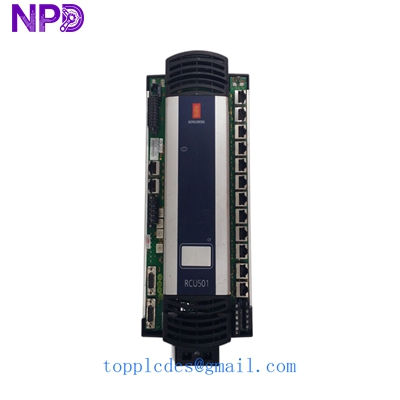
KONGSBERG RCU501
Customer Cases & Industry Applications
Case 1: Dynamic Positioning (DP) System Recovery
Situation: A PSV (Platform Supply Vessel) in the North Sea experienced intermittent data drops in its K-Pos DP system. The “R” controller (RCU501) was flagged with a persistent “NMI” (Non-Maskable Interrupt) error. Action: We supplied a New Surplus RCU501 (603439). The crew performed an onboard swap during a port call, matching the address wheels to the failed unit. Result: The DP system synchronized immediately. By sourcing a surplus unit, the vessel avoided a 6-week lead time for a system-wide upgrade to RCU502.
Case 2: K-Chief 700 Expansion
Situation: An LNG carrier required an additional I/O loop for new ballast water monitoring sensors. The existing K-Chief 700 cabinet had space, but the controller was near its 1280 I/O limit. Action: The customer added a dedicated RCU501 to handle the new sub-system. Result: Using a matching legacy module ensured seamless integration with their existing software version (AIM 8.x) without requiring a costly total system firmware re-certification.
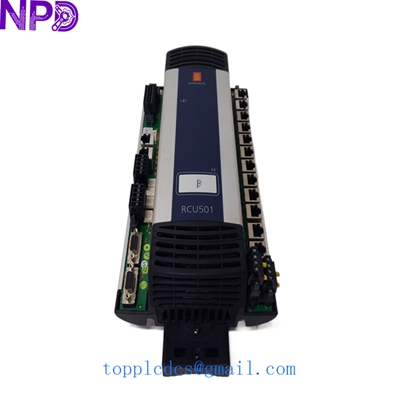
KONGSBERG RCU501
Frequently Asked Questions (FAQ)
Q: Is the RCU501 compatible with the newer RCU502? A: The RCU502 was designed specifically as a replacement for the RCU501. While they share similar logic, swapping from a 501 to a 502 often requires a software/firmware update to the AIM Safe System. If you want a “plug-and-play” fix without software changes, staying with the RCU501 is recommended.
Q: What does the “Ex Zone 2” rating mean for my installation? A: It means the module is certified for use in “Hazardous Areas” where explosive gases may be present but are unlikely to occur in normal operation. This is standard for engine room and deck-side automation cabinets.
Q: Can I hot-swap this module? A: Yes, in redundant (1oo2) applications, the RCU501 supports hot-swapping. The secondary unit will take over as Master while the faulty unit is replaced, maintaining continuous process control.