
Description
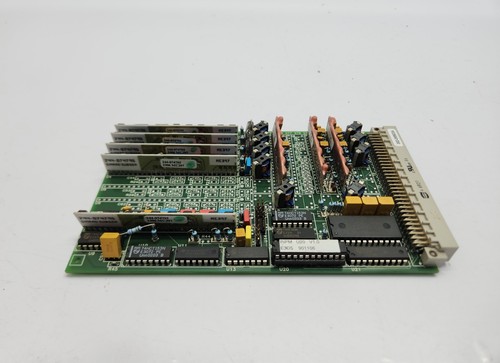
The KONGSBERG SIMRAD 381-101032 (often associated with the assembly or sub-board reference 382-088903A) is a specialized “INPUTM” (Input Module) PCB designed for Kongsberg Maritime and Simrad industrial automation systems. This card acts as a high-precision analog/digital signal interface, tasked with the acquisition and initial conditioning of raw sensor data before it is processed by the main controller. It is built to the rigorous standards required for shipboard navigation, dynamic positioning, and maritime automation environments.
⚙️ Technical Specifications
- Part Number: 381-101032 (Assembly/Sub-ref: 382-088903A)
- Function: Input Module (INPUTM)
- Weight: ~180 g
- Flammability Rating: 94V-0
- Country of Origin: Norway
- Platform Compatibility: Kongsberg/Simrad maritime automation and control systems
- Protection Class: IP00 (Requires mounting in an environmentally protected cabinet/enclosure)
🏗️ Application Areas
- Maritime Navigation and Control Systems
- Dynamic Positioning (DP) Interfaces
- Industrial Automation and Sensor Signal Acquisition
- Shipboard Control/Monitoring Systems (AMS)
📖 Product Usage Instructions
This PCB is a sensitive electronic component and must be handled using anti-static (ESD) protocols. It is intended to be installed within a Kongsberg/Simrad rack or control cabinet. Ensure the PCB is firmly seated in the backplane connector; verify that the locking tabs or retention screws are engaged to prevent disconnection due to shipboard vibration. Wiring connections to the input terminals should be performed using high-quality shielded cables to minimize electromagnetic interference (EMI).
🌐 Communication Configuration Steps
- System Bus: As an input module, this card typically communicates with the master processor via the internal system backplane bus.
- Configuration: Specific channel configuration (scaling, filtering, and input type) is usually managed via the master controller’s software interface. There are generally no field-adjustable baud rates or manual IP settings on the board itself, as these are determined by the host system’s project configuration.
⚡ Power-Up Debugging Flow
- Verification: Before power-up, verify that the PCB is correctly oriented and fully seated in the rack.
- Voltage Check: Confirm the rack power supply is stable at the required 24V DC (or system-specific rail voltage).
- Initialization: Upon power-up, observe the status LEDs on the module or the associated rack controller.
- Diagnostic Check: If the system reports a “Module Not Found” or “Comm Fault,” verify the backplane connector cleanliness and seating.
- System Software: Check the master control software to confirm the input channels are active and receiving valid sensor data.
✅ Initial Run Checklist
- Signal Mapping: Ensure the software input register matches the physical terminal wiring.
- Calibration: Perform a signal verification test to ensure the input values (e.g., 4-20mA, digital contacts) correlate correctly with the HMI/bridge display.
- Environment: Ensure the cabinet is properly sealed and that all cooling systems (if active) are functional.
- Record Keeping: Document the module’s revision (e.g., REV B) and firmware version in the vessel’s maintenance records.
❓ Frequently Asked Questions (Q&A)
Q: Is the 381-101032 interchangeable with other versions? A: Revision levels (e.g., Rev A vs. Rev B) can signify differences in board design or components. Always cross-reference the exact part number and revision with the vessel’s original system documentation before attempting a replacement.
Q: How do I identify a failure? A: Failure typically manifests as a loss of communication in the system software, “invalid” sensor values on the bridge, or dedicated fault LEDs on the card’s front panel.
Q: Can this PCB be repaired at the component level? A: Due to the high-reliability requirement of maritime navigation/control systems, component-level repair is generally discouraged. Factory-certified refurbishment or replacement with a tested, genuine part is the standard procedure to ensure system safety.