
Description
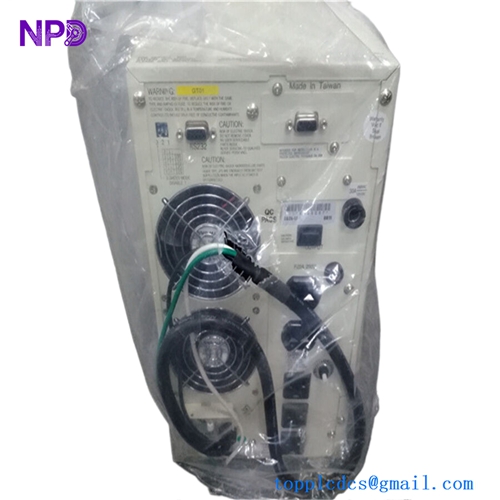
- Model: Kongsberg Simrad APC 10 HPR (Part Number: 125-103300)
- Brand: Kongsberg Maritime / Simrad (Norway)
- Series: HPR (Hydroacoustic Position Reference) / HPR 400 Platform / APOS Subsystem
- Core Function: Acoustic positioning processing and transceiver interface unit for subsea vessel tracking
- Product Type: Acoustic Positioning Computer / Processing Unit (APC)
- Key Specs: 110/230 V AC (50/60 Hz) Power | 200 VA Rating | RS-422 Serial (COM3/4) | IP22 Enclosure Protection
- Supply Status: ⚠️ Obsolete / Surplus Stock Only (Limited Availability)
- Stock Quantity: In-house tested unit ready for dispatch
- Warranty: 12 Months (From shipment date)
- Ship From: Shenzhen / Hong Kong / Global Marine Logistics Hubs
Key Technical Specifications
- Input Voltage Rating: 110 V / 230 V AC selectable (50/60 Hz system frequency)
- Power Consumption: Nominally 200 VA maximum
- Protection Class: IP22 (Marine bridge/equipment room enclosure standard)
- Serial Interfaces: Dual RS-422 serial channels (COM3 / COM4) for motion reference unit (MRU) and gyro compass telemetry
- Network Protocol / System Integration: APOS2 Ethernet interface architecture / TCP-IP network protocol support
- Compatible Transceiver Systems: Simrad HPR 400, HPR 300 series transceivers, and UPS2 power units
- Processor Architecture: Industrial rack-mount Acoustic Positioning Processor subrack
- Operating Temperature: -5 °C to +55 °C (marine cabinet environment)
- Relative Humidity: Up to 95% non-condensing (conformal coated electronics for marine environments)
- Hardware Reference Identifiers: MPN 125-103300, Serial Code Range 600-Series, Ref: AE381
Application Scenarios & Pain Points
Offshore vessel operations like deep-water drilling, ROV support, and subsea construction rely on Hydroacoustic Position Reference (HPR) systems to provide real-time underwater coordinates to the main Dynamic Positioning (DP) desk. The Kongsberg Simrad APC 10 HPR 125-103300 acts as the dedicated signal processing engine, translating raw ultrasonic transducer telemetry and motion sensor inputs into precise vessel-to-transponder vectors.
Because the APC 10 platform is a legacy processing unit, a power supply surge, memory corruption, or serial port degradation during a live subsea intervention can drop acoustic tracking in an instant. If your DP system relies on HPR 400 acoustic tracking to hold station near a platform jacket, losing this processor forces the vessel to downgrade DP class status or suspend diving operations. Factory lead times on legacy Simrad parts can drag out for weeks, making tested surplus units essential for avoiding charter downtime.
Typical Application Scenarios:
- Dynamic Positioning (DP) Acoustic Reference Feeds continuous SSBL (Super Short Baseline) acoustic position data into vessel DP controllers to maintain station-keeping during subsea operations.
- ROV Underwater Tracking & Telemetry Calculates real-time 3D underwater positions of remotely operated vehicles (ROVs) relative to the vessel’s hull-mounted transducer.
- Pipe-Lay & Subsea Construction Support Provides acoustic tracking for seabed frames, pipe-lay stingers, and trenching vehicles.
- Offshore Drilling Rig Riser Angle & BOP Monitoring Monitors acoustic transponder angles mounted on subsea Blowout Preventers (BOP) and marine riser stacks.
Real-World Field Case: Emergency Replacement on a Diving Support Vessel (DSV)
Background: While supporting saturation diving operations in the Gulf of Mexico, a DSV experienced a total loss of HPR acoustic positioning. The primary Simrad APC 10 HPR processor unit (125-103300) failed to complete its boot sequence following a generator switchboard changeover transient.
Problem: With saturation divers down at 110 meters, DP rules mandated a second acoustic reference source to continue work. The OEM technical line indicated that the legacy 125-103300 processing unit had long reached end-of-life (EOL), recommending an full APOS processor cabinet upgrade that required 4 weeks of shipyard time.
Solution: The vessel’s lead ETO contacted our marine spares division to source an exact pre-tested Kongsberg Simrad APC 10 HPR 125-103300 unit. We confirmed backplane serial revision compatibility, verified power supply health, and air-freighted the unit to the vessel’s port agent within 14 hours.
Result:
- Total Operational Interruption: Under 32 hours (preventing saturation diving demobilization costs exceeding $350,000).
- Commissioning: Drop-in rack replacement into the existing marine cabinet; network IP and COM port parameters were matched, bringing HPR 400 acoustic tracking back online immediately.
Compatible Replacement Models
When replacing legacy Kongsberg Simrad APC units, matching the exact part number (125-103300), internal serial card configurations, and IP network settings is critical for seamless integration into existing APOS operator stations.
| Original Part Number | Replacement / Alternative Model | Compatibility Level | Key Differences | Required Action / Conversion Effort | Cost Impact |
| 125-103300 (APC 10 HPR) | 125-103300 (Exact Match) | ✅ Direct Drop-in | Identical chassis, internal power supply, and COM3/4 serial board layout | Direct wire-for-wire swap out. Match IP address and COM port baud rates. | Standard Base Price |
| 125-103300 | Kongsberg APC 10 Variant Assemblies | ⚠️ Serial / Firmware Check | Base chassis is identical, but serial board channel options (RS-232 vs RS-422) may differ | Reconfigure serial jumpers or flash software parameters in APOS | Approx. Same |
| APC 10 HPR Platform | Kongsberg HPR 500 / HiPAP APOS OS Processor | ❌ System Upgrade Required | Next-generation transceiver and processing platform; different subracks and transceiver interfaces | Requires complete transceiver rack replacement, transducer cable rewiring, and APOS software overhaul | +300% to +500% |
Engineering Integration Advice: If your APC 10 unit experiences intermittent freezing or loss of communications, inspect the internal 110/230 V power supply module before replacing the full rack. However, if serial telemetry channels (COM3/4) are blown due to ground loop voltage spikes, replacing the complete 125-103300 unit is usually the fastest path to restoring system integrity.
Quality Control & SOP Transparency
To provide absolute confidence when dispatching legacy marine electronics, every Kongsberg Simrad APC 10 HPR 125-103300 processor undergoes a strict 5-stage quality audit:
- Inbound Physical & Electrical Audit:
- Visual inspection under magnification for sign of capacitor bulging, trace corrosion from salt atmosphere, or chassis mechanical deformation.
- Verification of original OEM serial plates, IP22 rating labels, and part number 125-103300.
- Live Bench System Testing:
- Mounted in our dedicated Simrad HPR test rack powered via a clean 230 V AC isolation transformer.
- Power-On Self-Test (POST): Verification of internal DC power supply rails and bootloader sequence execution.
- Serial Communication Verification: Injected test strings across COM3 and COM4 RS-422 serial lines using a NMEA 0183 simulator to verify port throughput without frame errors.
- Ethernet / APOS Interface Handshake: Verified IP connectivity (testing network link ping and APOS2 data telegram handshake).
- 24-Hour Thermal Endurance Test: Continuous full-load processing run inside a thermal test chamber at 45 °C to verify stability.
- Electrical Parameter & Insulation Checks:
- Insulation resistance testing (500 V DC) between AC supply line terminals and chassis ground (>20 MΩ threshold).
- Earth continuity validation across all rack grounding lugs.
- Firmware & Configuration Backup:
- Documentation and backup of onboard internal network settings (IP configurations and COM port settings).
- High-resolution photographic archiving of internal jumper settings for client reference.
- ESD-Safe & Marine Freight Packaging:
- Enclosed in heavy-duty ESD shielding anti-static packaging.
- Encased in custom-molded shock-absorbing foam and packed in dual-wall corrugated export crates.
- Sealed with dated “QC PASSED” security tape prior to freight dispatch.
Technical Integration & Field Troubleshooting Guide
Commissioning legacy acoustic processing units on a ship’s bridge can be tricky. Honestly, most middle-of-the-night emergency calls aren’t caused by a dead processor, but by simple serial baud rate mismatches or crossed RS-422 signal pairs.
1. Common Field Faults & Troubleshooting Matrix
| Fault Symptom | Probable Cause | Module Relevance | Quick Diagnostic Check | Corrective Action |
| No Power / Front LEDs Off | Main AC supply fuse blown or internal power module failure | ⚠️ Medium (Internal PSU) | Measure voltage at AC input terminals (110 V / 230 V AC) | Replace internal fuse; if input voltage is present but unit stays dead, replace 125-103300 unit |
| APOS Display: “No HPR Telemetry / COM Error” | RS-422 serial TX/RX pair swapped or port opto-isolator failure | ✅ High (Internal / Port) | Measure DC voltage levels on COM3 / COM4 RS-422 pins | Swap RX+ / RX- leads; if serial activity light remains dead under load, replace unit |
| Acoustic Positions Jump / Unstable | Motion Reference Unit (MRU) telegram timeout or dirty serial line | ⚠️ Medium (External Cable) | Check APOS diagnostic log for missing gyro/MRU telegram headers | Verify MRU baud rate matches COM port settings; check cable shield grounding |
| APOS Software Cannot Ping APC 10 | IP address mismatch or corrupt network configuration | ⚠️ Medium (Network) | Check Ethernet link LEDs on back of APC 10 chassis | Reset network configuration to match default subsea net mask (e.g., 157.237.x.x) |
2. Five Critical Pitfalls to Avoid During Replacement
❗ Risk 1: Swapping Serial Cables Without Checking RS-422 Polarity
The Trap: RS-422 differential signals require precise polarities (TX+, TX-, RX+, RX-). Swapping positive and negative legs on COM3 or COM4 will result in continuous framing errors on the APOS screen without lighting up a hardware failure lamp.Solution: Label your wires! Document the exact pinout of COM3 and COM4 before disconnecting the old unit.
❗ Risk 2: Forgetting to Reconfigure the Network IP Address
The Trap: Replacement surplus units retain the IP address of the previous vessel installation (e.g., 157.237.11.193). If your ship’s APOS operator station expects a different IP subnet, the processor will boot up fine but won’t talk to the HPR software.Solution: Connect a setup terminal to configure the IP address to match your vessel’s network map prior to closing up the rack.
❗ Risk 3: Running Without Proper Grounding / Bonding
The Trap: Marine acoustic processors are vulnerable to hull ground loops. Operating the APC 10 unit without connecting its dedicated earth grounding strap can cause electrical noise spikes that corrupt acoustic pulse decoding.Solution: Always bolt a heavy copper grounding braid from the APC 10 chassis grounding lug directly to the main vessel equipment rack earthing bar.
❗ Risk 4: Ignoring Voltage Selection Switches
The Trap: The APC 10 chassis supports dual voltage ranges (110 V and 230 V AC). Feeding 230 V AC into a unit set for 110 V AC input will instantly destroy the internal primary transformer!Warning: I’ve seen a technician swap a processor on an offshore vessel and plug 220 V shore power into a 110 V configured chassis—the primary supply blew out in a cloud of smoke within two seconds.Solution: Check the voltage selector switch on the back of the chassis before applying AC mains power!
❗ Risk 5: Hot-Plugging Serial or Ethernet Connectors Under Power
The Trap: Differential voltage offsets between ungrounded laptops, gyro compasses, and the APC 10 unit can spark across DB9 pins during connection, killing the RS-422 interface ICs.Solution: Always isolate auxiliary serial device power before plugging or unplugging serial cables from the COM ports.
Chief ETO Advice: Check your AC input voltage selection, verify your RS-422 polarities, and ground the chassis frame. Doing so will eliminate 90% of field setup issues.
If you need dimensional details, original wiring schematics, or price and availability for the Kongsberg Simrad APC 10 HPR 125-103300, contact our technical support team today.