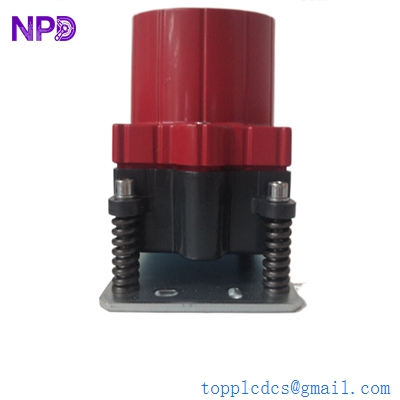

Description
- Model: DDLS 200 / 200.1-50-M12
- Part Number: 50125767
- Brand: Leuze Electronic (Germany)
- Core Function: Optical Data Transmission (Photoelectric data transceiver)
- Operating Range: 200 mm to 50,000 mm (50 meters)
- Interface: M12 Connector (Optimized for fieldbus communication)
- Transmission Rate: 2 Mbit/s
- Light Source: Infrared LED (Non-visible)
- Optical Opening Angle: ± 1° (To center of optical axis)
- Supply Voltage: 18–30 VDC
- Connection: 4-pin M12 Connector (Power and signal)
- Transmission Channel: F1 (Frequency 1) — Note: Typically used in pairs with an F2 unit.
- Enclosure Rating: IP65
- Housing Material: Metal / Die-cast aluminum
- Ambient Temperature: -5 °C to +50 °C
- Dimensions: 89 mm x 155.5 mm x 100 mm
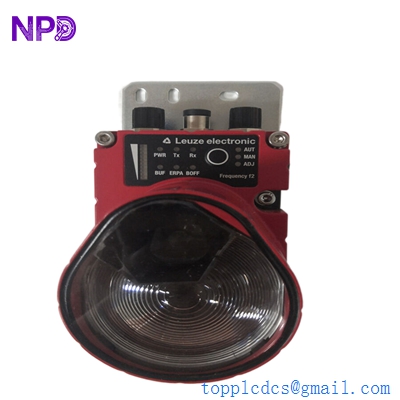
LEUZE DDLS200200.1-50-M12 50125767
Application Scenarios & Pain Points
The Leuze DDLS 200 series is the industry standard for “cable-less” data communication. In many automation environments, running physical cables to moving machinery is impossible or results in frequent cable fatigue and breakage. The DDLS 200 uses an infrared beam to bridge the gap, acting as a “virtual cable.”
Typical Application Scenarios:
- Automated Storage and Retrieval Systems (AS/RS) Used on stacker cranes to communicate between the moving carriage and the stationary PLC at the end of the aisle without using a festoon or cable chain.
- Transfer Carriages (RGV) Providing reliable data links for rail-guided vehicles where long cable runs would be prone to mechanical wear.
- Rotary Tables and Carousels Transmitting sensor data from rotating platforms where slip rings might introduce electrical noise or physical maintenance issues.
- Overhead Crane Systems Connecting the hoist control to the ground station over long distances (up to 50m) in dusty or high-vibration industrial halls.
Case Study: The “Festoon Failure”
Background: A high-speed sorting facility in a distribution center was losing communication with its primary transfer shuttle. The traditional “drag chain” cable was snapping every 4–6 months due to the high acceleration cycles.
The Problem: Every time a cable snapped, the line went down for 4 hours of repair, costing thousands in missed shipments.
The Solution: We replaced the physical cable with a pair of DDLS 200 transceivers (including the 50125767). By using optical transmission, we eliminated the mechanical stress entirely.
Result: Zero communication-related downtime for over two years. The maintenance team only needs to wipe the lenses once a month during routine cleaning.
Compatible Replacement & Pairing
The DDLS 200 operates using a “Master/Slave” or “Frequency 1/Frequency 2” relationship.
Model Number Part Number Relationship Note DDLS 200 200.1-50-M12 50125767 Frequency F1 This is the unit you are currently viewing. DDLS 200 200.2-50-M12 50125768 Frequency F2 REQUIRED PAIR: You must use an F2 unit to talk to an F1 unit. Warning: Two F1 units cannot communicate with each other. Always check if you need the matching Frequency 2 unit for a complete link.
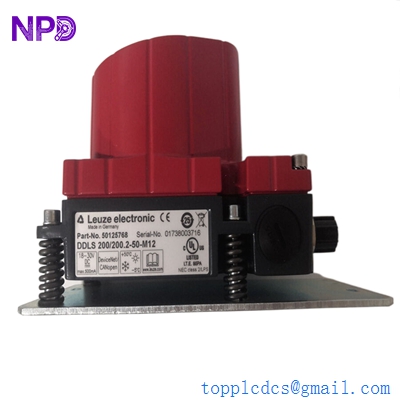
LEUZE DDLS200200.1-50-M12 50125767
Troubleshooting Quick Reference
Status LED Meaning Action PWR (Green) Power OK System is energized. AUT (Yellow) Alignment OK The beam is centered and signal quality is sufficient. LOW (Red) Low Signal Clean the lenses; check for physical obstruction or misalignment. DATA (Flash) Data Traffic Transmission is active. Technical SOP & Quality Guarantee
Optical transceivers require precise bench testing to ensure long-distance reliability:
- Alignment Sensitivity Test: We verify that the unit triggers the “AUT” signal within the specified ±1° angle.
- Distance Attenuation Check: We test the infrared intensity at simulated distances to ensure the internal LED hasn’t dimmed over time (common in used units).
- Communication Loop: We pair the 50125767 with an F2 unit and run a data loop to verify 0% packet loss.
- Seal Inspection: We check the IP65 gaskets to ensure no dust or moisture can enter the optical chamber.
Pro-Tip: When installing, ensure the mounting surface is vibration-free. A tiny 1mm wobble at the base becomes a 1-meter miss at a 50m distance. Use the Leuze alignment bracket for the best results.