
Description
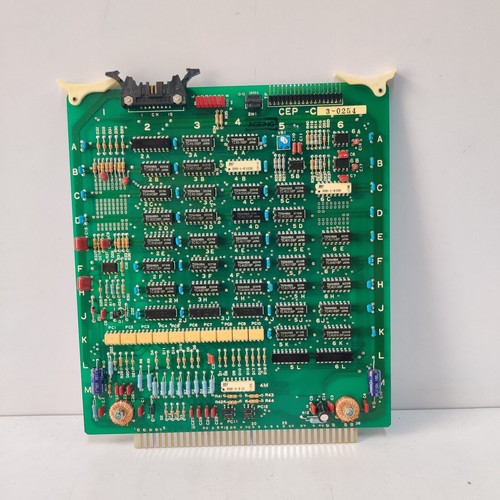
The MITSUI CEP-C 3-0254 is a specialized control PCB card utilized primarily in Mitsui-designed marine machinery and industrial engine control systems. This card acts as a high-reliability interface for data acquisition and logic processing, often found in shipboard propulsion monitoring or auxiliary equipment control. It is designed to withstand the harsh vibrations, temperature fluctuations, and corrosive environments typical of maritime and industrial engine room applications.
Technical Specifications
| Parameter | Description |
| Model | CEP-C |
| Part Number | 3-0254 |
| Manufacturer | MITSUI |
| Application | Marine Engine/Machinery Control |
| Function | Logic Processing / Signal Interface |
| PCB Features | Conformal coating for marine humidity protection |
| Weight | Approximately 0.40 kg |
| Origin | Japan |
Operational Guidelines & Usage
🔹 Startup Sequence
- Inspect the card for physical damage or evidence of moisture ingress before installation.
- Carefully seat the PCB into the designated slot in the Mitsui control rack. Ensure the locking tabs are fully engaged.
- Verify that all field-side terminal wiring is secure and matches the system wiring diagrams.
- Apply control power. The card will initialize; monitor the diagnostic indicators (typically LEDs) to confirm the module completes its power-on self-test (POST).
- Once “Ready” or “Active” indicators are steady, the system is prepared for operational command.
🔹 Shutdown Sequence
- Ensure the machinery controlled by the card is in a safe, parked state.
- De-energize the rack or the specific control circuit for the slot.
- Allow for the dissipation of static or residual voltage for at least 60 seconds.
- Utilize an anti-static wrist strap to extract the card and immediately place it in an anti-static bag for storage.
🔹 Normal Operational Flow
- The CEP-C 3-0254 continuously monitors inputs (pressure, speed, or limit switches).
- It executes onboard control logic to manage the outputs (solenoids, relays, or signal transducers).
- It provides status updates to the master controller or HMI via the system backplane or serial interface.
- It executes safety-interlock logic to prevent operation under abnormal conditions (e.g., low oil pressure or over-temperature).
🔹 Parameter Configuration
- This board often uses pre-configured logic; however, if calibration is required, use the designated Mitsui service interface or terminal.
- Ensure jumpers or DIP switches are set according to the equipment’s specific frame size or capacity.
- Document all configuration changes in the system maintenance log.
🔹 Mode Switching
- Auto Mode: The card operates autonomously based on internal logic and field sensor inputs.
- Service/Test Mode: Used during maintenance to manually verify I/O paths or check the card’s response to specific signal inputs without activating external machinery.
Common Questions & Answers (Q&A)
💡 Q: How do I identify if the 3-0254 card has reached its end of life?
A: Aside from physical failure (burned components), the most common indicator is erratic behavior or communication timeouts that cannot be resolved by cleaning the edge connector pins. If diagnostics show intermittent failures while the field wiring is verified healthy, the internal processor or memory may be degrading.
💡 Q: Is this board conformal coated?
A: Yes, being a marine-grade component, the Mitsui CEP-C series typically features a protective conformal coating to prevent moisture and salt-air corrosion. If you see signs of peeling or white residue on the board, it may be time to replace it to prevent short-circuiting.
💡 Q: Why does the system indicate a “Logic Error”?
A: A logic error typically points to a discrepancy between the card’s programmed state and the physical feedback it receives. Check for sticking relays or sensors that may be giving contradictory input signals (e.g., a “closed” valve indicating “open”).
💡 Q: What is the recommended maintenance schedule?
A: Annually inspect the board for dust accumulation. Given the marine environment, check the contacts for oxidation during every major dry-dock or significant maintenance interval.