Description
⚙️ Product Overview
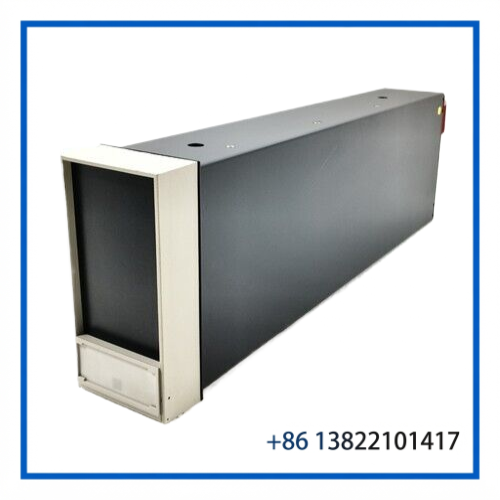
The MOORE 320C2NNF K029670-010 is an Independent Computer Interface Module used in Moore industrial process-control systems. The 320C2NNF belongs to the legacy generation of Moore control and interface hardware and is intended to provide computer-level interfacing within an industrial automation environment.
This module is particularly relevant to maintenance and replacement projects involving existing Moore control installations. Its primary function is associated with interfacing control-system information with computer-based supervisory or process-management equipment.
The 320C2NNF identification is important when sourcing a replacement because legacy Moore systems can contain multiple controller, I/O, interface, and communication assemblies with similar physical formats.
🔧 Key Features
- 🖥️ Independent computer interface architecture
- 🏭 Designed for industrial process-control systems
- 🔌 Interface between control equipment and computer-based systems
- 🧩 Part of the legacy Moore automation platform
- ⚙️ Suitable for existing system maintenance
- 🔄 Useful for replacement and restoration projects
- 📡 Supports computer/control-system interfacing
- 🛠️ Suitable as a spare for compatible Moore installations
- 📋 Model identification: 320C2NNF
- 🔢 Associated part number: K029670-010
📊 Technical Datasheet
| Parameter | Specification |
|---|---|
| Brand | MOORE |
| Model | 320C2NNF |
| Part Number | K029670-010 |
| Series | Moore 320 Series |
| Product Name | Independent Computer Interface |
| Product Type | Computer / Control-System Interface Module |
| Primary Function | Computer-Based Process-Control Interface |
| System Application | Industrial Process Automation |
| Module Architecture | Legacy Moore Control System |
| Product Status | Legacy / Replacement Spare |
🏭 Industrial Automation Applications
The 320C2NNF is intended for industrial control environments in which process-control information must interface with computer-based supervisory or monitoring equipment.
Potential applications include:
- Process-control systems
- Industrial automation
- Computer-based supervisory systems
- Legacy DCS installations
- Plant monitoring systems
- Process data acquisition
- Control-system communications
- Industrial equipment modernization
- Maintenance of legacy Moore systems
Because the module belongs to an older control architecture, its actual function can depend on the surrounding system hardware and installed configuration.
🖥️ Computer Interface Function
The Independent Computer Interface designation indicates that the 320C2NNF is intended to provide an interface between Moore control equipment and computer-level system functions.
In a typical legacy installation, the module may form part of the communication path between control-system hardware and a supervisory computer or higher-level process-management system.
The complete signal path can vary according to the original system architecture. Therefore, the module should be evaluated together with its associated racks, controllers, communication hardware, and cabling.
🔌 System Integration
When replacing a 320C2NNF, verify the complete system configuration before installation.
Important items include:
- Confirm model 320C2NNF.
- Confirm part number K029670-010.
- Compare the original module identification label.
- Check the rack or mounting position.
- Inspect mating connectors.
- Verify associated communication hardware.
- Check existing system cabling.
- Confirm the host computer/control-system configuration.
- Review the original control-system documentation.
- Test communication after installation.
The 320C2NNF should not be treated as a generic computer interface that can automatically replace another Moore module simply because the physical dimensions are similar.
🛠️ Installation & Commissioning
Before replacing the module, shut down or isolate the applicable control-system section according to the plant’s maintenance procedure.
Carefully document the existing cable arrangement before removal. Inspect connectors and the module socket for contamination, corrosion, bent pins, or mechanical damage.
After installation:
- Verify the module is correctly seated.
- Check all cable connections.
- Confirm the correct rack position.
- Restore system power according to the approved procedure.
- Check module status.
- Verify computer/control-system communication.
- Confirm process data transfer.
- Check for communication or diagnostic alarms.
- Compare system operation with the original configuration.
For a running process plant, replacement should be performed by qualified control-system personnel familiar with the installed Moore architecture.
🔍 Troubleshooting Guide
Computer communication is unavailable
Check module seating, communication cabling, associated interface hardware, and the host computer configuration.
Module does not initialize
Check system power, rack connections, module installation position, and associated control hardware.
Intermittent communication
Inspect connectors and cables for poor contact. Aging connectors and cable assemblies should receive particular attention in legacy systems.
Incorrect process data
Check the complete communication path and verify that the host system is receiving data from the correct control-system source.
Replacement module does not operate correctly
Confirm the full model and part number. A similar-looking Moore interface module may have a different system function or configuration.
Communication faults appear after replacement
Compare the original and replacement module identification, rack position, wiring, and system configuration before further troubleshooting.
🔧 Maintenance Recommendations
For legacy Moore control installations, preventive maintenance can significantly simplify future troubleshooting.
Recommended practices include:
- Inspect module connectors regularly.
- Keep control cabinets clean and dry.
- Check for corrosion or oxidation.
- Inspect communication cables.
- Record installed module numbers.
- Maintain system configuration documentation.
- Keep compatible spare modules available.
- Monitor intermittent communication problems.
- Label cables before module replacement.
- Record replacement dates and test results.
For older process-control equipment, maintaining a tested spare is especially useful when the original platform is no longer in active production.
⚠️ Replacement Considerations
The MOORE 320C2NNF is a legacy industrial automation component. When purchasing a replacement, the complete identification should be matched rather than relying on the product family alone.
Recommended verification points include:
- 320C2NNF model
- K029670-010 part number
- Hardware revision
- Connector arrangement
- Rack location
- Associated Moore modules
- Host computer/interface configuration
- Existing communication wiring
- Original system documentation
If the existing system has been modified over its service life, checking the installed configuration before replacement is particularly important.
🧰 Spare-Part Management
For plants operating older Moore control systems, a spare-parts strategy can include:
- One tested computer-interface spare
- Critical controller modules
- Power-supply modules
- Communication/interface cards
- I/O modules
- Connector and cable assemblies
- Configuration documentation
A complete inventory of module numbers can help maintenance personnel identify the correct replacement quickly during an unexpected system fault.
❓ Frequently Asked Questions
Q1: What is the MOORE 320C2NNF?
It is an Independent Computer Interface module used in legacy Moore industrial control systems.
Q2: What is the associated part number?
The supplied identification is K029670-010.
Q3: Is the 320C2NNF a PLC CPU?
No. It is identified as an Independent Computer Interface rather than a general-purpose PLC CPU.
Q4: What is its primary purpose?
Its primary purpose is computer-level interfacing within a Moore process-control environment.
Q5: Is it suitable for legacy process-control systems?
Yes. It is particularly relevant for maintenance and replacement of compatible existing Moore installations.
Q6: Can it be directly replaced by another Moore 320-series module?
Not necessarily. The exact model and part number should be matched because different modules can perform different functions.
Q7: What should be checked before installation?
Verify the model, part number, rack position, connectors, wiring, associated hardware, and host-system configuration.
Q8: Is the module suitable for new control-system designs?
It is primarily valuable for maintaining existing or legacy Moore installations rather than designing a new control system.
Q9: Why is the complete part number important?
The complete identification helps distinguish the required interface configuration from other Moore control and interface modules.
Q10: What is the best use for a spare 320C2NNF?
A tested spare can be maintained for rapid replacement when a compatible legacy Moore control system experiences an interface-module failure.
📦 Recommended Related MOORE Models
- MOORE 320A2NNF – Controller Module
- MOORE 320C2NNF – Independent Computer Interface
- MOORE 352-BA21NNF – Digital Control PCB
- MOORE 352EA21CNF – Control Module
- MOORE 16133-71/9 – Standard Analog Module
- MOORE 16147-51-2 – ACM Advanced Control Module
- MOORE 39ACM12CAN – Advanced Control Module
- MOORE 39ACM24BDN – APACS+ Advanced Control Module
- MOORE 39SAMCAN – APACS+ Standard Analog Module
- MOORE 39SDM024DCCBN – APACS+ Standard Discrete Module
🏁 Product Summary
The MOORE 320C2NNF K029670-010 Independent Computer Interface Module is a legacy industrial automation component intended for computer-level interfacing within Moore process-control systems.
Its primary value today is as a maintenance, replacement, and system-restoration spare for compatible Moore installations. Before installation, verify the complete model and part number together with the rack position, cabling, associated modules, and host-system configuration.