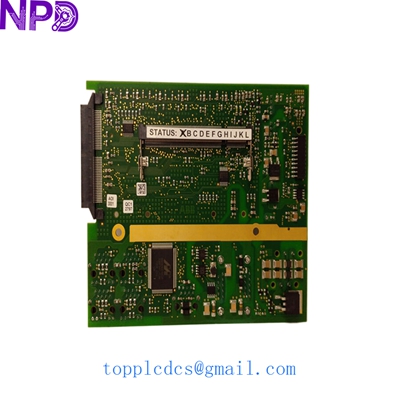
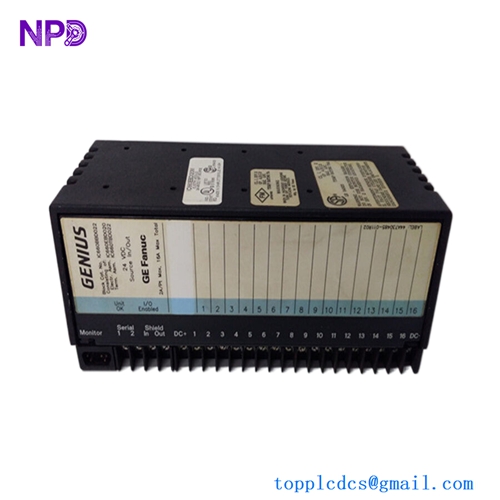
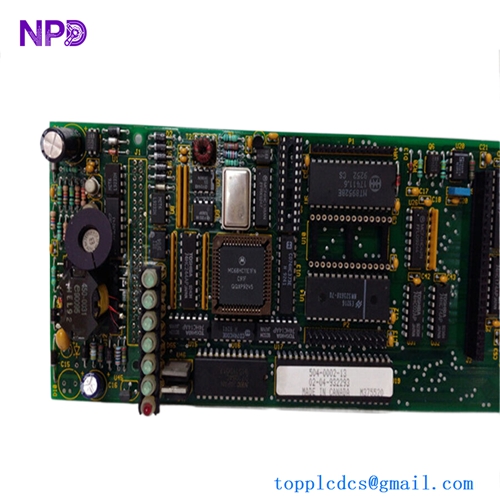
Description
- Model: Motorola MVME-147A
- Brand: Motorola (now part of Artesyn/SMART Embedded Computing)
- Series: MVME (VMEbus Single Board Computer)
- Core Function: High-performance system controller and processor for VMEbus racks
- Product Type: Single Board Computer (SBC)
- Key Specs: MC68030 CPU (25/33 MHz) MC68882 FPU Ethernet & SCSI-1 Interface
- Processor: Motorola MC68030 (32-bit CISC)
- Floating Point: MC68882 Floating Point Coprocessor (FPU)
- Memory Options: 4 MB, 8 MB, 16 MB, or 32 MB of Shared On-board DRAM
- I/O Interfaces:
- Ethernet: Intel 82596CA (AUI/10Base2 via transition module)
- SCSI: WD33C93 SCSI-1 Controller
- Serial: 4 x RS-232-C ports (via CD1400)
- Parallel: Centronics-compatible printer port
- Timers: 4 x 32-bit timers; Real-time clock with battery backup
- VMEbus Interface: A32/D32 Master/Slave; VMEbus System Controller functions
- EPROM Sockets: 2 x 32-pin sockets for system monitor (133Bug)
- Power Consumption: 5.0 V DC @ 4.0 Amps (Typical)
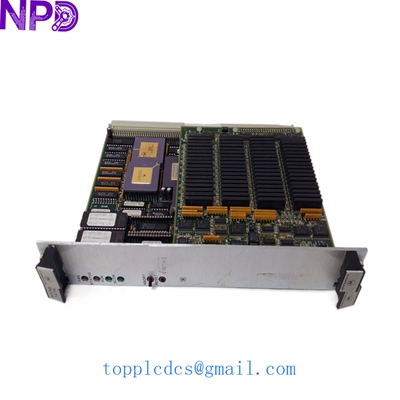
MOTOROLA MVME-147A
Application Scenarios & Pain Points
The MVME-147A was a foundational board in the evolution of VMEbus systems, widely used in military, aerospace, and semiconductor manufacturing equipment. In these high-uptime environments, the MVME-147A often handles real-time data acquisition and movement. The primary pain point today is “Memory Leakage” and “Battery Corrosion.” The on-board NVRAM battery often leaks after 20 years of service, destroying the PCB traces near the clock circuit. Furthermore, finding boards with functional SCSI controllers is becoming increasingly difficult as these vintage chips reach their end-of-life.
Typical Application Scenarios:
- Semiconductor Lithography: Managing the motion control loops for wafer stages.
- Defense Radar Systems: Real-time signal processing in legacy ground-based radar installations.
- Telecommunications: Controlling high-density cross-connect switches in older central offices.
- Research Laboratories: Serving as the crate controller for physics experiments (CERN/Fermilab heritage).
Case Study: The “Time-Travel” Radar
Background: A national air traffic control backup system used a cluster of MVME-147A boards to process legacy secondary surveillance radar data.
The Problem: The system began losing its configuration settings every time it was power-cycled for maintenance. The “Time and Date” would reset to 1988, causing the logging software to crash because it couldn’t handle “future” timestamps.
The Solution: We provided a refurbished MVME-147A-1. Before shipping, we didn’t just replace the battery; we installed a remote battery socket and performed a 72-hour burn-in using the “133Bug” diagnostic suite to stress-test the 68030 processor and the parity-checked DRAM.
The Result: The radar system regained its “memory.” The client saved hundreds of thousands of dollars by avoiding a total system overhaul that would have required re-certifying new software for an aging infrastructure.
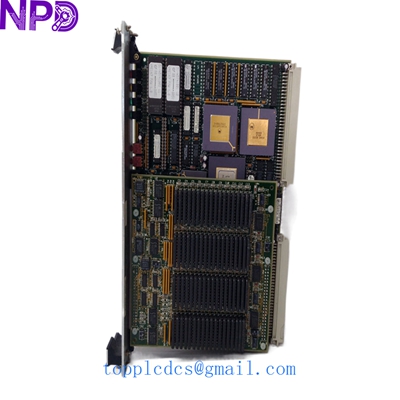
MOTOROLA MVME-147A
Compatible Replacement Models
| Original Model | Replacement Model | Compatibility | Main Difference | Effort Level |
| MVME-147A | MVME-147A-1 | ✅ Direct Replace | Later revision, better heat dissipation | Zero (Plug and Play) |
| MVME-147A | MVME-167 | ⚠️ Software Compatible | MC68040 CPU; much faster | High (Software recompilation) |
| MVME-147A | MVME-147 (Non-A) | ✅ Direct Replace | Earlier version, lower DRAM capacity | Low (Check RAM size) |
SOP & Quality Transparency
Vintage VME boards require a “Preservationist” approach to testing. We don’t just “power them on”; we validate the silicon.
- NVRAM/Battery Audit: We check for any sign of corrosion. Every board we ship has a fresh, tested battery to ensure your BIOS/Bug settings are preserved.
- 133Bug Diagnostic Suite: We run the full Motorola 133Bug self-test, which cycles through every register in the 68030 and every bit in the DRAM.
- Ethernet Loopback: We verify the Intel 82596CA controller can successfully transmit and receive packets across a local network segment.
- VMEbus Arbitration Test: We install the board into a multi-master rack to ensure its VMEbus requester and arbiter functions correctly handle bus contention.
- Pin & Connector Integrity: We use a jeweler’s loupe to inspect the 96-pin DIN connectors (P1 and P2). We look for “mushroomed” or gold-flaked pins that could cause intermittent backplane errors.
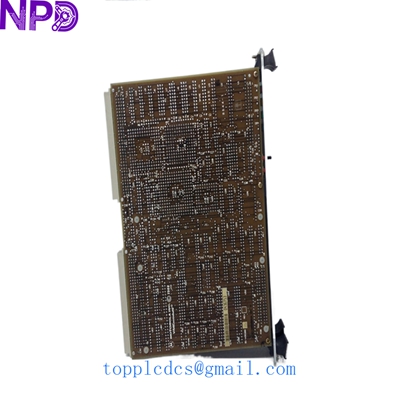
MOTOROLA MVME-147A
Troubleshooting Quick Reference
| Symptom | Possible Cause | Relation to MVME-147A | Quick Check |
| “FAIL” LED Red (Solid) | Processor/EPROM Failure | ✅ High | Ensure EPROMs are seated correctly in their sockets. |
| System Boots to “Bug>” Prompt | Normal / Battery Dead | ⚠️ Medium | If date/time is lost, replace the M48T02/12 NVRAM chip. |
| SCSI Device Not Found | WD33C93 Controller Fail | ✅ High | Check for termination power (TERMPWR) on the SCSI bus. |
| VME Bus Error (BERR) | Addressing Conflict | ⚠️ Medium | Verify the VME jump settings match your backplane map. |
Engineer’s Field Note: ❗ Mind the Jumpers. The MVME-147A has over 20 jumper headers (J1-J25) that control everything from SCSI termination to VMEbus mastership. Never install a replacement board without verifying every jumper against your original board. A single misplaced jumper on J1 can prevent the entire rack from booting.
Additional Inventory Models
Looking for other VMEbus or Motorola components? We have these in stock:
- Motorola MVME-162-222 68040 SBC
- Motorola MVME-167-002 High-End 68040 SBC
- Motorola MVME-177 High-Performance 68060 SBC
- Motorola MVME-712-M Transition Module
- Motorola MVME-242-1 32MB DRAM Mezzanine
- Motorola MVME-147A (This Model)
- Motorola MVME-332XT Intelligent Communication Controller
- Motorola MVME-110 VME Processor
For technical datasheets or to request an express quote, visit www.newplcdcs.com.