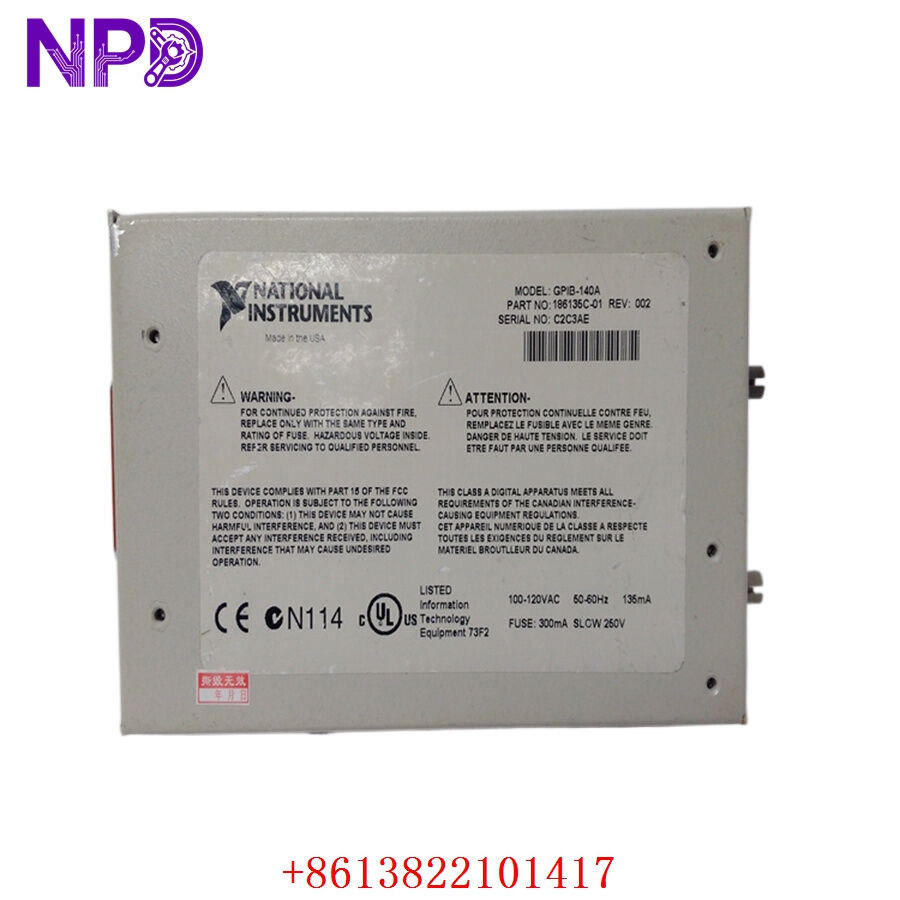

Description
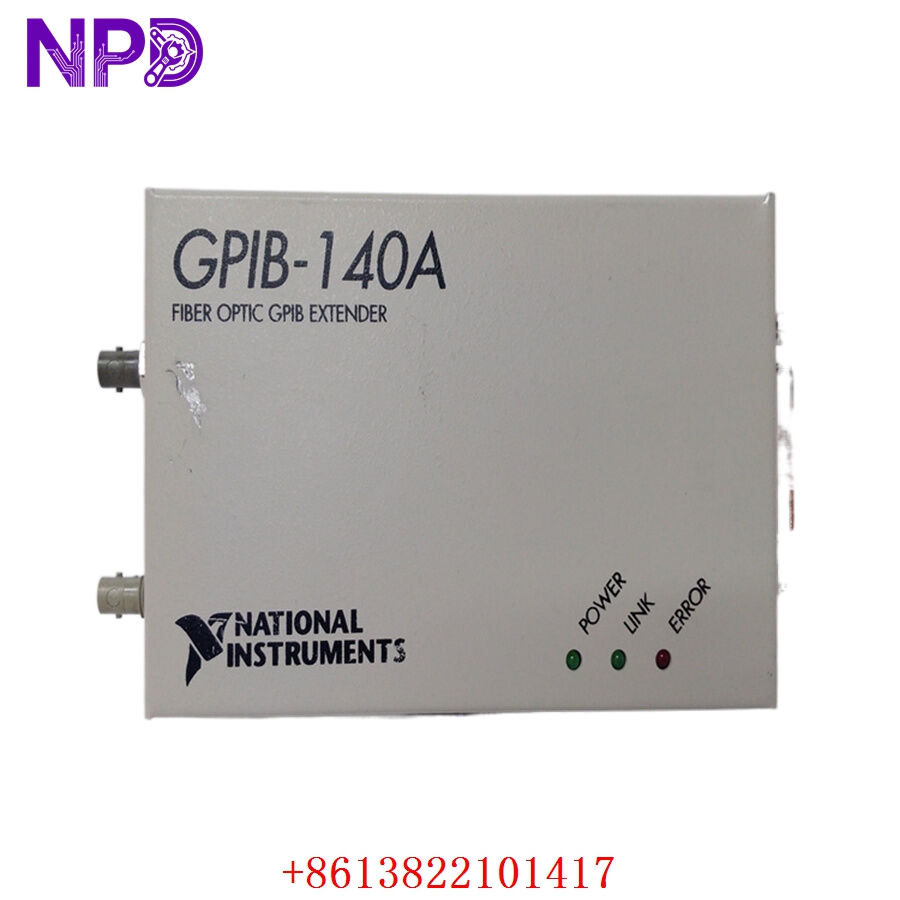
The NI GPIB-140A is a high-performance bus extender designed to overcome the physical distance limitations of the standard IEEE 488 (GPIB) specification. By utilizing fiber-optic cabling, this module allows for the expansion of a GPIB system up to 2 kilometers without compromising signal integrity or speed. It effectively bridges the gap between a controller and remote instruments, providing electrical isolation and immunity from electromagnetic interference (EMI), which is critical in industrial or laboratory environments with high electrical noise.
Product Specifications
- Model Identification: National Instruments GPIB-140A (Part Number: 776686-01)
- Maximum Distance: Up to 2 km (1.24 miles) between units
- Data Transfer Rate: Up to 1.1 MB/s (standard IEEE 488)
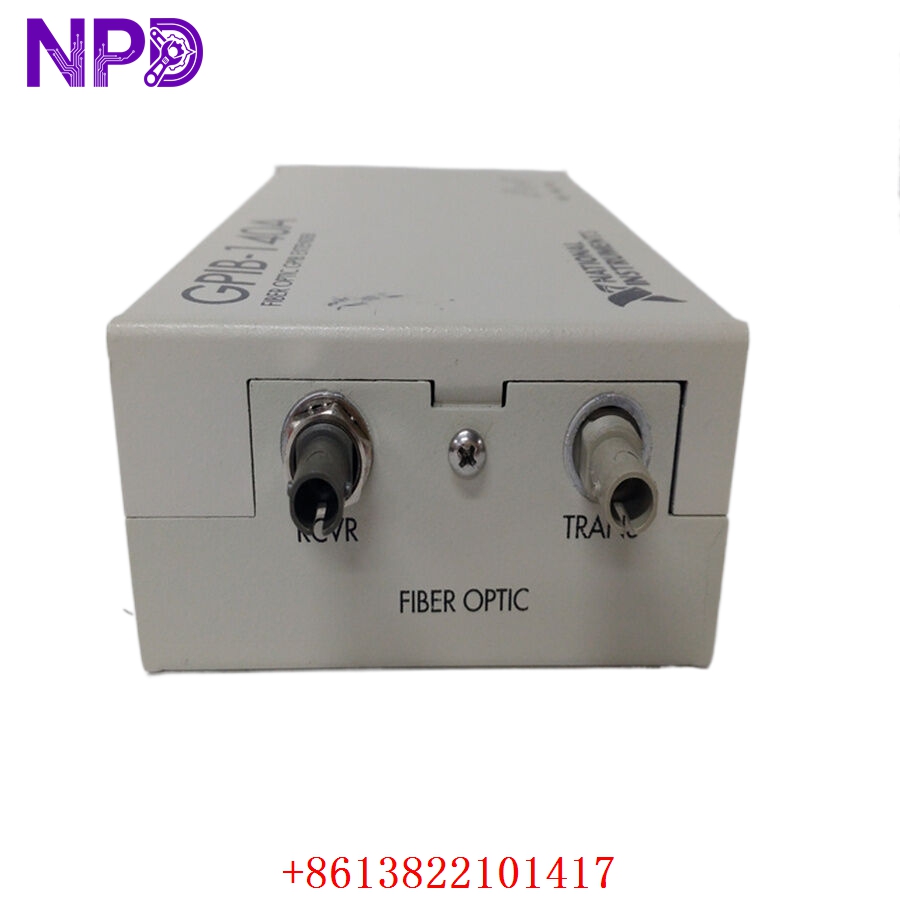
- Cabling Interface: Fiber-optic (standard ST connectors)
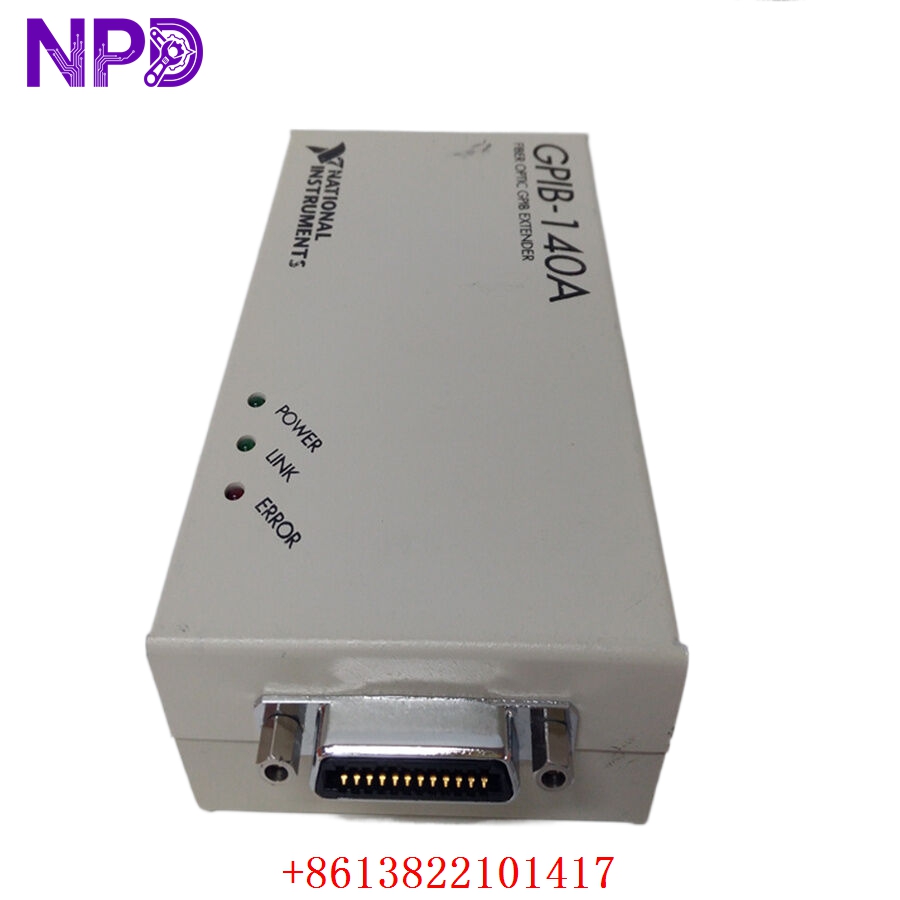
- GPIB Interface: Standard 24-pin IEEE 488 connector
- Isolation: Total electrical isolation via fiber-optic medium
- Dimensions: 188 mm x 132 mm x 42 mm
- Weight: 0.65 kg
- Country of Origin: USA / Hungary
Application Fields
The NI GPIB-140A is essential for complex test and measurement setups where instruments are geographically dispersed:
- Automated Test Equipment (ATE): Connecting a centralized control PC to remote test stations on a factory floor.
- Aerospace & Defense: Remote monitoring of sensors in hazardous or shielded environments like anechoic chambers.
- Research Laboratories: Extending GPIB control across different rooms or floors in a university or research facility.
- Industrial Monitoring: Linking distributed data acquisition hardware to a central monitoring station in high-EMI environments.
- Energy Sector: Controlling power monitoring equipment located at a distance from the main operator desk.
Product Operation Instructions
- System Setup: The GPIB-140A operates in pairs. You will need one unit at the local (Controller) end and one unit at the remote (Instrument) end.
- Fiber-Optic Connection: Connect the two units using a duplex fiber-optic cable with ST connectors. Ensure the “Transmit” (TX) port of one unit connects to the “Receive” (RX) port of the other.
- GPIB Connection: Plug the local unit into your GPIB Controller (e.g., a PCI-GPIB card or GPIB-USB-HS). Plug the remote unit into your GPIB instrument or instrument cluster.
- Power On: Apply power using the specified NI power adapter. The “Power” LED should illuminate. The “Ready” LED will indicate when a stable fiber link is established.
- Software Transparency: The GPIB-140A is transparent to software. No special drivers are required for the extender itself; your existing NI-488.2 software will communicate with the remote instruments as if they were locally connected.
Q&A: Common Questions
Q: Does using the GPIB-140A slow down my data transfer speed? A: The GPIB-140A supports the maximum data rates allowed by the IEEE 488.1 standard. While there is a microscopic propagation delay due to the length of the fiber, it is generally negligible for standard instrument control applications.
Q: Can I use this to connect multiple remote locations? A: No, the GPIB-140A is a point-to-point extender. To connect multiple remote sites, you would need a separate pair of extenders for each branch or use a GPIB hub/bridge.
Q: Is the fiber-optic cable included with the module? A: Usually, fiber-optic cables are sold separately to allow users to choose the specific length required for their facility layout.
Similar Model Recommendations
- NI GPIB-140A/2 (Extended distance version)
- NI GPIB-ENET/1000 (GPIB to Ethernet Controller)
- NI GPIB-USB-HS+ (High-speed USB Interface)
- NI PCI-GPIB (Plug-in Controller Card)
- NI GPIB-RS232 (Serial to GPIB Converter)