Description
🔹 Product Overview
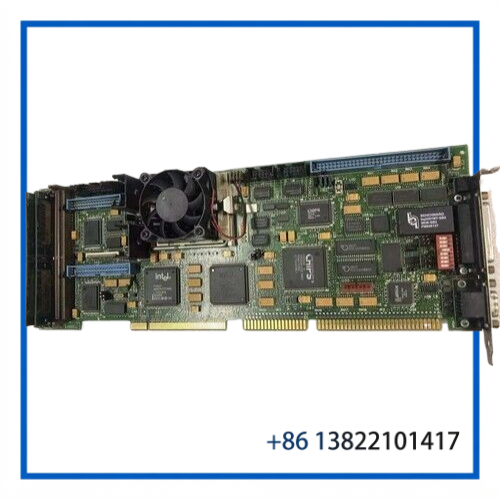
The Novellus XVME-560 2800303 is a legacy VMEbus analog input/A/D conversion board used in industrial and semiconductor equipment control systems. The board is associated with the Xycom XVME-560 platform and provides high-channel-count analog signal acquisition for VME-based control architectures.
The XVME-560 performs 12-bit analog-to-digital conversion and can accommodate up to 64 single-ended analog input channels or 32 differential channels, depending on the selected input configuration. It uses programmable gain and selectable input ranges to adapt the acquisition system to different sensor and instrumentation signals.
⚙️ Key Features
- Model: XVME-560
- Novellus Part Number: 2800303
- Board Type: VMEbus Analog Input / A/D Conversion Module
- A/D Resolution: 12-bit
- Input Capacity: Up to 64 single-ended or 32 differential channels
- Input Ranges: Selectable ranges including 0–5 V, 0–10 V, ±2.5 V, ±5 V and ±10 V
- Programmable Gain: 1, 2, 4 or 8
- VMEbus-Compatible: Designed for integration into legacy VME control systems
- Interrupt Capability: Supports VMEbus interrupt operation
- Typical Conversion Rate: Up to approximately 20 kHz, depending on operating configuration
- Application: Industrial control, semiconductor manufacturing equipment and analog data acquisition
📋 Product Datasheet
| Parameter | Specification |
|---|---|
| Brand | Novellus / Xycom |
| Model | XVME-560 |
| Part Number | 2800303 |
| Product Name | VME A/D Analog Input Card |
| Product Type | VMEbus Analog Input Module |
| Conversion | 12-bit A/D |
| Input Channels | Up to 64 single-ended / 32 differential |
| Input Range | 0–5 V, 0–10 V, ±2.5 V, ±5 V, ±10 V, configuration dependent |
| Condition | New – Open Box |
| Installation | VMEbus backplane |
| Power | Supplied through VMEbus / onboard conversion circuitry; verify system configuration |
| Dimensions | Verify against the installed board and mechanical revision |
| Weight | Verify against the actual unit |
🔌 Analog Signal Acquisition
The XVME-560 separates the analog acquisition circuitry from the VMEbus interface section. Incoming analog signals are multiplexed and conditioned before being processed by the A/D converter.
The programmable gain function allows the control system to adapt the acquisition range to different signal levels. This is useful when a single VME system needs to monitor sensors with different output amplitudes.
Typical signal sources can include:
- Temperature transmitters
- RTDs and thermistors
- Strain gauges
- Load cells
- Tachometer generators
- Process instrumentation
- General analog sensors
For differential measurements, the channel wiring should follow the original system’s signal-grounding and shielding design to minimize common-mode noise and measurement errors.
🖥️ VMEbus System Integration
The XVME-560 communicates with the host processor through the VMEbus backplane. Software accesses board registers and controls channel selection, gain configuration, conversion operation and data acquisition.
A typical system architecture can include:
Sensor → Signal Wiring → XVME-560 → VMEbus → Host CPU → Control Software
The board may operate in different acquisition modes, including sequential channel, single-channel, random-channel and externally triggered conversion modes.
The software configuration must match the installed board revision, VME address configuration, channel wiring and gain settings. When replacing an existing board, compare the original board’s jumpers, address configuration and revision markings before installation.
🏭 Typical Applications
The Novellus XVME-560 is particularly useful as a replacement spare for older semiconductor manufacturing equipment and other VME-based industrial control platforms.
Typical applications include:
- Semiconductor process equipment
- Wafer-processing systems
- Industrial data acquisition
- Process monitoring
- Temperature measurement
- Pressure and instrumentation monitoring
- Motion and machine monitoring
- Legacy VME automation systems
- Equipment refurbishment and control-system maintenance
🔧 Installation & Maintenance
Before installation, inspect the PCB for damaged connectors, bent pins, corrosion, contamination or loose components.
Recommended replacement procedure:
- Record the original board model, part number and revision.
- Power down the host equipment according to the equipment manufacturer’s procedure.
- Remove VMEbus power and allow sufficient discharge time.
- Document existing jumper and address settings.
- Inspect the VME backplane connector.
- Install the XVME-560 without forcing the board into the card guide.
- Confirm all external analog connections.
- Restore power and verify board recognition.
- Check representative analog channels against known reference signals.
- Record the replacement board number and test results for maintenance history.
For semiconductor equipment, keep the board protected from dust, conductive particles and electrostatic discharge during handling.
🛠️ Troubleshooting Guide
No board communication
Check VMEbus seating, card address settings, backplane condition and host software configuration.
Incorrect analog readings
Check the selected input range, programmable gain, channel wiring and sensor reference. A mismatch between software configuration and physical jumper settings can produce incorrect readings.
One channel does not respond
Inspect the associated field wiring, connector and signal source. Test the same sensor through another known-good acquisition path where possible.
Multiple channels show unstable values
Check grounding, shielding, common-mode voltage and external electrical noise. Verify that the signal source is within the configured input range.
Board is not detected after replacement
Compare the replacement board’s revision and configuration with the original unit. Legacy VME systems can depend on specific address, interrupt and software settings.
❓ FAQ
Q: Is the XVME-560 an analog output card?
A: No. The XVME-560 is primarily an analog input/A/D conversion module. It converts external analog signals into digital data for processing by the VMEbus control system.
Q: How many analog inputs does it support?
A: The XVME-560 supports up to 64 single-ended inputs or 32 differential inputs, depending on the configuration.
Q: What is the A/D resolution?
A: The standard XVME-560 provides 12-bit A/D conversion.
Q: Can the input gain be programmed?
A: Yes. The documented gain settings include 1, 2, 4 and 8.
Q: Is 2800303 the same as XVME-560?
A: The supplied listing identifies 2800303 as the Novellus part number associated with the XVME-560 board. Always compare the PCB label and revision before ordering a replacement.
Q: Is this suitable for a semiconductor equipment repair?
A: It can be suitable for legacy Novellus equipment using this specific VME A/D configuration. Verify the equipment model, board revision, connector configuration and software requirements before installation.
Q: Does the board require an external power supply?
A: The XVME-560 is designed for VMEbus system installation and includes onboard power-conversion circuitry. Exact power requirements should be verified against the host VME system and board revision.
🔗 Recommended Related Xycom Models
- Xycom XVME-500 – VME analog input module
- Xycom XVME-500/1 – Analog input module
- Xycom XVME-500/2 – Programmable-gain analog input module
- Xycom XVME-500/3 – High-speed analog input module
- Xycom XVME-505-1 – Analog output module
- Xycom XVME-530 – Analog output module
- Xycom XVME-212 – VME digital input module
- Xycom XVME-240 – VME digital I/O module
- Xycom XVME-244 – Optically isolated digital I/O module
- Xycom XVME-956 – PC/AT I/O expansion module
📦 Spare-Part Recommendation
For legacy Novellus equipment, the XVME-560 should be treated as a system-specific VME acquisition spare rather than a generic plug-and-play analog card. Before purchasing or installing a replacement, match the XVME-560 model, Novellus 2800303 part number, board revision, VME configuration, jumper settings and external connector arrangement with the existing installation.
For maintenance planning, keeping a tested spare available can reduce downtime when an aging VME-based acquisition board develops intermittent analog channels or communication problems.