Description
🔹 Product Overview
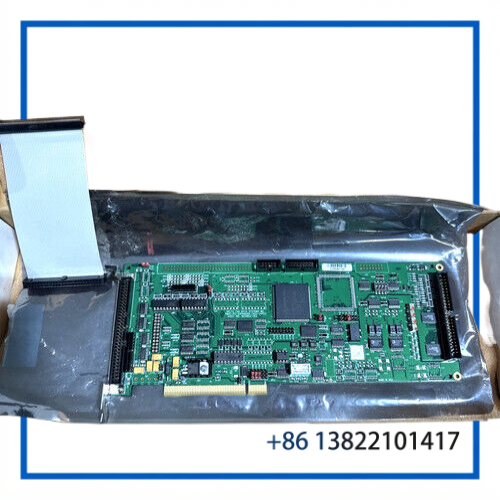
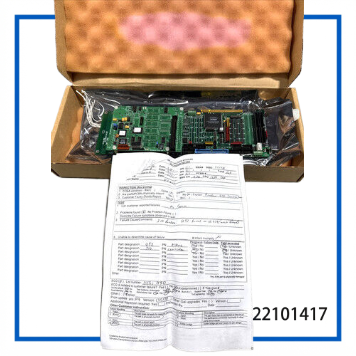
The OMRON DELTA TAU 400-603367-10X is a PMAC2 PCI programmable multi-axis motion controller designed for industrial machine control, servo systems, stepper applications, and precision motion-control equipment.
The PMAC2 PCI is a full-size PCI-bus controller with a piggyback CPU board. It can operate through a host computer’s PCI interface or be configured for standalone operation through its serial interface. The controller software supports up to eight axes and can interface with sinewave/direct-PWM servo drives as well as pulse-and-direction stepper drives.
This configuration is identified with the 8K×16 dual-ported RAM option, which provides a shared-memory communication path between the PMAC2 controller and host computer. The exact option configuration should be verified from the physical board markings before installation.
📋 Product Datasheet
| Parameter | Specification |
|---|---|
| Brand | OMRON DELTA TAU |
| Model | 400-603367-10X |
| Product Series | PMAC2 PCI |
| Product Name | PMAC2 PCI 8-Axis Motion Controller |
| Product Type | Programmable Multi-Axis Motion Controller |
| Bus Interface | PCI |
| Motion Capacity | Up to 8 Axes |
| RAM Option | 8K×16 Dual-Ported RAM |
| Communication | PCI / RS-232 / RS-422 |
| Condition / Status | Verify actual unit condition before installation |
⚙️ Key Features
- PMAC2 PCI programmable multi-axis controller
- Supports up to eight axes of motion control
- Full-size PCI-bus expansion card architecture
- Piggyback CPU board design
- Supports servo and stepper drive interfaces
- Compatible with direct-PWM, sinewave, and pulse-and-direction control architectures
- 8K×16 dual-ported RAM option for host communication
- RS-232 / RS-422 serial communication capability
- Programmable motion and PLC functions
- Suitable for OEM machine-control and retrofit applications
The PMAC2 PCI can provide onboard axis-interface circuitry and can also work with external axis-interface accessories for expanded motion-control configurations.
🏭 Industrial Motion-Control Applications
The PMAC2 PCI is intended for applications where coordinated motion and programmable axis control are required.
Typical applications include:
- CNC machine tools
- Semiconductor manufacturing equipment
- Robotics and automated positioning systems
- Precision assembly machinery
- Packaging equipment
- Electronic manufacturing equipment
- Multi-axis inspection machines
- Material handling systems
- Servo-driven production machinery
- Legacy industrial PC motion-control systems
For retrofit applications, the controller should be matched to the original machine configuration, including axis count, amplifier interface, encoder feedback, I/O configuration, firmware, and motion programs.
🔌 Dual-Ported RAM Function
The 8K×16 dual-ported RAM option provides a shared-memory communication path between the PMAC2 PCI controller and the host computer.
This architecture can be useful when the machine requires frequent exchange of motion commands, status information, variables, or other controller data. Delta Tau documentation identifies dual-ported RAM as a high-speed communication method for host/controller data exchange.
When replacing a controller, verify whether the original system depends on the dual-ported RAM option. A PMAC2 PCI board without the required memory option may not be a direct functional replacement even if the base model appears similar.
🔧 System Integration
Before integrating the 400-603367-10X into an existing machine, verify:
- PMAC2 PCI model and complete option code.
- Number of controlled axes.
- CPU and processor option.
- Onboard axis-interface configuration.
- Servo amplifier command format.
- Stepper pulse-and-direction requirements.
- Encoder and feedback wiring.
- PCI host-computer compatibility.
- Dual-ported RAM configuration.
- PMAC firmware and machine software.
- I/O assignments.
- Existing motion programs and parameters.
The PMAC2 PCI can communicate through the PCI bus and can also support serial communication for standalone configurations.
🛠️ Installation & Maintenance
Before installation, shut down the machine and isolate all relevant electrical power.
Check the controller for:
- Bent or contaminated connectors
- Damaged PCI contacts
- Loose piggyback-board connections
- Signs of overheating
- Corrosion or oxidation
- Damaged components
- Missing jumpers or hardware
- Abnormal PCB contamination
Because the PMAC2 PCI is an industrial motion controller containing static-sensitive electronics, appropriate ESD precautions should be used during handling and installation. Industrial installations should also protect the controller from conductive materials, excessive moisture, abnormal temperatures, and other environmental conditions that could damage electronic circuitry.
🔍 Troubleshooting
Controller is not recognized by the host PC:
Check PCI slot compatibility, board seating, power, BIOS/PC configuration, and installed PMAC software or drivers.
Host communication is unstable:
If the system uses dual-ported RAM, verify the installed RAM option and corresponding software configuration. Also inspect PCI contacts and board connections.
Axis cannot be enabled:
Check amplifier-enable signals, axis configuration, I/O assignments, servo parameters, and emergency-stop circuits.
Motor does not respond to commands:
Verify the command interface type, amplifier wiring, axis assignment, feedback configuration, and motion program.
Position feedback is incorrect:
Check encoder wiring, feedback polarity, encoder scaling, axis parameters, and servo configuration.
Replacement controller does not behave like the original:
Compare the complete part number and installed options. The base PMAC2 PCI model alone does not identify every hardware configuration.
✅ First-Operation Checklist
Before returning the machine to production:
- Confirm 400-603367-10X identification.
- Verify the complete board option configuration.
- Confirm the 8K×16 dual-ported RAM option if required.
- Compare the replacement with the original controller.
- Verify PCI host compatibility.
- Confirm axis count and axis assignments.
- Check amplifier and feedback connections.
- Restore verified PMAC parameters.
- Load the correct motion-control program.
- Test each axis at low speed.
- Verify limits, feedback, direction, and emergency-stop functions.
- Perform a controlled production test.
❓ FAQ
What is the OMRON DELTA TAU 400-603367-10X?
It is a PMAC2 PCI programmable multi-axis motion controller used for industrial servo, stepper, CNC, robotics, and automated machine applications.
How many axes can the PMAC2 PCI control?
The PMAC2 PCI software is designed for up to eight axes of control.
What is the 8K×16 option?
It refers to the dual-ported RAM option used for shared-memory communication between the controller and host computer.
Is this only a PCI interface card?
No. It is a programmable motion controller that uses the PCI bus for host communication and provides motion-control functions for servo and stepper systems.
Can it be used without a PC?
The PMAC2 PCI supports serial communication and can be configured for standalone operation, depending on the overall system configuration.
Can another PMAC2 PCI replace this model?
Only after checking the complete hardware and option configuration. Processor, axis-interface, memory, firmware, and application requirements should all be compared.
🔄 Related OMRON DELTA TAU Models / Series
- PMAC2 PCI
- PMAC2 PCI Lite
- PMAC PCI
- PMAC PCI Lite
- Turbo PMAC2 PCI
- Turbo PMAC2 PCI Lite
- PMAC2A Series
- UMAC Motion Controller
- ACC-8 Axis Interface Series
- ACC-24P / ACC-24P2 Axis Interface Series
These are related Delta Tau motion-control products and interfaces. They should not be treated as direct substitutes without confirming the original machine’s electrical, software, processor, axis, and communication requirements.
📦 Spare-Parts & Lifecycle Planning
For legacy PMAC-based equipment, the controller should be managed as a critical electronic spare rather than as a generic PCI card.
Recommended practices include:
- Configuration control: Record the complete part number and installed options.
- Parameter backup: Maintain current PMAC parameters and motion programs independently of the controller.
- Compatibility records: Document the host PC, operating environment, amplifier interface, encoder type, and I/O configuration.
- ABC classification: Assign higher inventory priority to PMAC controllers used on production bottleneck equipment.
- Buffer stock: Keep a tested spare when machine downtime has a high financial impact.
- Replacement verification: Compare processor, RAM, axis interface, firmware, and option configuration before installation.
- Last-time-buy planning: Consider securing qualified spares for older PMAC2 PCI installations where replacement availability may become more limited.