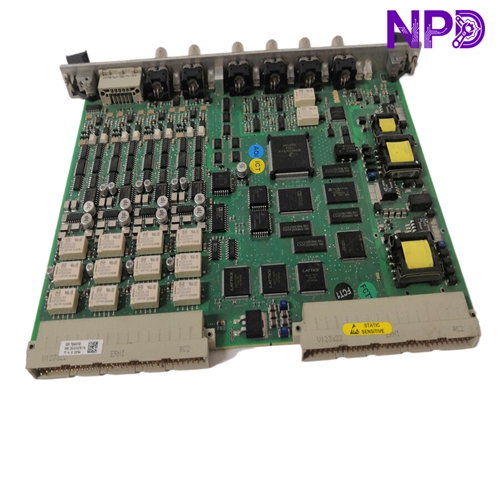

Description
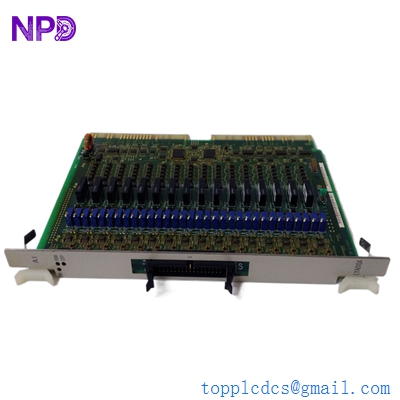
The Praxis Automation Technology 98.6.032.702 is a specialized Input/Output (I/O) module designed for the Praxis Mega-Guard vessel automation and ship control systems. As a key component in the Praxis decentralized automation architecture, this module acts as a bridge between the physical shipboard sensors/actuators and the centralized automation network. It is engineered to handle various signal types, providing the reliable data acquisition and control necessary for monitoring engine performance, tank levels, and auxiliary ship systems.
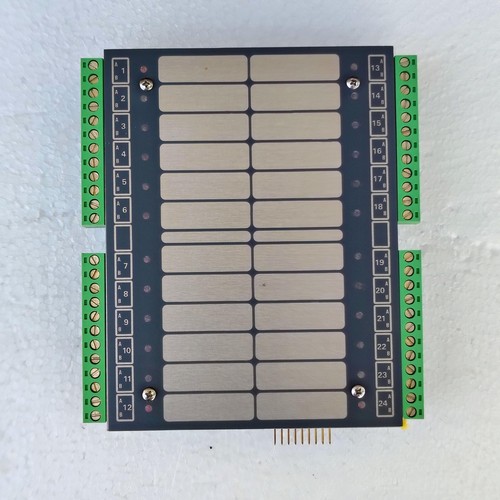
Key Technical Specifications
- Function: Remote I/O processing for shipboard automation (monitoring and control).
- System Compatibility: Fully integrated with the Praxis Mega-Guard hardware ecosystem.
- Signal Versatility: Designed to handle a mix of digital and/or analog signals, including 4–20 mA sensors, PT100 temperature probes, and dry-contact inputs.
- Data Bus: Communicates with the main automation controller via a high-speed, fault-tolerant industrial fieldbus (usually Ethernet-based or CAN-bus architecture).
- Galvanic Isolation: Features robust isolation on input/output channels to prevent electrical interference and ground loops—critical in marine environments with high electromagnetic noise.
- Diagnostic Capabilities: Includes onboard status LEDs for channel-specific activity monitoring and system-wide “Heartbeat” health signals.
- Ruggedization: Certified for marine use (IACS-compliant), featuring vibration damping, salt-mist resistance, and operating temperature ranges suitable for engine rooms.
- Hot-Swappability: Designed for maintenance efficiency, allowing individual modules to be replaced without shutting down the entire automation segment.
- Configuration: Software-configurable parameters for input scaling, signal filtering, and alarm hysteresis.
- Mounting: Compact, DIN-rail mountable housing for integration into standard control consoles.
Integration and Application
The 98.6.032.702 module is part of the “Mega-Guard” decentralized philosophy, where intelligence is distributed across the vessel. Its primary roles include:
- Engine & Machinery Monitoring: Collecting data from pressures, temperatures, and speed sensors.
- Control Loop Execution: Driving small actuators or solenoids based on commands received from the bridge or engine control room (ECR).
- Alarm Management: Locally processing sensor inputs to detect off-limit conditions, triggering alarms before they reach the main workstation.
Related Praxis Mega-Guard Components
To maintain a fully functional ship automation system, this I/O module is often deployed alongside:
- Mega-Guard Operator Station (OS): The HMI where the data from the I/O module is visualized.
- Mega-Guard Processor Unit (CPU): The central controller that manages the logic for the entire automation segment.
- CAN-bus Backbone: The physical cabling system (redundant) that connects the I/O module to the network.
- Local I/O Racks: The housing assemblies where these modules are mounted and interconnected.
- Power Supply Modules (PSM): Dedicated 24VDC supplies designed to provide stable, surge-protected power.
- Switching/Interface Relays: Used for driving heavier loads (pumps, fans) that cannot be controlled directly by the module.
- Configuration Software (Praxis Suite): Required for mapping the I/O points to specific software tags in the system.
- Redundancy Modules: Used to ensure the network remains active even if one communication path is cut.
- Gateway Modules: Used to translate Mega-Guard data to other ship systems like ECDIS or VDR.
- Test Connectors: Specialized harness connectors used by service engineers for rapid troubleshooting of the fieldbus.