
Description
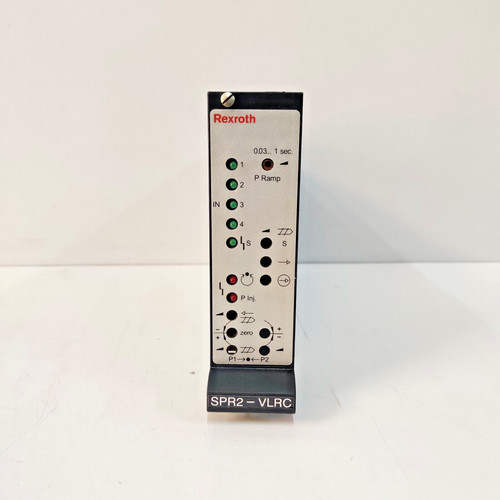
The Rexroth VT-VARAI-500-10/V0/VLRC is a precision analog amplifier card designed for the control of proportional valves without electrical position feedback. This module serves as a command value interface and amplifier, converting incoming reference signals (such as 0–10V or 4–20mA) into the precise current output required to drive proportional solenoids. It is a foundational component in hydraulic systems where smooth, repeatable control of flow or pressure is required without the complexity of closed-loop feedback systems.
Product Specifications
📍 Product Series: Rexroth VT-Series Analog Amplifier
⚖️ Weight: 0.45 kg
📏 Dimensions: Standard Eurocard format (100 mm x 160 mm)
🌍 Country of Origin: Germany
⚡ Operating Voltage: 24 V DC
🔄 Output Current: Adjustable up to 2.5 A
🛡️ Protection Class: IP20
🌡️ Operating Temperature: 0°C to +50°C
🏗️ Mounting Type: Card rack / Control cabinet module
🔌 Interface: Analog Command Input / Solenoid Output
Understanding Proportional Valve Control
In systems without position feedback, the amplifier ensures that the valve’s spool position is proportional to the input current. To understand how this card regulates the valve, consider the relationship between the input signal and the solenoid’s electromagnetic force.
Recommended Models in the Same Series
🔍 VT-VARAI-500-10/V0/0: Base model without specific ramp/dither adjustments.
🔍 VT-VSPA1-1-10/V0/0: Standard amplifier for valves with position feedback.
🔍 VT-VARAI-500-10/V0/VLRC-R: Factory-refurbished certified unit.
🔍 VT-VSPA2-50-10/V0: Dual-solenoid amplifier card.
🔍 VT-VSO-1: Basic amplifier for single-solenoid pressure valves.
🔍 VT-H-1-10/V0: High-response amplifier for fast-acting valves.
🔍 VT-VARAI-Series-Adapter: Breakout test card for signal monitoring.
🔍 VT-VSPA1-1-10/V0/A1: Variant with extended ramp time capabilities.
🔍 VT-VSPA-Module-Case: Protective housing for standalone card mounting.
🔍 VT-VARAI-Manual-Trim: Potentiometer-based manual adjustment board.
Troubleshooting Proportional Amplifiers When diagnosing issues with these cards, the most common areas to investigate are the ramp times (which control the acceleration of the spool) and the dither frequency (which prevents “stick-slip” at low speeds). If you notice jerky movement in your hydraulic actuators, it is often due to an incorrect dither setting or a mismatch between the card output and the solenoid’s nominal current rating.