
Description
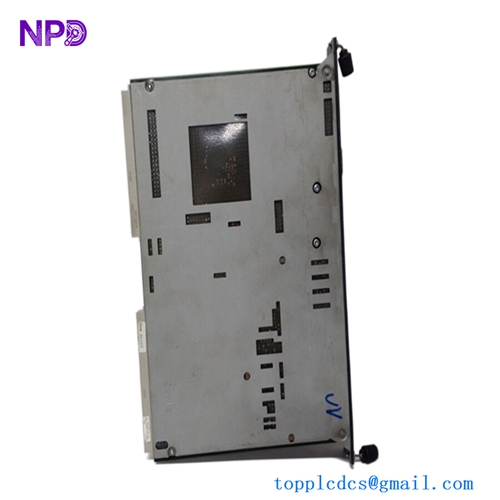
The Rolls-Royce SLIO-02 Canman Controller Network Module is an advanced, modular automation and communication node engineered specifically for marine propulsion control systems. Designed to ensure robust performance in demanding maritime environments, this module facilitates precise monitoring and management of ship engines, fixed-pitch (FP), and controllable-pitch (CP) propellers. Utilizing a dual CAN bus architecture, the system guarantees high reliability, fault tolerance, and seamless data exchange across critical vessel control stations.

📊 Product Technical Datasheet
- Brand: Rolls-Royce Marine
- Model / Designation: SLIO-02 (SLIO-2) / CANMAN Controller Network
- Series: Canman Propulsion Control and I/O Network Series
- Product Name: Controller Network Module
- Application: Marine Propulsion Control, Engine Monitoring, and Thruster Management
- Condition Status: Factory New / Refurbished & Tested Available
- Communication Interface: Dual redundant CAN bus structure
- Operating Power Supply: 24 VDC nominal system power
- Enclosure Type: Modular rail-mountable or panel-integrated industrial I/O node housing
- Operating Temperature: -10°C to +55°C (Standard maritime operational range)
🔍 Initial Operation Checklist
- Verify physical integrity: Inspect the module housing, backplane connectors, network communication ports, and status LED indicators for any transit or handling damage before installation.
- Check power compatibility: Ensure that the incoming DC power supply matches the rated 24 VDC system input requirements and verify correct polarity prior to energizing the unit.
- Inspect wiring terminations: Confirm that all CAN bus data lines, shield groundings, power supply connections, and discrete I/O signal leads are securely fastened and properly torqued.
- Verify network configuration: Power on the controller network node and check that network address settings (node IDs) and termination resistors match the vessel’s propulsion control layout.
- Perform communication loop check: Test the primary and redundant secondary CAN bus channels to ensure error-free data transmission between the bridge control panels and engine room nodes.
🔧 Routine Maintenance and Care
- Environmental monitoring: Regularly inspect the bridge console or engine control room (ECR) cabinets to ensure internal ambient operating temperatures remain within specified limits.
- Terminal security: Periodically check and retighten all power and network screw terminals to prevent loosening caused by persistent marine vibration and engine humming.
- Wiring and shielding inspection: Examine CAN bus cabling, data shielding integrity, and grounding connections periodically for signs of oxidation, moisture ingress, or mechanical wear.
- Diagnostic status checks: Routinely review the front-panel LED indicators on the SLIO-02 module to monitor heartbeat, network traffic, and error status flags.
- Surface cleaning: Clean the module exterior using a soft, dry or slightly damp lint-free cloth. Avoid harsh chemical solvents or abrasive cleaners.
⚠️ Troubleshooting and Common Issues
- CAN Bus Communication Faults: If data dropouts occur across the network, check termination resistor values (typically 120 ohms), verify cable continuity, and inspect shield grounding to eliminate noise.
- Module Initialization Failure: If the SLIO-02 unit fails to boot or register on the network, verify that the 24 VDC supply voltage is stable and check backplane seating.
- Propulsion Response Delays: Unresponsive commands or lag in propeller pitch/engine speed changes often point to network traffic bottlenecks, faulty node addresses, or degraded bus transceivers.
- Intermittent Fault Alarms: Environmental moisture or salt mist accumulation on terminal strips can cause erratic signal behavior; inspect internal cabinet seals and clean contacts if necessary.
🛡️ Safety Precautions
- Qualified Personnel Only: Installation, network configuration, firmware servicing, and hardware maintenance of marine propulsion control modules must be executed exclusively by certified marine automation engineers.
- Power Isolation: Completely isolate all 24 VDC power feeds and associated propulsion control circuits before opening control panels, swapping modules, or servicing internal wiring.
- System Interlocks: Never bypass critical safety interlocks, emergency stop loops, or propulsion feedback links while the vessel is maneuvering or operating under live navigation.
- Electrostatic Discharge Protection: Always wear an appropriate ESD grounding wrist strap when handling the internal circuit boards or replacement modules to prevent component damage.
❓ Frequently Asked Questions (Q&A)
- Q1: What is the primary role of the Rolls-Royce SLIO-02 Canman module?
A1: The SLIO-02 functions as a robust network node within Rolls-Royce marine propulsion control systems, handling data acquisition and command routing for engines and propellers.
- Q2: Why does the system utilize dual CAN buses?
A2: The dual CAN bus architecture provides network redundancy, ensuring that if the primary communication line experiences a fault, control data can seamlessly route through the secondary channel to maintain vessel maneuverability.
- Q3: Is the SLIO-02 module hot-swappable?
A3: While modular in design, replacing or swapping network controller nodes typically requires adherence to specific vessel safety protocols and system de-energization to prevent unexpected control disruptions during operation.
- Q4: What immediate actions should be taken if a network error LED lights up on the unit?
A4: Check the system alarm logs on the bridge automation screen to identify the specific node, inspect the physical CAN bus wiring for damage or loose terminations, and verify power stability.