
Description
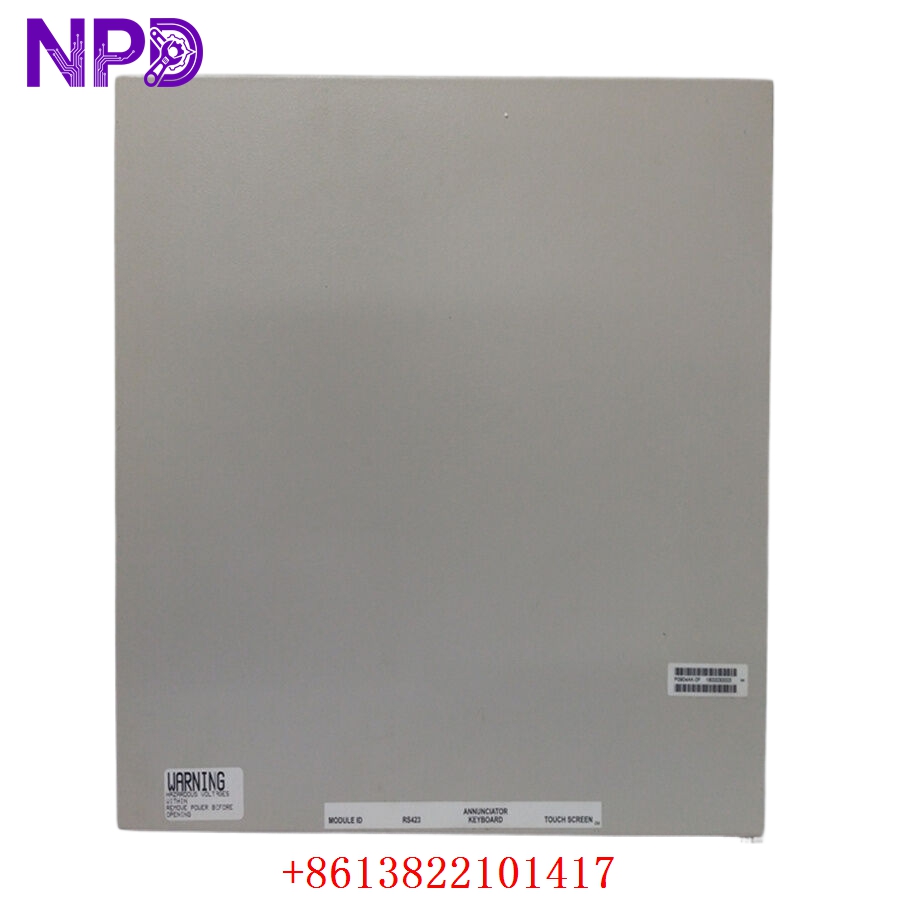
The SAACKE F-OSA (1-8400-143200) is a critical burner control and management unit designed for high-performance industrial heating and power generation systems. Engineered for precision, it orchestrates the entire combustion process—including fuel-air ratio control, ignition, flame monitoring, and safety shutdown procedures. This unit is essential for maintaining efficient combustion while ensuring the highest level of operational safety in boiler and furnace applications.

Technical Specifications
| Parameter | Description |
| Model | F-OSA / 1-8400-143200 |
| Manufacturer | SAACKE |
| Function | Automatic Burner Control & Management |
| Application | Industrial Burners & Boiler Systems |
| Safety Standard | Compliance with international burner safety norms |
| Weight | Approximately 1.2 kg |
| Origin | Germany |
Operational Guidelines & Usage
🔹 Startup Sequence
- Perform a pre-start system check to ensure all fuel valves are closed and the combustion chamber is purged of unburned gases.
- Ensure the safety interlock loop is “Closed” (e.g., water levels, gas pressure, and airflow switches must be in a ready state).
- Activate the SAACKE F-OSA unit via the central boiler control panel.
- The unit will initiate an automatic burner sequence: Fan Start -> Purge -> Ignition -> Pilot Valve Open -> Main Fuel Valve Open.
- Monitor the “Flame” indicator to confirm the unit has successfully detected combustion.
🔹 Shutdown Sequence
- Trigger the “Stop” command from the boiler control system.
- The F-OSA will automatically execute a controlled shutdown, closing the fuel valves instantly.
- The burner fan will continue to run for a post-purge duration to clear the combustion chamber of residual gases.
- Once the sequence is complete, the unit transitions to a standby state.
🔹 Normal Operational Flow
- The unit continuously receives feedback from sensors monitoring flame intensity, fuel pressure, and combustion air volume.
- It processes these inputs to dynamically adjust the fuel-air mixture for optimal efficiency.
- If operational deviations occur, the unit modulates the output signals to actuators to maintain stable combustion.
- Real-time diagnostic data is passed to the monitoring system to ensure compliance with emission and safety standards.
🔹 Parameter Configuration
- Access the configuration interface using the authorized SAACKE service tool or programming panel.
- Adjust burner parameters such as purge time, pilot ignition duration, and safety interlock sensitivity.
- Ensure all settings comply with the specific site’s combustion certificate and safety regulations.
- Save the configuration to the unit’s non-volatile memory; perform a functional test without fuel (where applicable) to verify timing cycles.
🔹 Mode Switching
- Automatic Mode: Standard operational mode where the F-OSA manages the combustion sequence based on demand signals.
- Service/Manual Mode: Reserved for authorized technicians to manually cycle burner components (valves, fans, igniters) during commissioning or troubleshooting. This mode requires a specific key or password to prevent unauthorized access.
Common Questions & Answers (Q&A)
💡 Q: Why is the unit locking out or displaying a “Fault” alarm?
A: A lockout usually indicates a safety violation. Check the flame sensor (ensure it is clean), confirm gas/oil pressure is within range, and verify that the air damper is reaching its purge position. Reset the unit only after identifying and correcting the cause of the fault.
💡 Q: Can the F-OSA unit be repaired on-site if the processor fails?
A: No. Due to the critical safety functions of the burner management system, the unit is not user-serviceable. If the processor fails, it must be replaced with a certified, calibrated unit to ensure the safety integrity of the combustion system.
💡 Q: How can I verify the flame monitor is working correctly?
A: During the burner start-up, observe the flame signal intensity on the diagnostic display. If the signal is unstable or near the low-threshold limit, the flame sensor lens likely needs cleaning or the sensor may be misaligned.
💡 Q: How often should the SAACKE F-OSA be inspected?
A: Regular maintenance should align with your boiler plant’s annual certification cycle. This includes checking the unit’s electrical connections, testing the safety interlock chain, and verifying the correct operation of all fuel valve shut-off times.