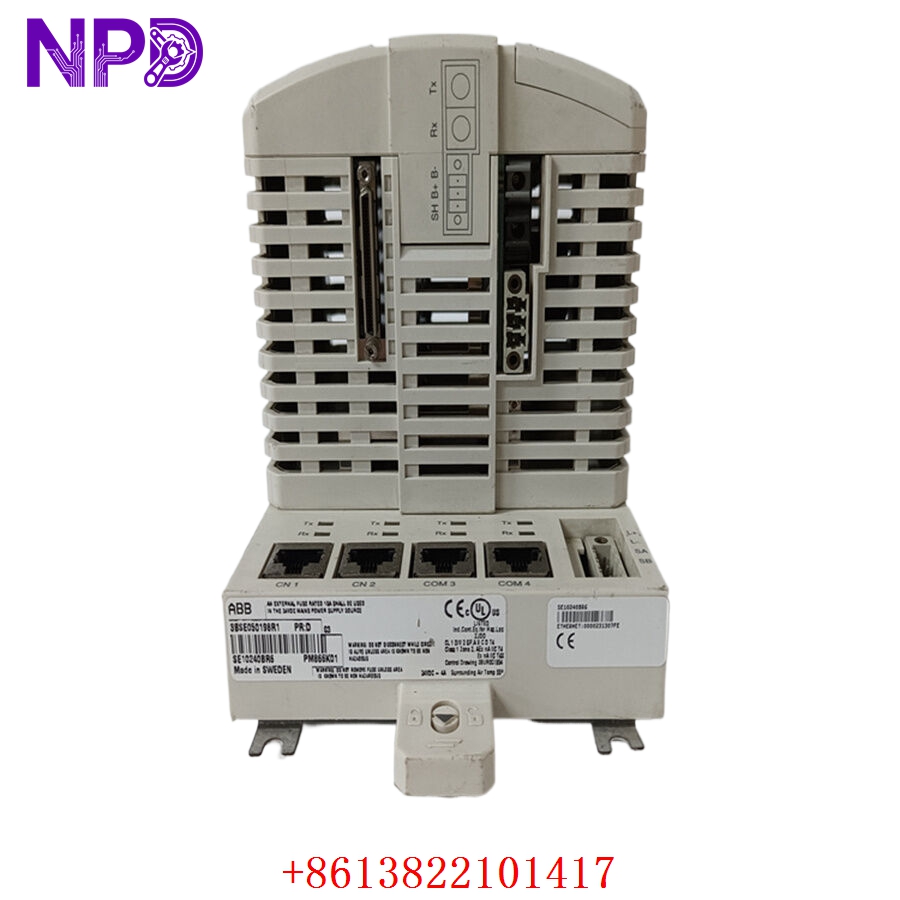

Description
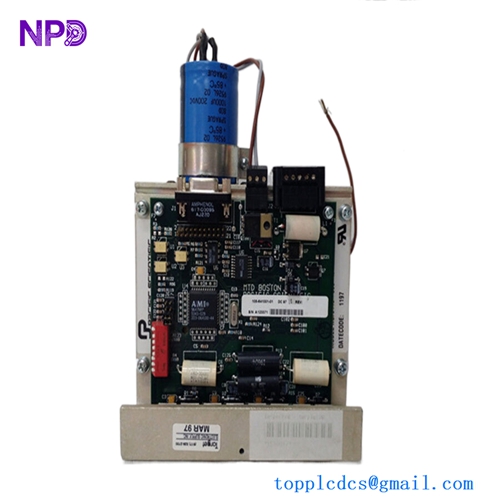
The SAM Electronics Lyngsoe Marine DRM401 is a high-performance Digital Relay Module utilized in complex maritime automation and alarm systems. Engineered for seamless integration into the Lyngsoe Marine control architecture, this module acts as a bridge between low-voltage digital logic and high-load industrial field equipment. It ensures reliable switching for alarms, valve actuators, and emergency shutdown interlocks, providing critical hardware reliability for modern vessel operations.

⚙️ Technical Specifications
- Dimensions: 180 mm x 120 mm x 60 mm
- Weight: 0.65 kg
- Country of Origin: Germany / Denmark
- Supply Voltage: 24V DC
- Operating Temperature: -15°C to +55°C
- Relay Output: Multiple isolated digital channels (Contact rating: 2A / 250VAC)
- Housing: DIN-rail mountable, ruggedized industrial enclosure
🏗️ Application Areas
- Maritime Alarm and Monitoring Systems (AMS)
- Automated Engine Room Control
- Valve Remote Control (VRC) Systems
- Emergency Signaling and Shutdown Interlocks
- Industrial Distributed I/O Assemblies
📖 Product Usage Instructions
Install the DRM401 within a clean, ventilated electrical cabinet. The module is designed for DIN-rail mounting; ensure it is snapped securely into place. Wiring should be done according to the specific terminal layout provided in the Lyngsoe Marine system manual. Use shielded wiring for control inputs to prevent inductive spikes from damaging the internal relay logic, and ensure the module’s common ground is tied to the cabinet’s protective earth.
🌐 Communication Configuration Steps
- IP Address: As a digital I/O module, addressing is typically defined by the host controller’s configuration file.
- Station Number: The unit’s node ID is set via hardware switches on the module’s front/side or defined within the engineering software during system mapping.
- Baud Rate: The communication speed is automatically matched to the Lyngsoe fieldbus protocol (typically RS-485 based) to ensure synchronization with the central processing unit.
⚡ Power-Up Debugging Flow
- Verify the 24V DC power input to the module terminals.
- Ensure the Lyngsoe control cabinet’s primary bus is active.
- Power on the module and observe the “Power” LED; it should turn a steady green.
- If the “Status” or “Fault” LED flashes, use the engineering terminal to check for communication loss or internal relay latching errors.
- Manually trigger a command from the central HMI to verify relay actuation (the corresponding output LED should illuminate).
✅ Initial Run Checklist
- Perform a “Click Test” for all relay channels to confirm physical actuation and circuit continuity.
- Verify that the feedback signals from the field devices (e.g., valve position switches) are correctly registered by the system.
- Check the electrical load on the relays to ensure it remains well within the 2A limit.
- Record the module’s firmware/hardware version in the vessel’s maintenance database.
- Tighten all terminal connections to ensure they are resistant to vessel vibration.
❓ Frequently Asked Questions (Q&A)
Q: What is the benefit of the DRM401 over standard mechanical relays? A: The DRM401 is specifically designed for integration with digital control systems, offering faster response times, built-in diagnostic monitoring, and lower power consumption than traditional large-scale mechanical relays.
Q: Can I replace the DRM401 while the system is live? A: It is strongly recommended to isolate the power to the specific I/O rack or module before extraction, as “hot-swapping” can induce electrical surges that may damage the backplane communication.
Q: Why is a relay failing to actuate despite a command? A: First, check if the module has power. Second, verify the logic signal is reaching the module. If both are present, the internal relay coil or the channel’s drive transistor may have failed due to an electrical overload.
Q: Is the DRM401 compatible with third-party automation systems? A: It is optimized specifically for Lyngsoe Marine architectures. While the electrical interface is standard, the communication protocol is proprietary to the SAM/Lyngsoe ecosystem.