Description
- Model: SIEI R-TPD3 (Available in various current ratings)
- Brand: Gefran / SIEI (Italy)
- Series: TPD32 Series Regenerative Converters
- Core Function: Bidirectional power conversion for DC motor drives and energy recovery
- Type: Regenerative Power Supply / DC Drive Module
- Key Specs: 3-Phase AC Input | 400 V – 690 V Class | Digital Control Interface
- Input Voltage: 3-Phase 230 V to 500 V AC (Optional 690 V)
- Output Type: Regenerative DC Bus / Armature Supply
- Control Method: Fully digital via internal microprocessor
- Communication: RS485 Serial (Standard), Profibus/DeviceNet (Optional via bridge)
- Feedback Options: Tachogenerator, Encoder, or Armature Voltage feedback
- Overload Capacity: 150% for 60 seconds (Typical)
- Programming: Via integrated keypad or “Gefran Configurator” software
- Protection: IP00 (Open chassis for cabinet integration)
- Cooling: Forced air with internal fans
- Certifications: CE, UL compliant
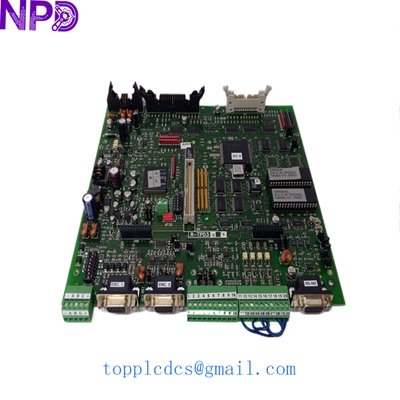
SIEI R-TPD3
Application Scenarios & Pain Points
In industries involving high-inertia loads—like heavy-duty cranes, elevators, or centrifuges—stopping a motor creates a massive amount of back-EMF (electromotive force). Without a regenerative unit like the R-TPD3, this energy is usually wasted as heat in a resistor bank or, worse, causes an “Overvoltage” trip that shuts down the line. The R-TPD3 doesn’t just manage the stop; it cleans that energy and pumps it back into the grid, saving on utility costs and preventing thermal stress on the cabinet components.
Typical Application Scenarios:
- Lifts and Cableways Managing the descent of heavy loads where the motor acts as a generator; ensures smooth braking and energy recovery.
- Metal Processing (Uncoilers) Used in steel mills for uncoiling applications where constant tension is maintained by “braking” the roll against the pull of the line.
- Centrifuges and Decanters Handling the high kinetic energy during the deceleration phase of large industrial rotating masses.
- Plastic and Rubber Extruders Providing stable DC power for main drive motors requiring precise torque control across the speed range.
Case Study: The Overheating Resistor Bank
Background: A mid-sized textile factory was using large braking resistors to stop their high-speed looms. In the summer, the electrical room reached 45°C, causing frequent thermal trips in the control cabinets. Problem: The heat generated by the braking resistors was overwhelming the HVAC system. Replacing the resistors was only a temporary fix as the root cause was energy dissipation. Solution: We integrated a SIEI R-TPD3 module into the DC bus system. Instead of burning off the braking energy, the R-TPD3 pushed it back to the plant’s main AC header. Result:
- Room Temp: Dropped by 12°C, eliminating thermal trips.
- Energy Savings: Measured at approximately 15% reduction in motor-related electricity costs.
- Reliability: The system has run for 3 years without a single “DC Link Overvoltage” alarm.
Compatible Replacement Models
| Original Model | Replacement Model | Compatibility | Key Difference | Modification | Cost Impact |
| R-TPD3 | TPD32-EV | ⚠️ Software Compatible | Modern evolution of the TPD3 | Requires parameter migration | +20% |
| R-TPD3 (Low Amp) | TPD32-EV-FC | ✅ Direct Replace | Field Controller version | Minor terminal labeling diff | Same |
| SIEI R-TPD3 | Gefran ADV200-SP | ❌ Incompatible | AC Drive vs DC Converter | Total system redesign | +150% |
Warning: When replacing an R-TPD3, check the Field Current (Excitation) ratings. Some older SIEI units had specific field-weakening configurations that must be manually matched in the new unit’s software.
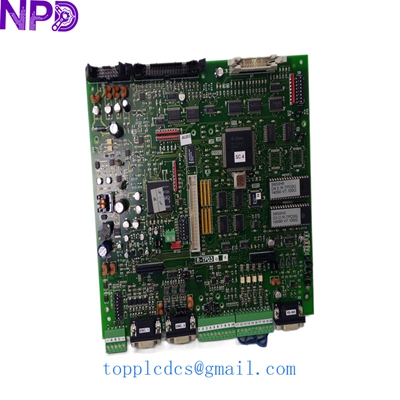
SIEI R-TPD3
Troubleshooting Quick Reference
| Symptom | Possible Cause | Part Relevance | Quick Check | Action |
| Display: “F01” (Overcurrent) | Short in motor or bridge | ✅ High | Check SCR/Thyristor resistance | Replace module if SCR is shorted |
| Display: “F05” (Phase Loss) | Blown input fuse | ❌ Low | Measure AC input L1-L2-L3 | Replace external high-speed fuses |
| No Keypad Response | 5V Logic Power failure | ✅ High | Check internal ribbon cable | Reseat cable or replace control board |
| “Overvoltage” on Braking | Unit not regenerating | ✅ High | Check “Enable” signal on terminal | Verify logic timing in PLC |
| Humming/Vibration | Phase imbalance | ⚠️ Medium | Check SCR firing angles in diag | Re-calibrate firing pulses |
Wiring Note from the Field: I’ve seen many technicians forget the synchronization transformer on these SIEI units. If your R-TPD3 is getting a “Sync Error,” check the small transformer that provides the phase reference. If that reference is out of phase with the main power, the unit will refuse to fire the thyristors to prevent a catastrophic short.
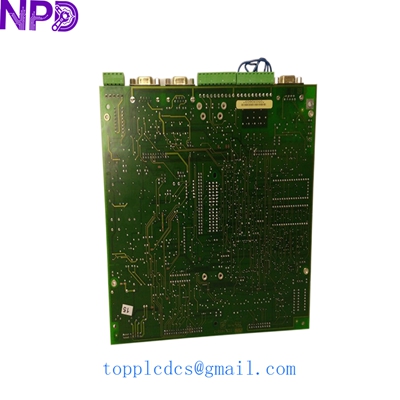
SIEI R-TPD3
Quality Assurance SOP
- Visual Audit: We inspect the thyristor bridges for any signs of arcing or “pitting.” We check the capacitors for bulging, which is common in older SIEI stock.
- Thyristor Static Test: Every SCR (Silicon Controlled Rectifier) is tested for gate-to-cathode resistance and forward/reverse leakage using a high-precision meter.
- Logic Power-Up: We power the control section separately to verify the microprocessor boots, the display is clear, and no internal memory errors (EEPROM) are present.
- Firmware Verification: We record the software version (e.g., V4.x). If you have a specific firmware requirement to match an existing drive, we can verify compatibility.
- Rugged Packaging: These modules are heavy. We use custom-cut foam and double-walled boxes to ensure the chassis isn’t bent during air freight.
Other Available Models in Stock:
- GE 369-HI-0-M-0-0-E
- Bently Nevada 3500/22M 138607-01
- Emerson KJ3222X1-BA1 12P2532X082
- Honeywell TC-FXX132 51304441-175
- Triconex 3721
- Alstom ALSPA P320
- ABB newplcdcs PP836A 3BSE013177R1
- Fanuc A06B-6079-H106