
Description
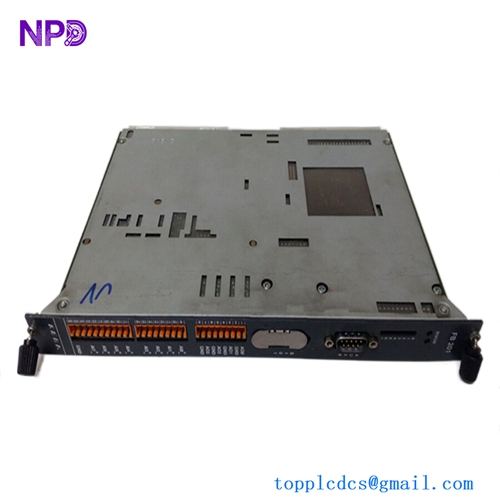
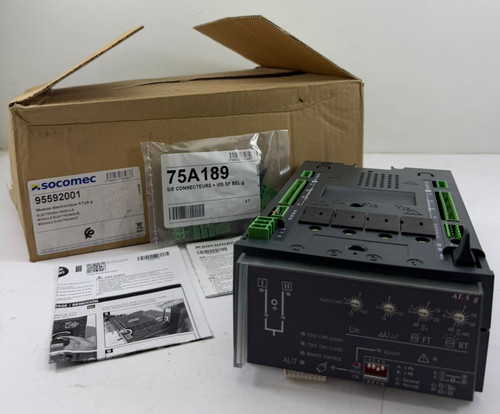
The Socomec ATyS G (Ref: 95592001) is an advanced electronic control module designed for Automatic Transfer Switching (ATS) applications. It is specifically engineered to manage the monitoring of power sources (typically Mains/Mains or Mains/Genset) and control the automatic transfer of loads. The ATyS G is widely utilized in critical infrastructure, data centers, and industrial facilities to ensure continuous power supply by providing intelligent switching logic based on voltage and frequency thresholds.
📋 Technical Specifications
| Parameter | Specification |
|---|---|
| Product Name | ATyS G Automatic Transfer Controller |
| Reference Number | 9559 2001 |
| Core Function | Source monitoring and automatic switching control |
| Monitoring Inputs | 3-phase + Neutral voltage and frequency monitoring |
| Interface | LCD screen with navigation keys and status LEDs |
| Operating Voltage | 200–480 V AC |
| Communication | Modbus RTU (via optional modules) |
| Power Supply | Self-powered from measurement inputs |
| Mounting Style | Door-mounted (Panel-mount) |
| Safety | Compliant with IEC 60947-6-1 |
🚀 Key Features and Benefits
- Source Monitoring: Real-time detection of phase loss, under/over-voltage, and under/over-frequency on both Source 1 and Source 2.
- Configurable Parameters: Fully programmable thresholds for voltage/frequency and time delays (e.g., source restoration timers, engine start/stop signals).
- Load Management: Integrated outputs for controlling the motorized changeover switch (ATyS series).
- Test Modes: Built-in test functionality to verify backup source availability without interrupting power to the load (if configured).
⚠️ Integration and Operational Note
The 95592001 is designed to work as the “brain” for the Socomec ATyS range of motorized transfer switches.
- Parameterization: Use the front-face interface to set your “Return to Normal” timers. Incorrect settings here are a common cause of “load hunting,” where the system switches back and forth between sources too rapidly.
- Wiring: Ensure the voltage sensing lines (Source 1 and Source 2) are correctly fused with dedicated protection, as these lines also power the controller.
- Firmware: If you are interfacing the unit with a BMS (Building Management System) via Modbus, ensure your communication module is correctly addressed and the baud rate matches your network requirements.