
Description
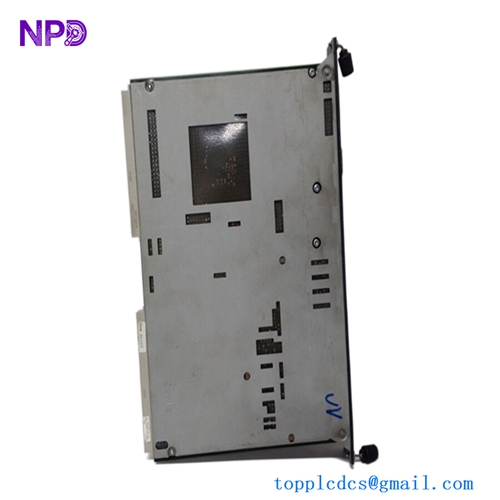
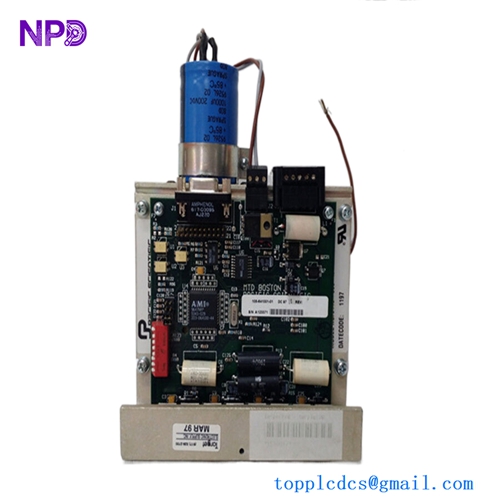
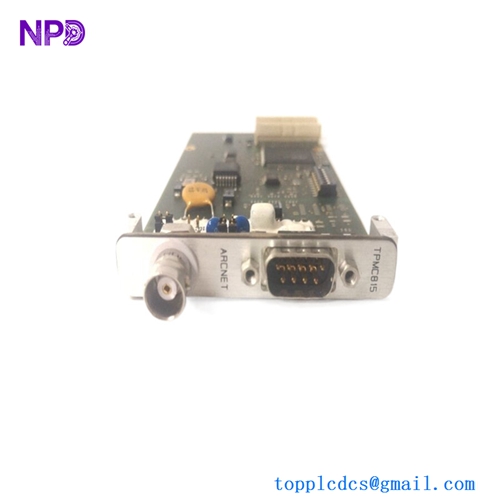
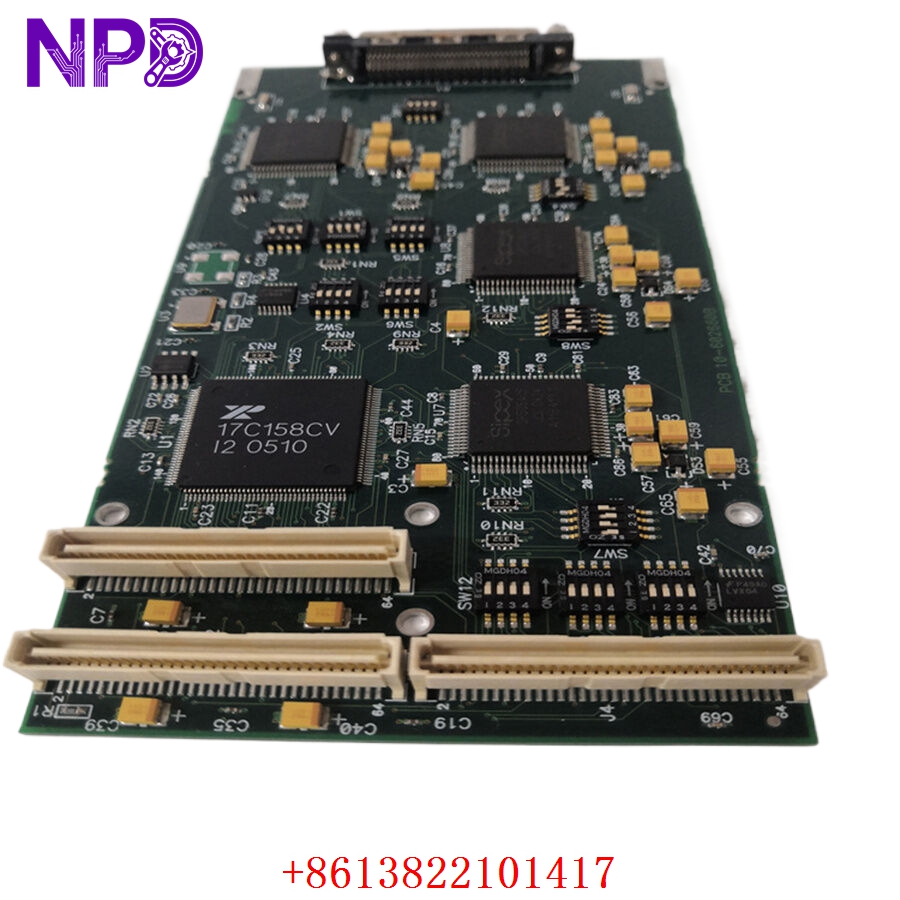
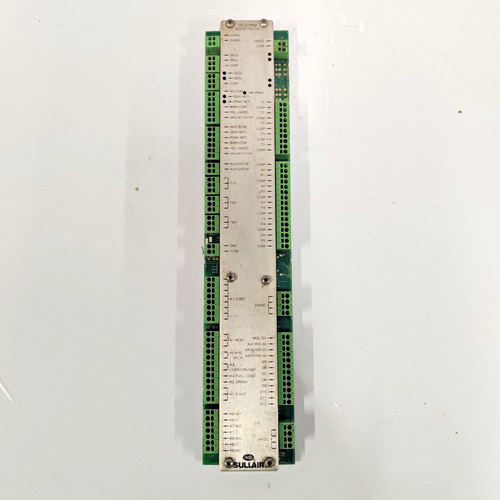
The SULLAIR SUPERVISOR I/O CONTROLLER (P/N 02250176-799 REV 4) is a specialized microprocessor-based interface module designed for Sullair rotary screw air compressors. This controller serves as the primary data acquisition and command unit, managing the input and output signals between the compressor’s sensors (temperature, pressure, vibration) and the main Supervisor control display. Its primary purpose is to ensure the safe, efficient, and automated operation of the air-end and motor systems under varying industrial load conditions.
Technical Specifications
| Parameter | Description |
| Model | 02250176-799 |
| Revision | REV 4 |
| Manufacturer | SULLAIR |
| Application | Rotary Screw Air Compressor Management |
| Function | Signal Processing & I/O Expansion |
| Mounting | Cabinet-mount (Standard Sullair I/O Rack) |
| Origin | USA |
Operational Guidelines & Usage
🔹 Startup Sequence
- Ensure all field sensors and actuator wiring are correctly terminated at the I/O terminals.
- Verify that the I/O controller is firmly seated in the cabinet backplane.
- Power on the Sullair Supervisor cabinet. The controller will perform a boot-up sequence and attempt to establish a communication handshake with the main HMI panel.
- Once the “Status” LED on the I/O board is solid green, the system is ready to read sensor inputs.
- Initiate the compressor “Auto/Manual” start sequence from the main panel.
🔹 Shutdown Sequence
- Select “Stop” from the main HMI display to allow the compressor to perform a controlled unload cycle.
- Once the motor has come to a full stop and the pressure is vented, disconnect power from the compressor control cabinet.
- For service, ensure the board is handled by the edges to prevent static damage to the I/O circuitry.
🔹 Normal Operational Flow
- The controller continuously scans analog and digital inputs (such as discharge pressure and air-end temperature).
- It translates these electrical signals into digital data and transmits them to the main controller.
- Upon receiving logic commands, the I/O board activates physical output relays to control the blow-down valves, loading valves, and motor starter coils.
- It monitors the “Watchdog” timer to ensure that the connection with the master controller is healthy.
🔹 Parameter Configuration
- Configuration of I/O mapping is typically pre-defined by the Sullair compressor logic.
- If replacing the unit, ensure the controller is set to the correct hardware ID if applicable, matching the specific compressor frame size.
- No user-adjustable potentiometers are present; all scaling and thresholds are handled through the Supervisor’s master software settings.
🔹 Mode Switching
- Monitoring Mode: The controller actively polls inputs and reports status.
- Service/Fault Mode: Triggered automatically if a signal falls outside the programmed safety envelope (e.g., high discharge temperature). The controller will force the compressor into a safety shutdown (trip) to protect the equipment.
Common Questions & Answers (Q&A)
💡 Q: What does the “Status” LED indicate if it is flashing rapidly?
A: A rapid flash usually indicates a communication timeout between the I/O controller and the main Supervisor HMI. Check the ribbon cables connecting the I/O board to the backplane for loose pins or corrosion.
💡 Q: Can I use a REV 4 board in a system that originally used REV 2?
A: Generally, Sullair revisions are backward-compatible, but you must verify the firmware compatibility of your main Supervisor HMI. If the firmware is outdated, the new I/O board may not be recognized.
💡 Q: How does the controller protect the air-end?
A: It integrates directly with temperature and pressure sensors. If the controller detects a signal exceeding the high-limit threshold, it triggers an immediate relay disconnect to the motor starter, bypassing standard software delays to ensure instantaneous protection.
💡 Q: What is the most common failure mode for this I/O board?
A: Damage from power surges on the sensor loops or extreme heat within the compressor cabinet. Ensure the cabinet cooling fans are unobstructed and the door seals are airtight to keep the electronics free from oil mist and ambient heat.