
Description
- Model: Triconex 2481
- Brand: Triconex (Schneider Electric)
- Series: Tricon Lite / Tricon System
- Core Function: 16-Channel TMR Digital Input (DI) Module
- Product Type: Digital Input Card
- Key Specs: 24 VDC TMR (Triple Modular Redundant) Isolated SIL 3
- Number of Channels: 16 Isolated Digital Inputs
- Nominal Input Voltage: 24 VDC
- Input Voltage Range: 15–30 VDC
- Architecture: Triple Modular Redundant (TMR) with internal 2-out-of-3 voting
- Isolation: 1,500 VDC (Field to Logic)
- Point Diagnostics: Continuous testing for stuck-on, stuck-off, and field power loss
- Input Current: 5.2 mA @ 24 VDC (Nominal)
- Filtering: 1 ms to 20 ms (Configurable via TriStation 1131)
- Safety Rating: SIL 3 (IEC 61508)
- Power Consumption: < 10 W

TRICONEX 2481
Application Scenarios & Pain Points
The Triconex 2481 is a cornerstone of “High Integrity” safety architectures. Unlike standard industrial I/O, the 2481 is TMR, meaning every input signal is routed through three independent paths and “voted” on before the logic solver acts. If you have a critical pressure switch or an emergency stop button that must work regardless of a single component failure, the 2481 is the module that handles that signal.
Typical Application Scenarios:
- Emergency Shutdown (ESD) Monitoring “Panic” buttons and field switches that trigger a total plant isolation.
- Fire and Gas Systems (F&G) Interfacing with discrete smoke or flame detectors where the cost of a false trip (nuisance) is as high as the cost of a missed trip.
- Critical Interlocks Ensuring that a valve or pump is in the correct physical position before allowing a process sequence to begin.
- Burner Management Systems (BMS) Monitoring flame scanners and fuel valve limit switches to ensure the burner can be safely ignited.
Case Study: The “Stuck Input” Trap
Background: An LNG facility was receiving random “Input Discrepancy” alarms on a 2481 module connected to a main manifold valve.
The Problem: The system was still running safely because the TMR architecture was “voting out” the bad signal path. However, the diagnostic logs on the 2481 showed that one of its three internal input circuits had a “Stuck-At” fault—it always saw the valve as “Open” even when it was closed.
The Solution: We provided a fresh 2481 module. Because the Tricon chassis supports “Hot Swapping,” the maintenance team pulled the faulty module and inserted the new one while the plant was fully operational. The new module automatically synchronized its internal state with the active processors.
Result: The alarm cleared immediately. By replacing the module before a second channel failed, the client avoided a full system shutdown and maintained their SIL 3 safety integrity level.
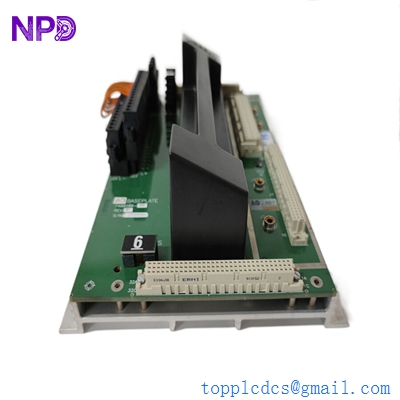
TRICONEX 2481
Similar Product Recommendations
The 2481 is the 16-point version. Depending on your chassis density, you might be looking for its higher-capacity cousins or different voltage variants.
| Model Number | Compatibility | Main Difference | Integration Note |
| 2481 | ✅ Direct | 16-Channel 24V DC | Standard TMR Digital Input. |
| 3503E | ❌ Incompatible | 32-Channel 24V DC | Used in larger Tricon v10/v11 chassis. |
| 2401 | ⚠️ Related | 115V AC version | Used for high-voltage digital inputs. |
Troubleshooting Quick Reference
| Symptom | Possible Cause | Relevance | Action |
| “PASS” LED Off | Internal ASIC/Hardware Failure | ✅ High | Replace the module; the card has failed its internal self-tests. |
| “FAULT” LED Solid Red | External Power Loss / HW Fault | ✅ High | Check the 24V field power supply; if power is okay, replace module. |
| “ACTIVE” LED Off | Module Not Scanned | ⚠️ Medium | Check if the module is configured correctly in TriStation 1131. |
| Input Discrepancy Alarm | Single Channel Failure | ⚠️ Medium | One of the 3 internal paths is bad. TMR is still protecting you, but you should swap the card soon. |
Technical SOP & Quality Guarantee
Safety hardware requires a level of testing that standard PLC parts do not. Our process for the 2481 includes:
- Triple-Path Injection: We inject signals into each channel and verify that all three internal “legs” see the signal and vote correctly.
- Isolation Verification: We perform an insulation test to ensure the 1,500 VDC galvanic barrier between the field and the backplane is intact.
- Threshold Accuracy: We test the “On” (15V) and “Off” (5V) thresholds to ensure the module doesn’t trigger on phantom voltages or ground leakage.
- Hot-Swap Validation: We test the module’s ability to initialize and sync with a Tricon Main Processor rack without causing a bus disturbance.
Engineer’s Pro-Tip: When you replace a 2481, always check the External Termination Panel (ETP) and the interface cable. Often, “Faults” on the module are actually caused by moisture in the ETP or a loose screw on the field wiring block. Check your terminal voltage at the ETP before condemning the module.