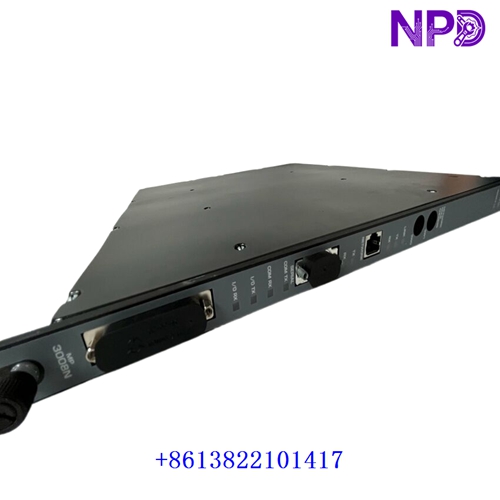
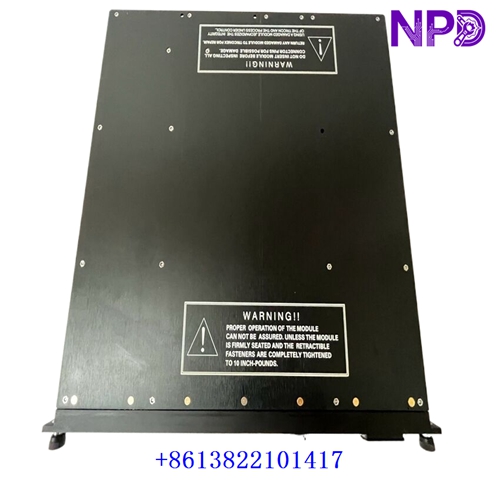

Description
Product Description
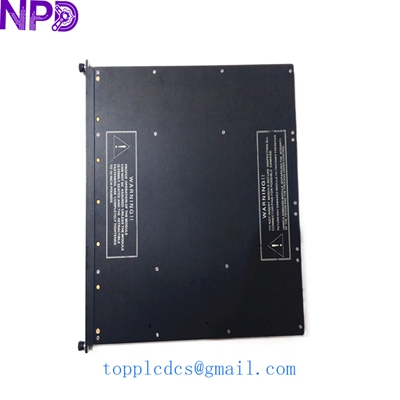
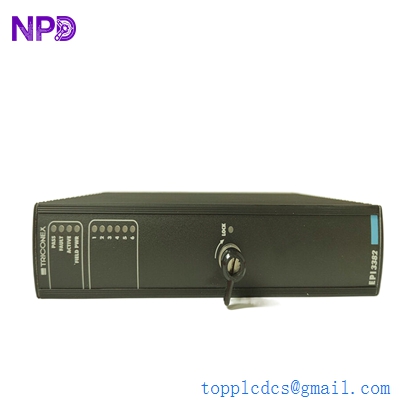
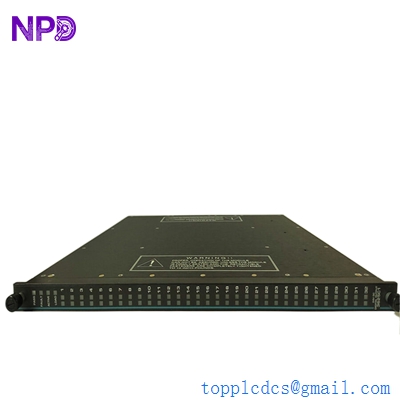
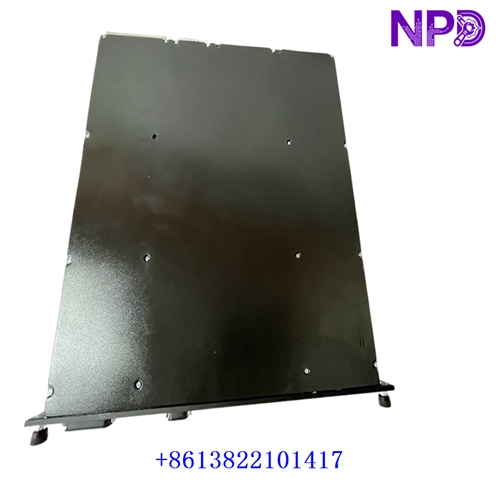
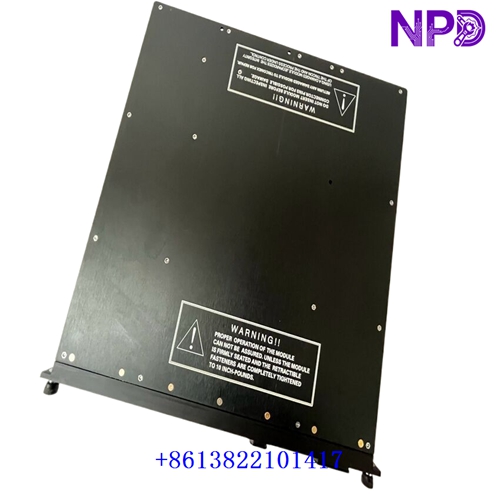
The TRICONEX 3008N Enhanced Main Processor Module is a central processing component for Tricon Version 10 safety instrumented systems (SIS). It executes the configured safety control program, performs processor-level diagnostics, and coordinates data exchange between the three independent processing channels through the high-speed TriBus. Each 3008N operates as one processing leg in the Triple Modular Redundant (TMR) architecture, with separate processing and I/O communication functions. The module is designed for safety-critical applications such as emergency shutdown (ESD), fire and gas protection (F&G), and other industrial process protection systems. Its processor architecture uses a 32-bit Motorola MPC860 processor operating at 50 MHz, with 16 MB DRAM, 32 KB battery-backed SRAM, and 6 MB Flash PROM. The 3008N is the nuclear-qualified designation mapped to the standard 3008 processor platform, so replacement work must verify the qualified hardware revision, Tricon system version, chassis designation, and approved configuration. It should not be treated as a generic PLC CPU or assumed interchangeable with other Tricon processor generations.
TRICONEX 3008N
Product Datasheet
| Parameter | Specification |
|---|---|
| Brand | TRICONEX |
| Model | 3008N |
| Product Number | 3008N |
| Series | Tricon Version 10 |
| Product Name | Enhanced Main Processor III |
| Product Type | Main Processor Module |
| Primary Function | Safety logic execution, processor diagnostics, and TMR data exchange |
| System Architecture | Triple Modular Redundancy (TMR) |
| Processor | Motorola MPC860, 32-bit |
| Processor Clock | 50 MHz |
| DRAM | 16 MB, non-battery-backed |
| SRAM | 32 KB, battery-backed |
| Flash PROM | 6 MB |
| TriBus Communication Rate | 25 Mbps |
| TriBus Protection | 32-bit CRC protection |
| TriBus Data Transfer | 32-bit DMA |
| Processor Arrangement | Three independent main processor modules, one per processing leg |
| I/O Communication | Dedicated I/O and communication processor for each leg |
| Application | Safety instrumented systems, ESD, F&G, and critical process control |
| System Compatibility | Tricon Version 10; confirm approved software and hardware revision |
| Standard Model Mapping | 3008 |
| Installation | Compatible Tricon main chassis |
| Supply Voltage | Supplied through the Tricon chassis; exact module-level power rating not verified |
| Dimensions | Not independently verified |
| Weight | Approx. 2.12 kg reported by supplier; verify actual shipping and net weight |
| Country of Origin | USA reported by suppliers; individual unit origin not verified |
| Product Status | Legacy / nuclear-qualified spare reference |
| Discontinued | Current manufacturer lifecycle status not verified |
First-Time Operation Inspection Checklist
- 🔍 Model identification: Confirm the complete 3008N marking, part number, serial number, and hardware revision.
- 🧩 System compatibility: Verify the installed controller is an approved Tricon Version 10 configuration.
- 🏷️ Nuclear qualification: For nuclear applications, confirm the module’s qualification documentation and approved revision. A standard 3008 is not automatically an acceptable substitute for a 3008N.
- 🔌 Chassis inspection: Check the main chassis slot, backplane connector, and module seating before installation.
- ⚙️ TMR channel verification: Confirm the three processor legs are correctly installed and that the controller’s channel diagnostics report the expected status.
- 💾 Configuration review: Verify the application program, system executive, and TriStation software compatibility before commissioning.
- 🧪 Diagnostic check: Review PASS, FAULT, ACTIVE, and maintenance indicators after startup.
- 🔄 Communication check: Confirm TriBus and I/O communication diagnostics are normal.
- 📋 Acceptance test: Complete the approved safety-system commissioning and proof-test procedures before returning the process to service.
Daily Maintenance
- 📊 Review processor health, channel status, and controller diagnostic messages.
- 🔍 Monitor PASS, FAULT, ACTIVE, MAINT1, and MAINT2 indicators for abnormal conditions.
- 🔄 Check TriBus and I/O communication diagnostics for intermittent faults.
- 🧰 Maintain a clean, dry, temperature-controlled cabinet environment within the system’s approved limits.
- 🔌 Inspect accessible chassis connections and wiring during scheduled maintenance.
- 📝 Record processor faults, channel discrepancies, system events, and maintenance actions.
- 💾 Maintain verified backups of application programs, configuration records, and approved software versions.
- ⚠️ Investigate persistent channel faults promptly rather than repeatedly resetting or reseating the processor.
Troubleshooting and Frequently Asked Questions
Q1: What is the primary function of the TRICONEX 3008N?
The 3008N is a main processor module. It executes the safety application, performs processor diagnostics, and exchanges voted data with the other processor channels through TriBus.
Q2: How does the 3008N work in a TMR system?
A Tricon V10 main processor subsystem uses three independent 3008N modules. Each module controls one processing leg. The system compares channel results and uses hardware voting to tolerate certain faults while maintaining control.
Q3: Is the 3008N the same as the standard 3008?
The 3008N is the nuclear-qualified designation mapped to the standard 3008 platform. However, qualification requirements and approved hardware revisions matter. Do not substitute a standard 3008 in a qualified installation without formal engineering approval.
Q4: What processor and memory does the 3008N use?
The documented platform uses a 50 MHz Motorola MPC860 32-bit processor, 16 MB DRAM, 32 KB battery-backed SRAM, and 6 MB Flash PROM.
Q5: What does a FAULT indicator mean?
A FAULT indication means the module has detected a fault condition. Review the controller diagnostics and maintenance records to identify the cause. Do not assume that reseating or resetting the module resolves the underlying problem.
Q6: What should be checked if TriBus communication is abnormal?
Inspect processor seating, chassis connections, channel status, and controller diagnostic records. Check whether the fault is isolated to one processor leg or affects multiple channels before replacing hardware.
Q7: Can the 3008N be installed in any Tricon chassis?
No. Verify the main chassis model, controller generation, system version, and qualified configuration. Chassis and module compatibility must be established from the approved Tricon documentation.
Q8: Can a 3008N be replaced while the system is operating?
Tricon systems support specific maintenance and replacement procedures, but permission depends on the controller configuration, system state, and application safety requirements. Follow the approved hot-replacement procedure and site change-control process. Never remove a processor simply because the system is TMR.
Safety Precautions
- ⚠️ Treat the 3008N as part of a safety instrumented system. Hardware replacement and configuration changes require authorized personnel.
- 🔒 Follow site lockout/tagout, permit-to-work, and management-of-change procedures.
- 📋 Verify the approved processor revision and nuclear qualification records where applicable.
- 🚫 Never install a standard 3008 in place of a qualified 3008N without documented engineering authorization.
- 🧤 Use ESD protection when handling the processor module.
- 🔌 Do not force the module into its chassis slot or handle connectors while energized unless the approved procedure specifically permits it.
- 🧪 Perform required diagnostics and safety validation after replacement.
- 📝 Preserve configuration backups, event records, and replacement traceability.
Recommended TRICONEX Related Models
The following are related Tricon system modules and processor references. They are not all direct replacements for the 3008N; verify system generation and qualification before substitution.
- TRICONEX 3008 – Enhanced Main Processor III
- TRICONEX 3009 – Main Processor Module
- TRICONEX 3007 – Main Processor Module
- TRICONEX 3006 – Main Processor Module
- TRICONEX 3005 – Main Processor Module
- TRICONEX 3004 – Main Processor Module
- TRICONEX 8110 – Main Chassis
- TRICONEX 8111 – Expansion Chassis
- TRICONEX 8112 – Remote Expansion Chassis
- TRICONEX 8310 – High-Density Power Module, 120 V AC
- TRICONEX 8311 – High-Density Power Module, 24 V DC
- TRICONEX 4352A – Tricon Communication Module
- TRICONEX 4352B – Tricon Communication Module
- TRICONEX 3703E – Analog Input Module
- TRICONEX 3721 – Analog Input Module