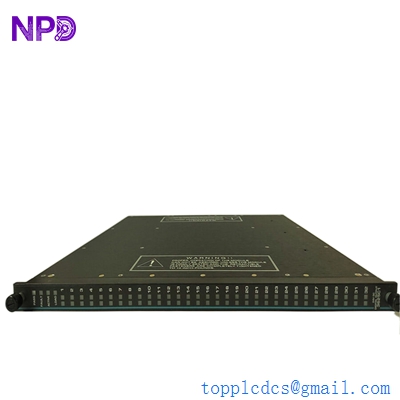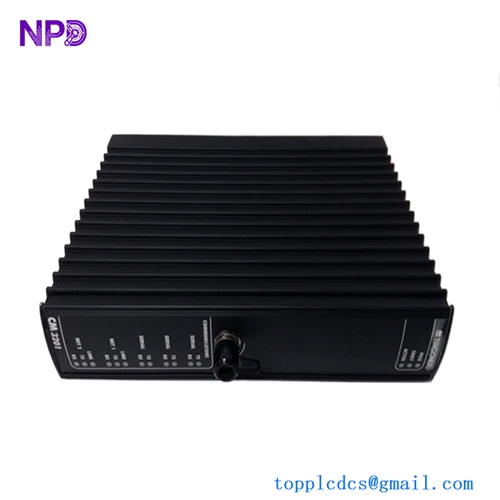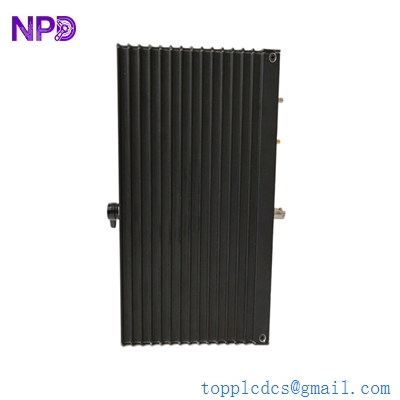

Description
- Model: 3301
- Brand: Triconex (Schneider Electric)
- Series: Tricon / Trident Safety Systems
- Core Function: Digital Input (DI) signal processing for safety-critical monitoring
- Product Type: 32-Channel TMR Digital Input Module (New Surplus)
- Key Specs: 24 VDC | Triple Modular Redundant (TMR) architecture | SIL 3 Certified
- Input Channels: 32 isolated points
- Nominal Input Voltage: 24 VDC (Operating range 20–30 VDC)
- Input Current: 4 mA at 24 VDC (Typical)
- Threshold Levels:
- Logic High: > 15 VDC
- Logic Low: < 8 VDC
- Response Time: < 10 ms (Field-to-Internal Bus)
- Isolation: 1500 VDC (Field-to-Logic)
- Architecture: Triple Modular Redundant (TMR) – Three independent input legs with 2-out-of-3 voting
- Safety Integrity: Certified for SIL 3 (IEC 61508)
- Diagnostics: Continuous self-test of all three legs; “Stuck-On” and “Stuck-Off” detection
- Operating Temp: -40 °C to +70 °C (-40 °F to +158 °F)
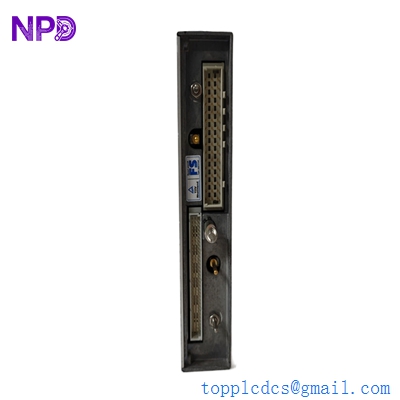
TRICONEX 3301
Installation & Configuration Guide
Phase 1: Preparation (Pre-Installation)
⚠️ Safety First:
- This module is part of a Safety Instrumented System (SIS). Ensure the process is in a stable state or that the specific safety loops are bypassed according to your facility’s SOP.
- Revision Check: Verify that the module hardware revision matches the configuration in your Tristation 1131 project.
- Field Power: Ensure the 24 VDC field power supply to the baseplate is stable and within the 20–30 V range.
Phase 2: Removal of Faulty Module
- Identification: Locate the faulty module via the “Fault” (Yellow) LED or the Diagnostic Monitor software.
- Unlocking: Loosen the top and bottom retaining screws on the front panel.
- Extraction: Use the built-in extractor handles to pull the module straight out of the rack. Avoid any side-to-side rocking, which can stress the backplane connector.
Phase 3: New Module Installation
- Connector Inspection: Check the backplane pins for any debris or oxidation.
- Insertion: Slide the 3301 into the card guides until it is firmly seated against the backplane.
- Locking: Tighten the front panel screws. This is essential for proper grounding and noise rejection.
Phase 4: Commissioning & Testing
- Self-Test: The “PASS” (Green) LED should illuminate after internal initialization (typically within 15 seconds).
- Software Validation: In Tristation, verify the module status is “Active.” Ensure there are no “Voter Mismatch” alarms.
- Functional Test: Toggle a field switch (e.g., an Emergency Stop button) and verify the change of state on the HMI and within the logic program.
Customer Cases & Industry Applications
Case 1: Restoring Fire & Gas Redundancy in an Offshore Platform
Situation: A North Sea oil platform identified a failure in one leg of a Triconex 3301 DI module monitoring smoke detectors. While the 2-out-of-3 voting kept the system operational, the loss of redundancy reduced the system to 1-out-of-2, compromising safety standards.
Task: The platform required a replacement immediately to restore full TMR (SIL 3) compliance. Conventional procurement lead times were 12+ weeks due to logistics and part obsolescence.
Action: We provided a New Surplus 3301 module from our stock. The module was expedited via helicopter transport to the platform.
Result: The module was hot-swapped online. Redundancy was restored instantly, and the “Fault” alarm cleared. The safety superintendent noted: “Getting a new-in-box 3301 this quickly saved us from a mandatory production curtailment.”
Case 2: SIL 3 Upgrade for a Chemical Processing Unit
Situation: A chemical plant was upgrading its burner management system (BMS) and needed additional high-integrity digital inputs for flame scanners and fuel valve limit switches.
Task: The project required modules that were guaranteed to be original and unused to satisfy the TUV safety audit requirements for the new SIL 3 loops.
Action: We supplied 3 units of the 3301 with original factory seals and documented traceability.
Result: The BMS upgrade was completed on schedule. The TMR architecture of the 3301 provided the necessary fault tolerance to prevent nuisance shutdowns, which had previously plagued the plant’s older simplex system.
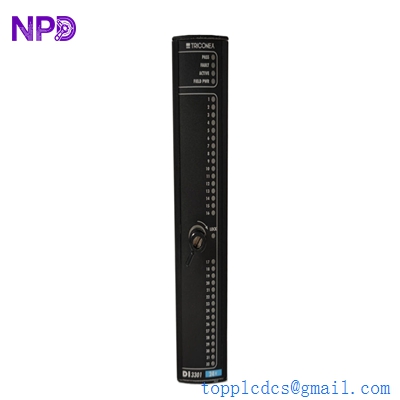
TRICONEX 3301
Frequently Asked Questions (FAQ)
Q: Can the 3301 be hot-swapped? A: Yes, all Triconex TMR modules are designed for online hot-swapping. The triple redundant architecture ensures that the other two healthy legs continue to monitor the field inputs while you replace the faulty module.
Q: What happens if there is a field wiring fault? A: The 3301 features extensive diagnostics. If a field wire is shorted to ground or open, the module will typically report an “External Fault” or “Field Power” error, allowing you to troubleshoot the wiring without pulling the module.
Q: Why choose “New Surplus” over “Used” for a safety system? A: In a Safety Instrumented System (SIS), reliability is non-negotiable. Used modules have been subjected to years of heat and environmental stress. Our New Surplus 3301 units have zero running hours, meaning the internal components are fresh and provide the full design life expected of a SIL 3 component.
Q: Is the 3301 compatible with both Tricon and Trident racks? A: The 3301 is a standard Tricon series module. For Trident systems, you would typically look for the 2101 or 3101 modules. Always verify your rack type before ordering.
Q: How do I handle a “Voter Mismatch” alarm? A: A voter mismatch occurs when one of the three legs sees a different input state than the other two. If this persists after replacing the module, the issue is likely a high-impedance connection in the baseplate or field wiring terminal.