Description
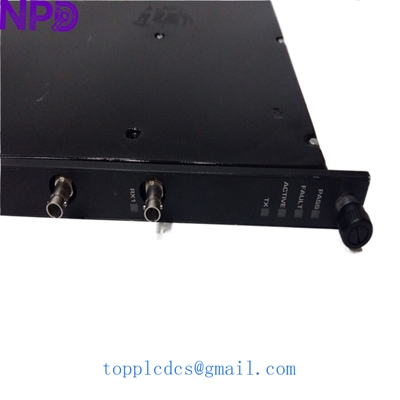
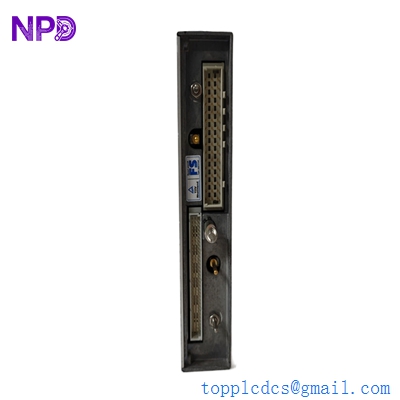
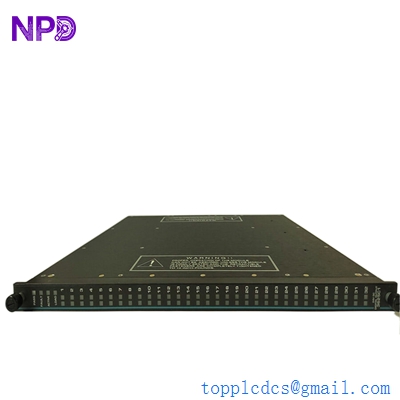
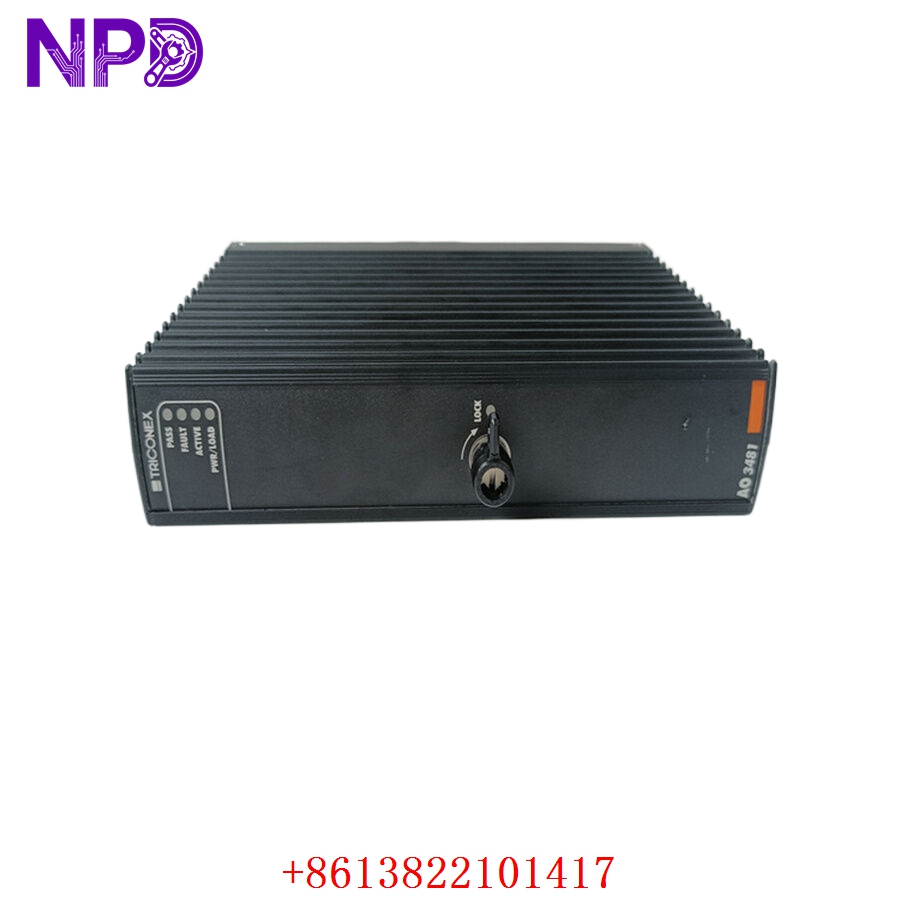
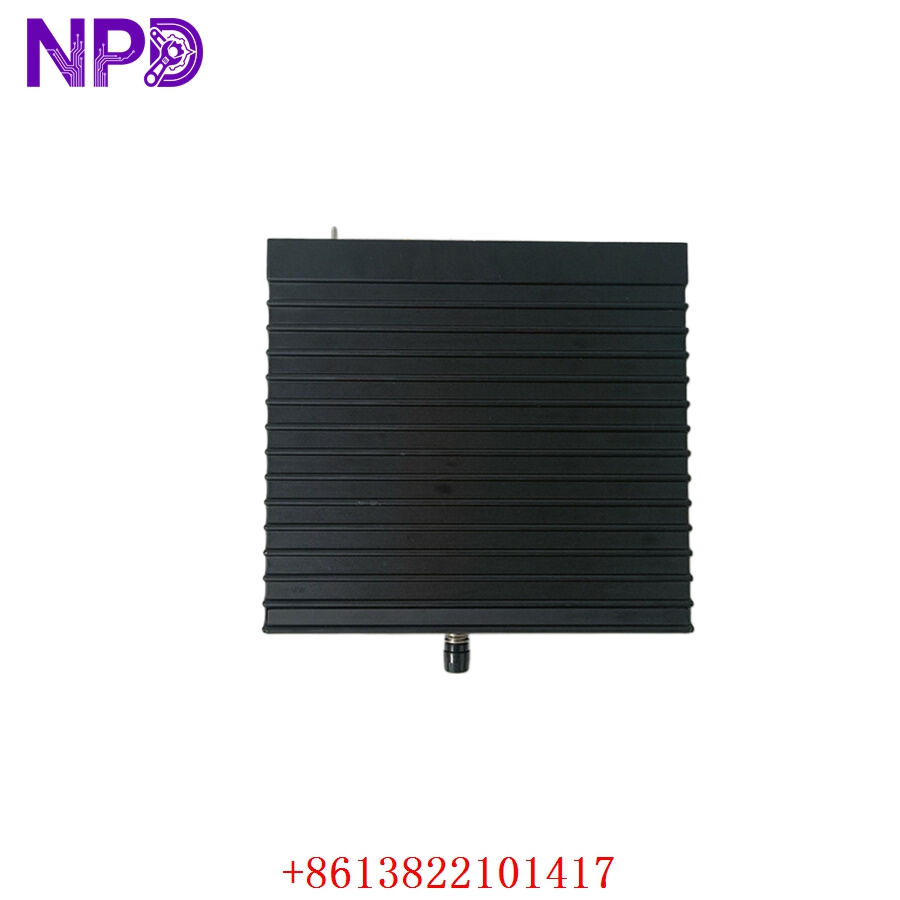
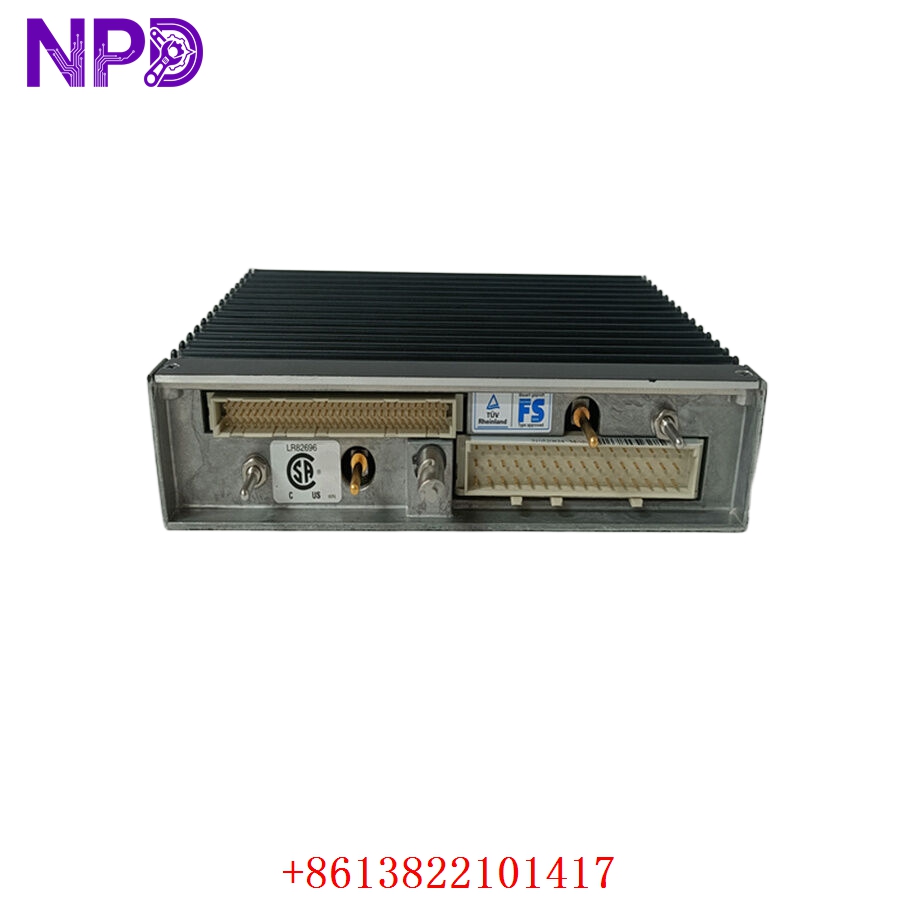
- Model: Triconex 3481 (Often designated as AO3481 / 3481S2)
- Brand: Triconex (Schneider Electric / Formerly Invensys)
- Series: Trident safety Instrumented System (SIS) Platform
- Core Function: Delivers triple-modular redundant, highly isolated analog current loop signals to critical field actuators
- Product Type: Analog Output (AO) Module
- Key Specs: 4 Channels | DC-Coupled 4 to 20 mA Output Range | Commoned Return Architecture | 12-Bit Resolution
- Operating Platform: Triconex Trident v2 System Baseplate Architecture
- Channel Capacity: 4 Output Points, DC-coupled
- Output Signal Range: Standard 4 to 20 mA DC (Capable of 0 to 22 mA over-range tracking)
- Return Path Configuration: Commoned-return topology
- Signal Resolution: 12-Bit hardware conversion logic
- Output Calibration Accuracy: < 0.25% of Full Scale Range (FSR) across 0 to 70^\circC operating window
- Loop Power Configuration: Requires external nominal 24 VDC field loop power supply (Accepts up to 32 VDC max)
- Leg Failure Switchover Speed: 1 ms typical execution time (3 ms maximum threshold upon hardware leg fault)
- Diagnostic Hardware Subsystem: Integrated Forced-Switch Diagnostics (FSD) for fault path monitoring
- Environmental Rating: Factory G3 conformal coating for exposure resilience in corrosive atmospheres
Application Scenarios & Engineering Pitfalls
The On-Site Reality
When dealing with Triple Modular Redundant (TMR) Safety Instrumented Systems like the Triconex Trident line, you are looking at the final line of defense for industrial safety. The Triconex 3481 controls critical proportional valves, emergency variable speed drives, or turbine actuators. If this output card fails or trips due to field loop degradation, the system’s fault-tolerant voting architecture keeps the plant running temporarily, but you are left operating without redundancy (running on a degraded “leg”). Finding immediate replacements for these obsolete modules is vital to prevent an unexpected total system trip that could leave your plant dark for days.
Typical Deployment Scenarios
- Oil & Gas – Emergency Shutdown (ESD) Systems
Controls the precise analog positioning of emergency isolation valves (ESDVs) or critical choke controls on extraction manifolds.
- Petrochemical – Burner Management Systems (BMS)
Manages fuel modulating valves on critical process boilers, requiring sub-millisecond response validation for flame safety loops.
- Power Generation – Steam Turbine Governor Interfacing
Delivers steady, noise-isolated current loops to throttle control actuators, matching strict real-time frequency synchronization standards.
- Chemical Processing – Exothermic Reactor Quench Controls
Drives the modulating feed control valves responsible for injecting chemical retardants when a process parameter exceeds safe boundaries.
Plant Survival Case Study: Refineries Corrosive Atmosphere Failure
- Background: A coastal oil refinery was operating an obsolete Trident v2 safety rack on a hydrocracker unit. The atmosphere inside the auxiliary rack house had subtle concentrations of ambient hydrogen sulfide, despite air filtration systems.
- The Problem: The active Triconex 3481 Analog Output board regulating the primary pressure control valve suffered an internal component failure on Leg B. The Trident system flagged a “Slot 4 Degraded” alarm, dropping the unit into a 2-out-of-3 (2oo3) voting mode. The field maintenance supervisor knew that if another leg failed before a replacement was found, the system would default to a fail-safe state, shutting down the entire hydrocracker line—costing an estimated $220,000 per day. The OEM’s supply networks listed the card as long out of production with no local depot stock.
- The Solution: The instrumentation leader contacted us directly. We bypassed the standard delays by picking an original, unused surplus 3481 card from our inventory core. The card was installed into our local Trident emulation test loop, put through automated signal verification cycles, and sent out via priority express transport within 4 hours.
- The Result: The replacement hardware arrived at the refinery maintenance shop by noon the next day. The field team hot-swapped the module, watched the main controller verify the new leg’s safety diagnostics, and observed the system return to a secure, fully redundant state.
Compatible Replacement Models
When keeping legacy safety instrumentation platforms functional, identifying correct board revisions avoids safety configuration mismatches. Here is the hardware mapping for the Trident analog output family:
| Original Part Number | Alternative Model | Compatibility Level | Key Differences / Structural Variances | Required On-Site Modification Steps | Cost Variance |
| Triconex 3481 | Triconex 3481S2 | ✅ Drop-in Replacement | Updated engineering firmware baseline; improved reverse voltage protection characteristics on the field loop interface. | Direct card-slot hot swap. No adjustments to application code or physical wiring required. | Baseline Cost |
| Triconex 3481 | Triconex 3482 | ❌ Hardware Incompatible | High-Current Analog Output variant; utilizes isolated point-to-point grounds rather than a commoned return path. | Requires Model 2481 baseplate layout. Physical terminal assignments and current paths do not match. Do not insert into a 3481 slot. | +35% |
| Triconex 3481 | Triconex 3351 | ❌ Hardware Incompatible | This is an Analog Input module, completely inverted circuit architecture. | Mismatched hardware backplane interface pins and internal registers. | +15% |
Quality Assurance & Testing Standard Operating Procedure
To eliminate safety-system certification concerns regarding surplus or shelf-aged electronics, every Triconex module is ran through a rigorous verification cycle before being cleared for deployment to your facility.
[Traceability & S/N Check] ➔ [High-Magnification Component Audit] ➔ [Galvanic Isolation Multimetering] ➔ [Active 2oo3 System Loop Emulation] ➔ [Static-Shielded Nitrogen Packaging] 1. Serialization and Traceability Verification
- Batch Auditing: Verifying tracking codes against known Triconex assembly dates and firmware version revisions.
- History Profiling: Checking hardware component modifications against factory service notices to guarantee full field safety alignment.
2. High-Magnification Component and Substrate Inspection
- Structural Check: Optical analysis of the circuit tracks under high-magnification scopes to ensure there is zero evidence of conformal coating flaking, trace degradation, or thermal component stress.
- Pin Alignment: Verifying that the high-density backplane connection array is perfectly straight and clean of metallic oxide layers.
3. Galvanic Isolation Circuit Verification
- Electrical Safety Stressing: Using dedicated insulation multimeters to test dielectric barriers between the field-side loop return paths and the inner logic bus components.
- Pass Boundaries: Every board must show insulation values exceeding 10 MΩ to ensure complete protection against high-voltage surges crossing into the central processing units.
4. Active 2oo3 System Loop Emulation
- The Testing Environment: The Triconex 3481 card is installed into a live Trident v2 safety baseplate node.
- Dynamic Current Validation: We run custom diagnostic code to inject steps (4 mA, 12 mA, 20 mA, and 22 mA) across all four output paths simultaneously, monitoring current precision with reference tracking instruments.
- Leg-Failure Simulation: We intentionally break individual logic circuits on the testing rig to confirm that the board switches tracking responsibilities to the parallel legs within the required 1 to 3 ms envelope without dropping output loop control.
5. Final Quality Sign-Off and Secure ESD Packaging
- Certification Labeling: The inspecting engineer applies a dated, signed quality check sticker directly onto the protective anti-static containment layer.
- Sealing Protocols: The module is sealed inside an ESD moisture-barrier bag, filled with clean padding blocks, and packed inside a double-wall industrial shipping carton to maintain full field readiness during transport.
High-Availability Safety System Troubleshooting Quick Reference
❗ SAFETY FIRST: While the Trident platform supports active online card swapping (hot-swapping), ensure that the target module’s functional interlocks are configured correctly within the TriStation 1131 software environment before pulling any hardware from a live system.
Q: The Trident master module logs a persistent “Field Power Fault” for the slot containing the 3481 card, though the drive/actuator loop seems physically complete.
A: Correlation: High. This usually points to a drop in external loop power or a blown input protection circuit on the card itself, rather than a failure of the main logic bus.
- Use a digital multimeter to measure the loop power supply right at the input terminals of the corresponding baseplate module.
- Verify that the voltage measures within the 24 to 32 VDC operating window.
- If the supply voltage checks out but the fault flag won’t clear, look for evidence of reversed loop polarity or localized short circuits that may have tripped the board’s internal overcurrent protection. If the fault stays locked to the card, swap it out.
Q: TriStation diagnostics display an “Active Leg Asymmetry” or “FSD Fault Warning” targeting a single channel on the 3481 module.
A: Correlation: High (Requires component swap). This indicates that the module’s internal Forced-Switch Diagnostics found a tracking deviation between the triplicated control paths on that specific channel. The card is warning you that its voting logic has dropped to a degraded state.
- Connect your TriStation engineering tool and view the diagnostic buffer registers to identify the specific leg failure code.
- Honest technical truth: Do not try to field-repair these trace faults. The board is running without full fallback redundancy on that channel. Prepare your spare card, match the revisions, and schedule a hot-swap window to restore proper 2oo3 coverage.
Q: The actuator is physically oscillating or drifting, but the drive configuration parameters look perfectly stable within the control program logic.
A: Correlation: Medium. The output smoothing capacitors or the digital-to-analog converter (DAC) filters on the board might be drifting out of calibration due to high component age or prolonged thermal exposure inside the cabinet.
- Connect a calibrated current-loop meter in series with the problem loop.
- Compare the physical current output against the digital terminal values requested by your logic system.
- If you measure an output variance greater than 0.25% FSR, or notice high-frequency analog ripple on the line, replace the card to rule out interface board degradation.
❗ Critical Installation Checklist for On-Site Technicians
- Confirm Baseplate Compatibility: The 3481 commoned-return board must only be slotted into its corresponding commoned-return analog output baseplate interface structure. Forcing this card into an alternative model slot can damage the backplane socket lines.
- Check the Hot-Swap Expiration Window: When performing an online system recovery, do not leave the faulty card slot empty. Insert your verified replacement module into the adjacent slot right away to allow the system to synchronize parameters and close the diagnostic loop window before an automatic configuration timeout is triggered.
- Verify External Loop Isolation: Ensure your external 24 VDC field instrument power supply is completely isolated from the main internal logic power infrastructure. Mixing field and system grounds can bypass the card’s galvanic barriers, rendering your safety system vulnerable to external electrical faults.