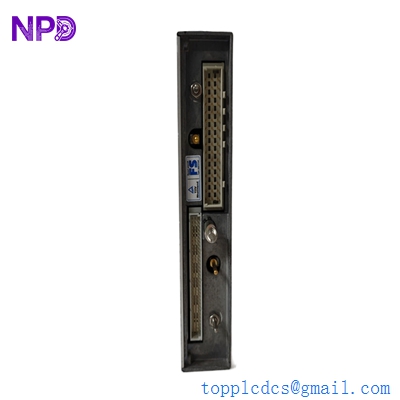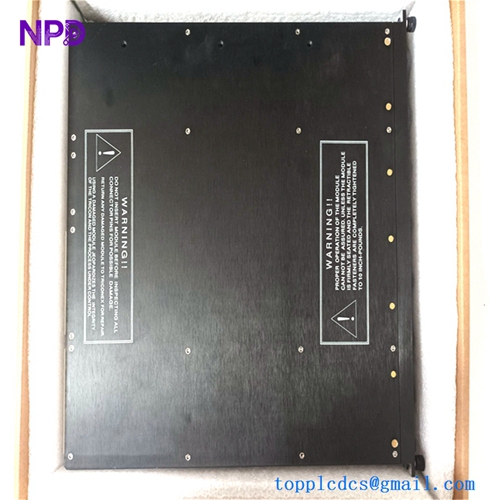

Description
- Model: Triconex EPI3382
- Brand: Triconex (Schneider Electric)
- Series: Tricon v9 / v10 High-Availability Systems
- Core Function: Enhanced Power Indicator (EPI) / Power Module Interface
- Product Type: System Power Management Module
- Key Specs: Dual Redundant Power Monitoring | Diagnostic Feedback to Main Processors
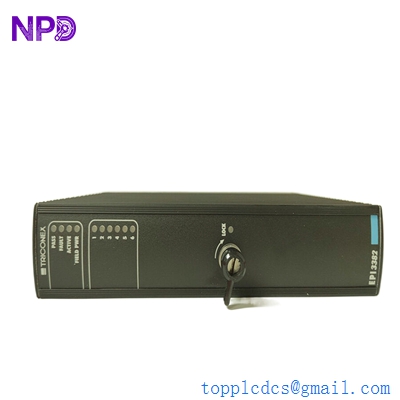
TRICONEX EPI3382
Key Technical Specifications
- Input Voltage: 24 V DC (Dual redundant inputs)
- Module Type: Passive/Active monitoring interface
- Compatibility: Tricon Controller Chassis (v9.6 through v11.x)
- Diagnostics: Individual LED indicators for Power A and Power B
- Heat Dissipation: < 5 Watts
- Isolation: 500 V DC (Input to Chassis)
- Form Factor: Standard Tricon module width
- Environmental: Rated for Class 1, Division 2 hazardous locations
- Alarm Outputs: Dry contact/Logic signal for power loss notification
- Hot-Swap: Fully supported within a powered Tricon chassis
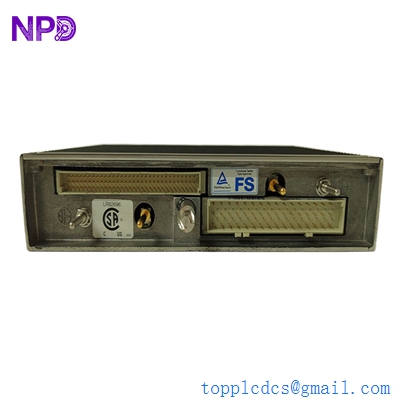
TRICONEX EPI3382
Application Scenarios & Pain Points
In a Safety Instrumented System (SIS) like Triconex, “power” isn’t just about electricity; it’s about availability. The EPI3382 is the eyes and ears of your chassis power supply. If one of your primary power feeds fails, the EPI3382 ensures the system knows about it immediately—triggering an alarm in the SOE (Sequence of Events) recorder—before the second power feed has any issues. Without a functional EPI module, you are effectively “flying blind,” unaware that your redundant system has become a single-point-of-failure system.
Typical Application Scenarios:
- Emergency Shutdown (ESD) Systems Monitoring power health in refineries where a total loss of control power would necessitate a flare-off and full site evacuation.
- Fire and Gas (F&G) Systems Ensuring redundant power is available for flame detectors and suppression solenoids across offshore platforms.
- Nuclear Control & Protection Providing high-reliability power status feedback in reactor protection systems (RPS).
- Turbomachinery Control (TMC) Used on large compressor trains where power interruptions can cause massive mechanical damage during a high-speed trip.
Case Study: The “Silent Backup” Failure
Background: A major petrochemical plant in the Middle East was running a Tricon v10.5 system. Everything looked “green” on the HMI, but a routine maintenance walk-through revealed the EPI3382 had no LEDs lit for “Power B.”
The Problem: The system had been running on a single power source for weeks. The EPI3382 module itself had a failed internal logic gate, meaning it stopped reporting the status of Power B to the Main Processors (MP). The plant was one tripped breaker away from a total process shutdown.
Solution: We supplied a certified EPI3382 from our critical spares stock. Because the Tricon chassis is designed for high availability, the technician performed a hot-swap.
Result:
- Instant Recovery: As soon as the new module was seated, the “Power B” LED turned green and the diagnostic alarm cleared in the Tricon Manager software.
- Risk Mitigation: The client avoided an estimated $2.5M loss—the cost of an unplanned “cold” shutdown of their ethylene cracker.
- Validation: We provided the client with the full diagnostic dump from the replaced module to assist in their Root Cause Analysis (RCA).
Compatible Replacement Models
The EPI3382 is a standard component, but versioning matters in the Triconex world.
| Original Model | Successor/Alternative | Compatibility | Notes |
| EPI3382 | 3382 (Standard) | ✅ Direct | EPI3382 is the “Enhanced” version with better diagnostics. |
| EPI3382 | 3381 | ❌ Incompatible | 3381 is for older v6/v8 systems; different backplane. |
| 3BSE018681R1 | EPI3382 (v11) | ✅ Direct | Backwards compatible with most v9/v10 chassis. |
Engineer’s Note: When replacing these, check your Tricon Manager (MSW) version. While the hardware is usually “drop-in,” some older firmware versions might flag a “Module Mismatch” if the hardware revision of the new EPI3382 is significantly newer than the one it’s replacing. This can usually be cleared by “Accepting” the new module in the software configuration.
Troubleshooting Quick Reference
| Symptom | Likely Cause | Action |
| “Power A” LED Off | Blown fuse on the Power Entry Module (PEM) or failed source. | Check the input terminals at the back of the chassis. |
| Both LEDs Off (System Running) | EPI3382 internal logic failure or backplane seat issue. | Gently reseat the module. If no change, replace immediately. |
| “System Alarm” but LEDs Green | Communication fault between EPI and Main Processors. | Check the “Module Status” in Tricon Manager for a “Comm Fail.” |
| Module “Active” LED blinking | Normal startup or firmware synchronization. | Wait 30 seconds; if it doesn’t go solid, check for a hardware ID conflict. |
❗ Strict SOP Warning: Triconex modules are heavy and the backplane pins are precision-engineered. When installing the EPI3382, ensure the top and bottom levers are fully open before insertion. Never force the module. If it doesn’t slide in like silk, something is misaligned. I’ve seen $10,000 backplanes ruined by one “strong-arm” installation attempt.