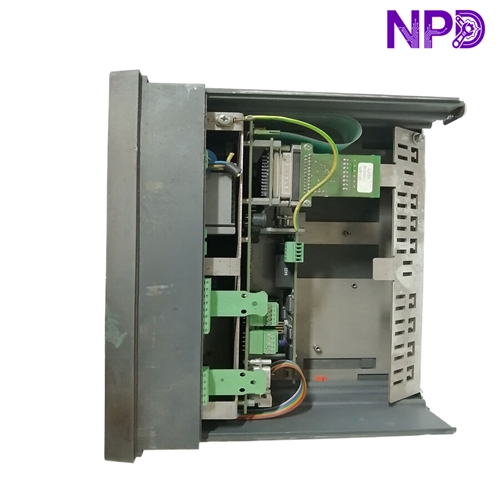

Description
The Tyco PS-136 is a dedicated industrial power supply module frequently utilized within Tyco Fire Protection and Security Systems. It is specifically engineered to provide stable, filtered 24V DC power to critical components such as fire alarm control panels (FACPs), remote power supplies for notification appliances, and integrated security system controllers.
These units are designed for continuous operation in high-reliability environments, ensuring that systems remain powered even during fluctuations in main AC supply.

Technical Specifications ⚙️
| Feature | Specification |
|---|---|
| Product Type | Power Supply Module |
| Manufacturer | Tyco Fire & Security / SimplexGrinnell |
| Model | PS-136 |
| Input Voltage | Typically 120/240 VAC (Selectable/Auto-ranging) |
| Output Voltage | 24V DC (Regulated) |
| Application | Fire Alarm Control Panels, Security System Peripherals |
| Protection | Short-circuit, overload, and thermal protection |
| Mounting | Chassis/Panel mount within FACP cabinet |
| Compliance | UL Listed (specific to fire safety standards) |
Key Applications & Integration 🏭
- Fire Alarm Systems: Acts as the primary or auxiliary power source for notification appliance circuits (NACs), keeping fire strobes and horns operational during alarm conditions.
- Security Control Panels: Provides reliable power for access control modules, card readers, and motion sensors.
- System Redundancy: Often paired with lead-acid battery backup systems. The PS-136 includes charging circuitry to maintain these batteries, ensuring the system operates during a mains power loss.
Maintenance & Troubleshooting Notes 🔧
- Battery Maintenance: If your system reports “Low Battery” or “Charger Trouble,” it is often not the PS-136 itself, but the connected lead-acid batteries that have reached the end of their service life (typically 3–5 years).
- Output Voltage Checks: Always measure the output at the terminal block using a digital multimeter. A reading significantly lower than 24V DC (e.g., <22V) under load often indicates a failing capacitor or a component nearing the end of its operational lifespan.
- Ventilation: Despite being designed for enclosed fire cabinets, ensure the cabinet is not packed so tightly that air cannot circulate around the module. Excessive heat is the primary cause of premature failure in these power modules.
- Fuse/Breaker Checks: Before condemning the module, verify the input AC fuse and any secondary output protection fuses that may be mounted on the FACP motherboard or the power distribution board.