Description
⚙️ Product Overview
ULVAC CRTM-9000G is a crystal oscillation type deposition controller designed for monitoring and controlling thin-film deposition processes. It works with a quartz crystal sensor to measure deposition rate and film thickness during vacuum evaporation and related film-forming processes.
The controller is part of ULVAC’s CRTM deposition-control family. ULVAC describes the CRTM series as quartz crystal deposition controllers developed for precise deposition-rate and film-thickness control. The CRTM series is used in evaporation applications where stable film thickness and deposition rate are important.
The CRTM-9000G has also been used in research and production vacuum deposition systems. Published technical literature identifies the CRTM-9000G as the controller used with a quartz crystal microbalance for monitoring film thickness and deposition rate.
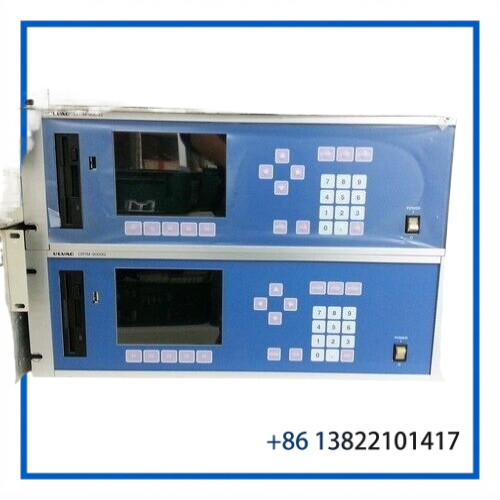
🔧 Key Features
- Brand: ULVAC
- Model: CRTM-9000G
- Product Type: Crystal Oscillation Deposition Controller
- Application: Vacuum deposition and thin-film processing
- Measurement Principle: Quartz crystal monitoring
- Main Function: Deposition-rate and film-thickness control
- Process Type: Evaporation / vacuum film deposition
- Controller Generation: CRTM-9000 series
- Equipment Integration: Configuration dependent
- Condition: Used
- Sensor Configuration: Verify actual system configuration
- Communication / I/O: Configuration dependent
- Power Requirements: Verify nameplate and system documentation
📋 Product Datasheet
| Parameter | Specification |
|---|---|
| Brand | ULVAC |
| Model | CRTM-9000G |
| Product Name | Crystal Oscillation Deposition Controller |
| Product Category | Film Measurement / Deposition Control |
| Product Type | Quartz Crystal Deposition Controller |
| Measurement Method | Crystal oscillation / quartz crystal |
| Primary Function | Deposition rate and film thickness control |
| Application | Vacuum evaporation / thin-film deposition |
| Deposition Process | Configuration dependent |
| Sensor | Quartz crystal deposition sensor |
| Film Thickness Monitoring | Supported |
| Deposition Rate Monitoring | Supported |
| Control System Interface | Configuration dependent |
| External I/O | Configuration dependent |
| Communication Interface | Configuration dependent |
| Display | Integrated controller display |
| Power Supply | Verify nameplate |
| Dimensions | Verify actual unit |
| Weight | Verify actual unit |
| Condition | Used |
⚡ Operating Function
The CRTM-9000G receives measurement information from a quartz crystal sensor installed in the deposition system. As material is deposited onto the crystal, its oscillation characteristics change. The controller uses this change to determine deposition conditions and provide process information.
This allows the deposition system to monitor parameters such as film growth rate and accumulated thickness during evaporation.
The controller can therefore be integrated into a larger vacuum deposition system rather than operating as an isolated measurement instrument. The actual sensor, source-control arrangement, process parameters, and external interfaces depend on the equipment configuration.
ULVAC documentation also notes that the CRTM-9000/9000G generation supports stored configuration and process data, including system parameters and deposition programs.
🧰 Installation & Configuration
Before installing a CRTM-9000G:
- Confirm the complete model marking on the controller.
- Compare the replacement unit with the existing controller.
- Verify the connected quartz crystal sensor and sensor configuration.
- Check all rear-panel connectors before power-up.
- Confirm signal and control cables are connected to the correct positions.
- Verify the controller’s power requirement from the nameplate.
- Check the deposition system’s existing process parameters and backup data.
- Install the controller according to the equipment service documentation.
- Perform sensor recognition and measurement checks.
- Confirm deposition-rate and thickness readings before returning the system to production.
ULVAC documentation for the CRTM family shows that the controller is connected to the deposition oscillator through dedicated RF/external and control connections. Exact connection details depend on the controller generation and installed sensor configuration.
When replacing an older CRTM-9000G, do not assume that every CRTM-series controller is a direct substitute. ULVAC has documented compatibility considerations for CRTM-9000, CRTM-9000G, and later CRTM-9100G backup data.
🔩 Maintenance Recommendations
For a used CRTM-9000G, maintenance should focus on the controller, sensor connection, and deposition-system interface.
- Inspect the front panel and display for damage or abnormal indications.
- Check rear connectors for bent pins, oxidation, or loose connections.
- Inspect sensor cables and RF/coaxial connections.
- Keep the controller free from dust and process contamination.
- Verify stable communication with the quartz crystal sensor.
- Check whether deposition-rate readings remain stable.
- Compare film-thickness readings with the process reference.
- Back up existing process programs before changing controller parameters.
- Record software and hardware revision information where available.
- Keep a verified spare when the deposition system is production-critical.
A used controller should ideally be tested with a compatible sensor or system before being placed into continuous production service.
❓ Frequently Asked Questions
What is ULVAC CRTM-9000G?
It is a crystal oscillation type deposition controller used for quartz-crystal-based monitoring and control of vacuum deposition processes.
What does the controller measure?
Its primary role is monitoring deposition rate and film thickness through a quartz crystal sensor.
Where is CRTM-9000G used?
It can be used in vacuum evaporation and thin-film deposition systems, including research and industrial film-processing equipment.
Is CRTM-9000G a PLC?
No. It is a dedicated deposition measurement and control instrument rather than a general-purpose PLC or DCS controller.
Is the listed unit new?
No. The referenced eBay listing identifies the unit as Used.
Can CRTM-9000G be replaced by CRTM-9100G directly?
Not automatically. ULVAC has published compatibility information concerning backup data between the CRTM-9000/9000G generation and CRTM-9100G, so the exact system configuration and software version should be checked before substitution.
What should be checked before purchasing?
Confirm the model, display condition, sensor interface, rear-panel connectors, software/revision information, physical condition, and compatibility with the existing deposition system.
🔄 Related ULVAC Components
- ULVAC CRTM-9000 Crystal Oscillation Deposition Controller
- ULVAC CRTM-9100G Deposition Controller
- ULVAC CRTM-9200 Deposition Controller
- ULVAC CRTM-6000G Deposition Controller
- ULVAC CRTM-R1 Crystal Deposition Controller
- ULVAC CRTM-R1-EL Deposition Controller
- ULVAC CRTS-M6 Crystal Oscillation Sensor System
- ULVAC Quartz Crystal Deposition Sensor
- ULVAC VTR Series Vacuum Deposition System
- ULVAC Depoview Deposition Monitoring System
The CRTM-6000G and newer CRTM-R1/R1-EL controllers are part of ULVAC’s deposition-controller product family, while the CRTM-9000/9000G belongs to an earlier generation. They should be regarded as related products rather than automatic drop-in replacements.
🏭 Application Summary
ULVAC CRTM-9000G is a specialized deposition controller for vacuum thin-film processing. Its main role is to work with a quartz crystal sensor to monitor deposition rate and film thickness, helping maintain repeatable film-formation conditions.
It is particularly relevant for equipment maintenance, laboratory vacuum deposition systems, semiconductor and electronic-material processing, optical coating, and other applications where controlled thin-film deposition is required.
For replacement purchasing, the complete model number should be matched first, followed by verification of the quartz crystal sensor, cable/interface configuration, controller revision, backup data, and compatibility with the existing deposition equipment.