
Description
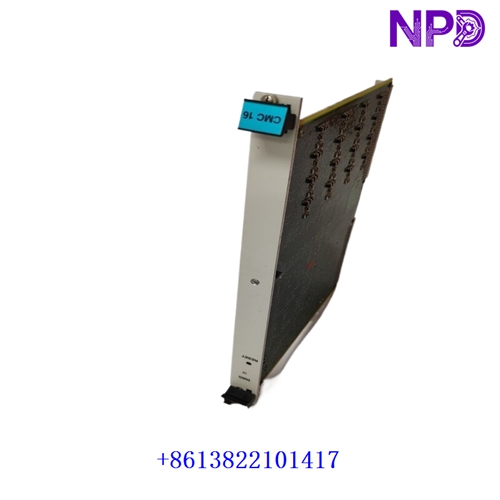
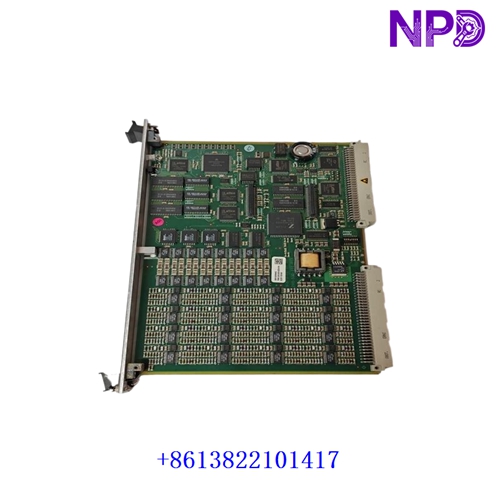
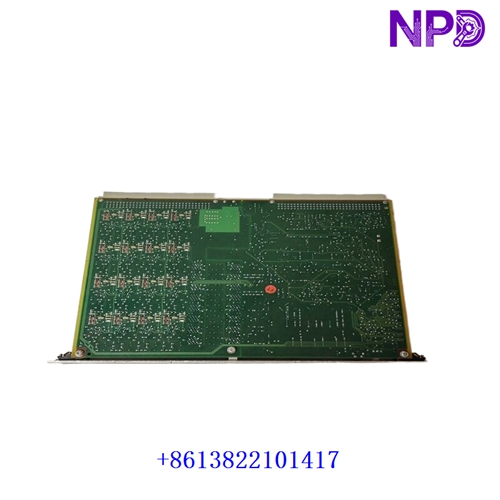
The Vibro-Meter (Meggitt) VM600 CMC16 (associated part numbers include 200-530-025-014 and 200-530-111-013) is a high-density, intelligent Condition Monitoring Card (CMC) designed for the VM600 rack-based machinery protection and condition monitoring system. It acts as a sophisticated front-end data acquisition and processing card, capturing complex vibration, position, and speed variables to evaluate the mechanical health of critical rotating machinery.
| Parameter | Specification |
| Brand / Manufacturer | Vibro-Meter / Meggitt |
| Model / Series | VM600 CMC16 Condition Monitoring System (CMS) |
| Module Part Numbers | 200-530-025-014 / 200-530-111-013 |
| Product Type | Condition Monitoring Card (CMC) / Data Acquisition Module |
| System Compatibility | VM600 Rack-Based Monitoring Systems (utilizing VM600 CMS software / VibroSight) |
| A/D Conversion | High-resolution 24-bit analog-to-digital conversion |
| Sampling Rate | Up to 98 kHz max. sampling rate |
| Speed Measurement Range | 1 to 100,000 RPM (0.017 Hz to 1.667 kHz) with 5 ns resolution |
| Input Impedance | \ge 100 k\Omega |
| Operating Temperature | 0°C to +65°C (32°F to 149°F) |
| Product Status | Industrial Machinery Protection & Condition Monitoring Spare Part |
First-Run Inspection Checklist
- ☑ Physical & PCB Board Integrity
Inspect the front faceplate, status LEDs, internal multi-pin connectors, and electronic board components for any transit vibration damage, micro-cracks, or electrostatic contamination.
- ☑ Rack Slot Compatibility & Bus Connection
Ensure that the target VM600 rack backplane slot is designated for condition monitoring cards and that raw/tacho bus connections align correctly without pin deflection.
- ☑ Firmware & Software Version Match
Verify that the card’s internal firmware revision matches the plant’s configuration software (such as VibroSight or VM600 CMS suite) to ensure seamless communication over Ethernet or rack gateway links.
Routine Maintenance & Servicing
- 🛠 Data Buffer & Network Diagnostics
Periodically review error logs, event queues, and spectrum data packets via the host condition monitoring software to verify that dynamic signals are processing cleanly without dropped frames.
- 🔌 Terminal & Sensor Loop Checks
Inspect input signal wiring terminals on matching input/output cards (such as associated IOC modules) to confirm loop integrity and shield ground continuity.
Troubleshooting & Common Issues
- ⚠️ Communication or Link Timeouts
If the host system loses connection to the CMC16 card, verify rack controller (CPUM/CPUR) health, check Ethernet/serial link configurations, and ensure backplane power rails are stable.
- ⚠️ Signal Clipping or High Noise Floor
If raw vibration or tachometer channels register erratic spikes or flatlined clipping, check sensor power supplies, review input voltage scaling (-20 VDC to +20 VDC range), and inspect signal cable shielding against electromagnetic interference.
Safety Precautions
- 🔐 Qualified Personnel Only
Rack insertion, hardware replacement, and software configuration must be performed exclusively by certified vibration analysis and machinery protection specialists.
- ⚠️ Live Rack Handling Guidelines
Although VM600 infrastructure supports modular maintenance, always follow strict plant safety policies regarding safety instrumented loops and rack power allocation before manipulating cards.
Frequently Asked Questions (Q&A)
- ❓ Q1: What is the core function of the CMC16 card in a VM600 system?
A: It serves as an intelligent data acquisition engine that converts raw dynamic signals (vibration, position, speed) into frequency-domain and time-domain metrics, executing Fast Fourier Transforms (FFT), limit checks, and vibration trending for advanced machinery diagnostics.
- ❓ Q2: How does the CMC16 receive its input signals?
A: It can acquire inputs directly via rear terminal connectors or share signals from adjacent mechanical protection cards (such as MPC4 modules) across the VM600 rack’s internal “raw bus” and “tacho bus” infrastructure.