
Description
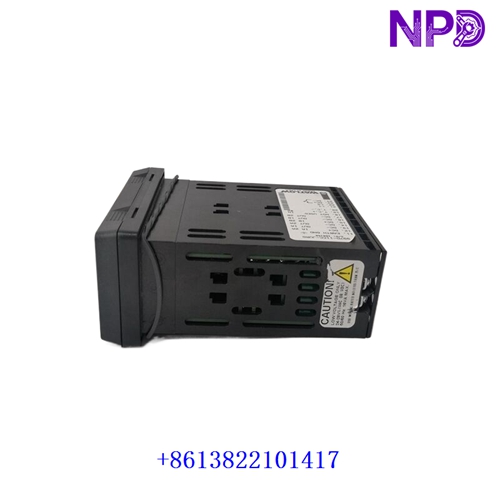
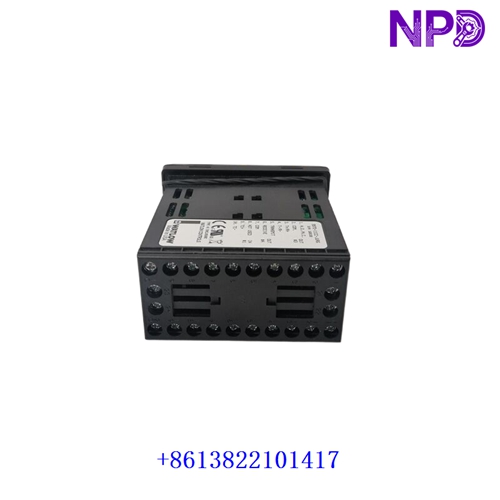
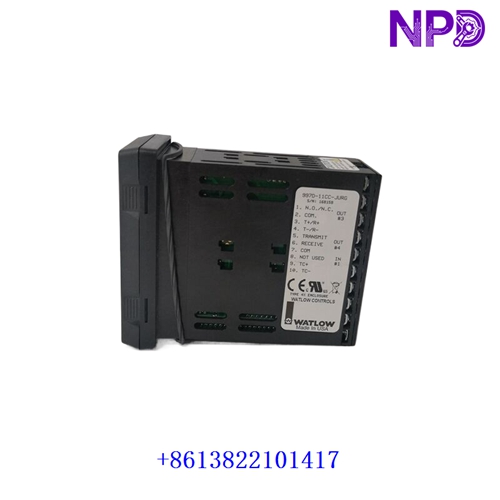
The Watlow Anafaze 997D-11CC-JURG is a high-reliability, 1/8 DIN vertical limit and safety controller. Part of the legacy Watlow Anafaze Series 997 line, it functions as an independent safety “watchdog” device designed to monitor thermal processes, detect over-temperature or under-temperature conditions, and physically break control circuits to prevent equipment damage, system runaway, or fire.
| Parameter | Specification |
| Brand / Manufacturer | Watlow / Anafaze |
| Model / Part Number | 997D-11CC-JURG |
| Product Type | 1/8 DIN Digital Vertical Safety Limit Controller |
| Display Type | Digital red LED display ( signified by the “D” designation) |
| Input Sensor Type | Thermocouple Type J (configured via the “J” suffix specification) |
| Output Configuration | Dual Electromechanical Relays (Form C, 5A resistive) |
| Reset Action | Latching with Manual Reset (denoted by “URG” option layout requiring a deliberate operator intervention) |
| Power Supply | 120/240 VAC (nominal switchable) |
| Agency Approvals | FM (Factory Mutual) approved safety limit device |
| Product Status | Industrial Safety Spare Part / Legacy Product Support (commonly succeeded by modern platforms like the Watlow PM6 series) |
First-Run Inspection Checklist
- ☑ Physical & Enclosure Integrity
Inspect the 1/8 DIN vertical plastic housing, front-panel display window, tactile buttons, and rear plug-in terminal blocks for shipping impacts, cracks, or terminal corrosion.
- ☑ Panel Cutout & Mounting Check
Verify that the panel cutout matches standard 1/8 DIN vertical specs (\approx 45 mm \times 92 mm) and that mounting brackets clamp the unit securely against the enclosure wall.
- ☑ Sensor & Power Verification
Confirm that the connected safety sensor is a Type J thermocouple mapped independently from the primary loop controller, and check that incoming supply voltage matches line configurations.
Routine Maintenance & Servicing
- 🛠 Monthly Limit Trip Testing
Perform scheduled safety checks by temporarily lowering the high-limit setpoint below the live process temperature to verify that the output relays cleanly drop out and interrupt the heating circuit.
- 🔌 Terminal & Contact Inspection
Inspect high-current relay connection points periodically to ensure wiring remains tight and free from thermal degradation or vibration looseness.
Troubleshooting & Common Issues
- ⚠️ Latching Limit Lockout (Cannot Reset)
If the unit stays tripped after the process cools down, verify that the actual process temperature has fallen safely below the limit setpoint before attempting a manual front-panel or remote reset.
- ⚠️ Sensor Break / Open Input Error
If the display flashes an open sensor error or trips spuriously, check the Type J thermocouple wire continuity, extension wire polarity, and junction block terminal seating.
Safety Precautions
- 🔐 Qualified Personnel Only
Installation, wiring configuration, and safety setpoint adjustments must be performed strictly by certified instrumentation engineers familiar with thermal safety loops.
- ⚠️ Independent Safety Mandate
The Series 997 is an independent safety cut-off device. It must never be wired to share control functions with standard PID loop controllers; its outputs must directly interlock safety contactors or fuel shut-off valves.
Frequently Asked Questions (Q&A)
- ❓ Q1: What is the specific purpose of the “JURG” configuration suffix?
A: The J designates a Type J thermocouple input, and the URG suffix indicates a latching safety limit structure requiring a manual reset action so operators must clear and acknowledge fault conditions physically.
- ❓ Q2: Why does the system require a separate limit sensor instead of sharing the main controller’s input?
A: To satisfy industrial safety standards (such as FM approvals), safety limit devices must remain completely independent of primary control loops to ensure reliable shutdown protection even if the main PID controller fails.