
Description
Product Core Brief
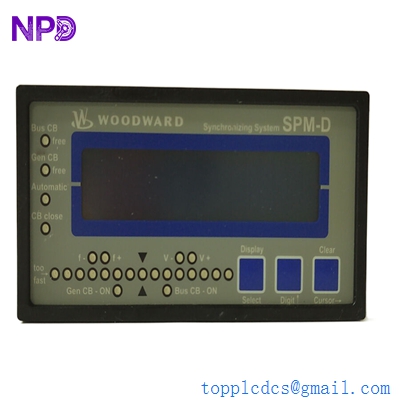
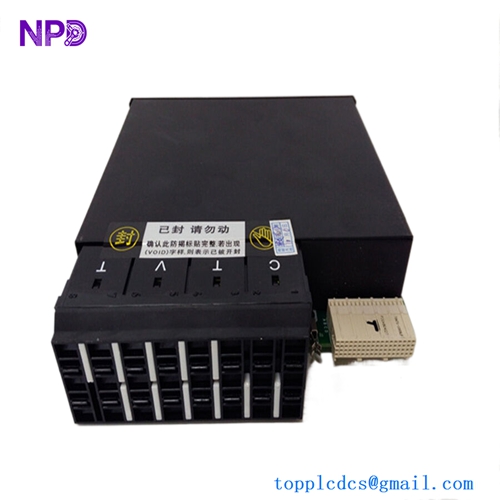
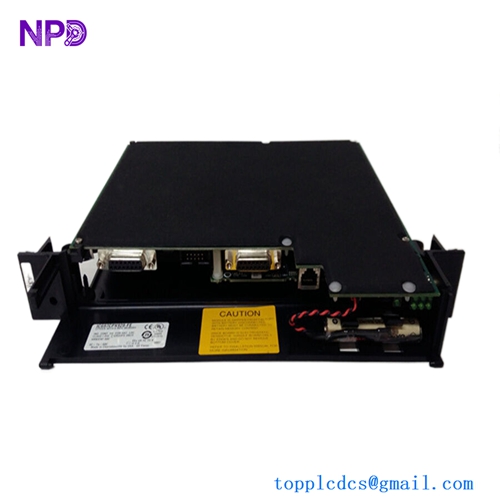
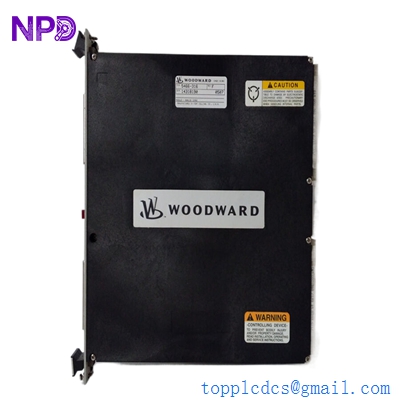
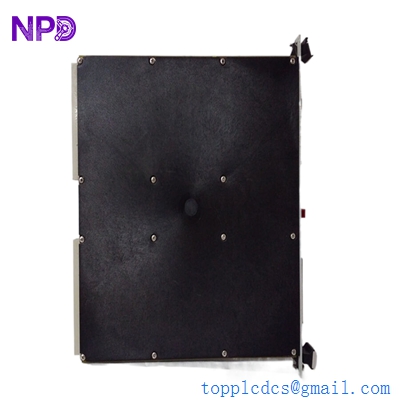
- Model: WOODWARD 5466-316
- Brand: Woodward (USA)
- Series: MicroNet TMR (Triple Modular Redundant) Control System
- Core Function: 48/24 Discrete I/O module for high-reliability turbine control.
- Condition: Brand New Surplus (Original, non-refurbished)
- Type: Discrete Input/Output (I/O) Module
- Key Specs: 48 Discrete Inputs 24 Discrete Outputs TMR Architecture Support
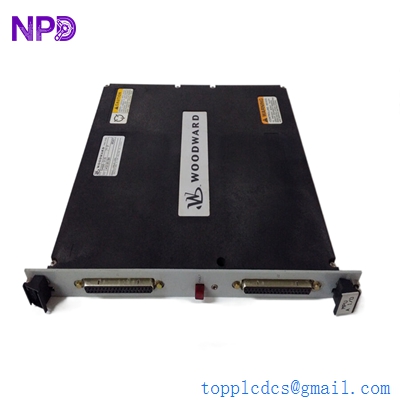
WOODWARD 5466-316
Key Technical Specifications
- Input Channels: 48 Discrete Channels
- Output Channels: 24 Discrete Channels
- Architecture: TMR (Triple Modular Redundant) for fault-tolerant operation
- Input Voltage Range: 18–32 V DC (Typical 24 V DC)
- Output Current Rating: 500 mA per channel (continuous)
- Isolation: 500 V AC to chassis and other circuits
- Response Time: < 5 ms for input state changes
- Communication Interface: Woodward proprietary high-speed VME/MicroNet backplane
- Operating Temperature: -40 to +70 °C
- Humidity: 5% to 95% non-condensing
- Certification: UL, CSA, CE (Compliant with North American and European standards)
Installation & Configuration Guide
⚠️ Safety Protocol:
- Notify the control room that the turbine control system (TGS) will be accessed.
- Ensure the system is in a “Safe State” or “Ready” mode if the TMR architecture allows for online repair; otherwise, schedule a full shutdown.
- Discharge any static by wearing a grounded anti-static wrist strap.
Required Prep:
- Compare the serial number and hardware revision of the new 5466-316 with the failing unit.
- Take high-resolution photos of the current module seated in the chassis to document card slot position and front-panel wiring (if any).
- Tools: Flat-head screwdriver (for ejector handles), ESD-safe bag for the old module.
Phase 2: Removal (10 Minutes)
- Power Verification: Confirm the specific TMR rack power indicators are stable.
- Handle Release: Simultaneously press the top and bottom ejector buttons.
- Extraction: Pull the handles outward to unseat the module from the MicroNet backplane. Slide the card out along the guides.
- Inspection: Check the backplane pins for any signs of arcing or bending. If the system has been running for years, use a vacuum with a plastic nozzle to clear light dust—never use compressed air inside the chassis.
Phase 3: Installation (15 Minutes)
- Address Settings: Check the back of the module or the side PCB for any DIP switches. Match the settings exactly to the module you just removed. In my experience, forgetting to mirror the address switches is the #1 cause of “Module Not Found” errors.
- Alignment: Align the 5466-316 card with the upper and lower plastic guides in the rack.
- Seating: Slide the card in firmly. When the ejector handles touch the rack frame, push them inward to lock the module onto the backplane. You should feel a distinct “click.”
- Verification: Tighten the front panel screws to ensure the module is grounded to the chassis.
Phase 4: Testing & Commissioning (20 Minutes)
- Boot Sequence: Turn on the rack power. Observe the “STATUS” LED.
- Solid Green: Module healthy and communicating.
- Flashing Amber: Initializing or self-test in progress.
- Solid Red: Fault detected (Check backplane connection).
- Software Sync: Use Woodward “Watch Window” or “AppManager” to verify the module is recognized by the TMR kernel.
- I/O Loop Test: Force a discrete input (e.g., a trip contact) and verify the state change in the logic.
- Maintenance Log: Record the installation date and the new module’s serial number for lifecycle tracking.
Customer Cases & Industry Applications
Case 1: Emergency Spares for a Middle Eastern Power Plant
Situation: A 400 MW gas turbine plant in Oman was using the Woodward MicroNet TMR system. During a routine inspection, one of the three redundant paths in the Discrete I/O section failed. While the turbine kept running due to the TMR’s 2-out-of-3 voting, the plant was one fault away from a total blackout.
The Problem: The 5466-316 is an older model. The original equipment manufacturer (OEM) quoted a 14-week lead time because the part was “build-to-order” or required a modern upgrade kit costing over $50,000.
Our Action: We located a “New Surplus” unit in our climate-controlled warehouse. We provided the customer with photos of the original seals and the 24-hour burn-in test report. We shipped via DHL Express within 6 hours of the PO.
Result: The part arrived in 4 days. The onsite engineers replaced the faulty module while the system remained live. The plant manager later told us that avoiding a single “forced outage” saved them roughly $120,000 in lost revenue and grid penalties.
Case 2: Strategic Life Extension for a Marine Vessel
Situation: A large LNG carrier used Woodward controls for its steam turbine propulsion. The system was 15 years old, and the company was planning to decommission the ship in 5 years.
The Problem: They didn’t want to invest $200k in a full “Next-Gen” control upgrade, but they couldn’t risk a mid-ocean failure. They needed a “Last-time-buy” strategy.
Our Action: We helped them build a “Survival Kit” including two 5466-316 modules and a power supply. By sourcing New Surplus instead of “Direct from OEM,” they saved 40% on capital expenditure.
Result: Eighteen months later, a lightning strike damaged the I/O rack while the ship was in port. Because the spares were already in the ship’s locker, the crew replaced the modules in 2 hours, staying on schedule for their next cargo window.
Frequently Asked Questions (FAQ)
Q: Is the 5466-316 hot-swappable? A: In a MicroNet TMR chassis, the module is designed to be replaced while the system is powered (Online Repair), provided the other two redundant modules are healthy. However, you must follow Woodward’s specific “Step-by-Step” software bypass procedure before pulling the card to avoid a “nuisance trip.”
Q: Why should I buy “New Surplus” instead of a refurbished unit from eBay? A: Honestly, it’s about the “Total Cost of Ownership.” A refurbished unit often has old capacitors that have been heat-stressed for 50,000+ hours. They might look clean, but their Mean Time Between Failures (MTBF) is a fraction of a new unit. For a critical turbine that controls millions of dollars in power, saving $500 on a used part is a massive risk. We only provide New Surplus that has never been commissioned.
Q: Does this module require a specific firmware version? A: The 5466-316 is generally “transparent” to the application, but it must be compatible with your MicroNet kernel version. When you order, tell us your current system’s SOS (System Operating Software) version, and we can verify compatibility before shipping.
Q: What happens if the module doesn’t work upon installation? A: Every module we ship undergoes a Live Test on our Woodward test rig. If it fails to initialize in your rack, we first provide remote support with one of our engineers. If the hardware is indeed faulty, we offer a “No-Hassle” replacement within the first 30 days, provided the warranty seals are intact.
Q: Can you provide a Certificate of Conformance (CoC)? A: Yes, we provide our company’s internal CoC and the detailed Test Report (including LED status, communication handshake, and I/O point verification). For older obsolete parts like this, original factory CoCs are often unavailable, but our documentation is accepted by most major industrial insurance providers.