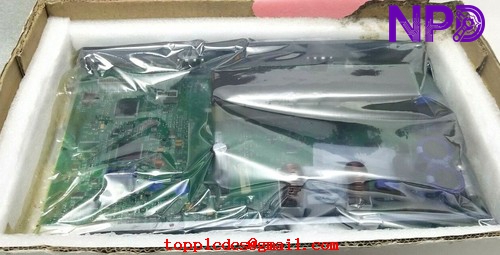

Description
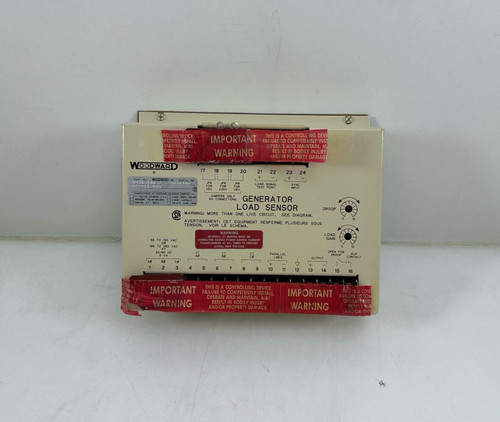
The Woodward 8290-048 (Part Number 190064-100) is a high-precision, industrial Generator Load Sensor designed to monitor and report the active power (kW) being delivered by a generator to the electrical bus. This device is a critical component in paralleling switchgear and power management systems, providing the necessary feedback to controllers to ensure accurate load sharing and reverse power protection in multi-generator plant environments.
Key Technical Specifications
- Primary Function: Measures real power (kW) and provides a proportional DC output signal.
- Sensing Inputs: Typically accepts voltage (PT) and current (CT) inputs directly from the generator output circuit.
- Output Signal: Provides a standardized isolated DC signal (usually 0–1 mA or 4–20 mA, depending on configuration) proportional to the active power output.
- System Integration: Compatible with Woodward analog load-sharing systems and traditional governor control interfaces.
- Accuracy: Engineered for high stability and low drift, essential for preventing “load hunting” between parallel generators.
- Isolation: Features galvanic isolation between the high-voltage input circuits and the low-voltage control signal output, protecting the control system from transient surges.
- Configuration: Includes internal calibration potentiometers (Trimmers) for setting “Span” (Full scale kW) and “Zero” (Offset).
- Mounting: Rugged, rail-mounted or panel-mount chassis designed for integration within industrial switchgear cabinets.
- Environment: Designed to operate in high-EMI environments typical of power generation plants.
- Reliability: Long-term design life with high MTBF (Mean Time Between Failures), critical for continuous-duty power plants.
Integration and Application
The 8290-048 acts as the “eyes” of the generator’s load-sharing logic. It continuously monitors the Phase current and Line-to-Line voltage to calculate the active power:
- Load Sharing: It sends the load signal to the load-sharing module (e.g., a Woodward SPM-A or similar), which adjusts the governor of the engine to ensure proportional load distribution.
- Reverse Power Protection: In some configurations, its signal is used by protective relays to detect if the generator is “motoring” (drawing power from the grid instead of supplying it).
- Metering: The output signal can also be routed to local analog kW meters on the switchgear door for operator visibility.
Related Woodward Power Management Components
To maintain a stable electrical system, the 8290-048 is often utilized in conjunction with the following legacy and modern components:
- SPM-A Synchronizer: Used alongside this sensor for automatic paralleling of generators.
- EGCP Series Controller: Modern digital controllers that may integrate load-sensing functionality internally or via external transducers.
- Current Transformers (CTs): Essential for stepping down line current to the sensor’s input range.
- Potential Transformers (PTs): Necessary for providing safe, proportional voltage sensing.
- Analog Load Sharing Lines: Shielded twisted-pair cabling for transmitting the kW signal.
- Governor Control System: The engine speed control unit that reacts to the load-share command.
- Reverse Power Relay (RPR): Often a separate safety relay used for redundant protection against reverse power events.
- Test Switches: Used for disconnecting the PT/CT inputs during periodic maintenance or calibration.
- Potentiometer Calibration Tools: Required for adjusting the “Span” and “Zero” settings during annual testing.
- Shielding/Grounding Blocks: Used to ensure the low-level signal output is free from electrical noise.