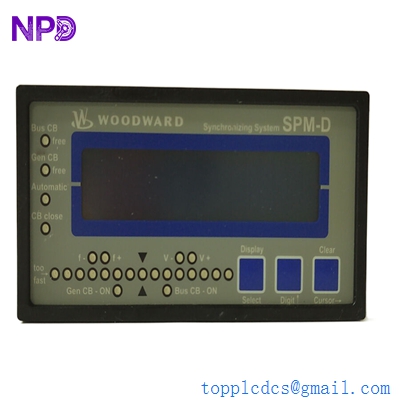

Description
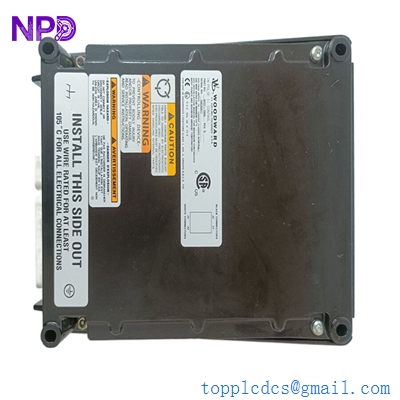
The Woodward SPM-D11 8440-1666 is an advanced microprocessor-based synchronizer and load-share module designed for one- or three-phase AC generators equipped with Woodward or compatible speed controls and automatic voltage regulators. Below are the ten core specification parameters detailing its build, origin, and technical ratings:
- Brand: WOODWARD
- Model Number: 8440-1666
- Series: SPM-D11 / LSXR Series
- Product Name: Load-Share Synchronizer Module
- Place of Production: United States / Global Facilities
- Condition State: Brand New / Factory Recertified Options Available
- Dimensions: APRANORM DIN 43700 Panel-Mount Form Factor (144 mm × 72 mm × 122 mm)
- Weight: Approx. 0.8 kg to 2.0 kg (Shipping weight)
- Country of Origin: USA
- Power & Input Ratings: Auxiliary supply with 400 Vac / 100 Vac system measuring inputs and discrete/analog bias configurations
⚙️ Operating Guidelines & Usage Methods
Proper integration of the Woodward 8440-1666 module requires strict adherence to industrial electrical standards and precise wiring of the generator and busbar potential transformers (PTs) and current transformers (CTs). Operators must ensure that all control and measurement wiring utilizes shielded cables to mitigate electromagnetic interference (EMI) from adjacent high-voltage lines. Grounding must be implemented strictly in accordance with manufacturer guidelines to protect internal circuitry from ground loops and voltage transients. Configuration can be managed directly via the front panel interface or through PC software using communication ports.
During active operation, continuous monitoring of synchronization parameters, real power control, power factor/var sharing, and generator protection functions is vital. Maintenance personnel should periodically inspect terminal block connections and verify that ambient operating temperatures remain within specified industrial limits. Never attempt internal component repairs or adjustments while the unit is energized, as this can cause permanent electrical damage or severe personal injury.
⚡ Power-Up & Power-Down Sequence
Industrial control hardware demands a structured sequencing protocol to prevent voltage spikes, data corruption, and out-of-phase breaker closure.
Startup Sequence:
- Verify that all external emergency stop circuits, safety interlocks, and auxiliary sensing lines are fully functional and in their normal standby states.
- Energize the auxiliary control power distribution panel, ensuring the input supply voltage to the module stabilizes within its operational window.
- Allow the module internal boot sequence and diagnostic self-test to complete fully, observing the two-line liquid crystal display and status indicators.
- Bring the incoming generator up to rated speed and voltage, feeding the generator voltage and single-phase CT sensing inputs correctly.
- Enable the synchronizer control loop to monitor bus and generator parameters, phase matching, and slip frequency before permitting circuit breaker closure.
Shutdown Sequence:
- Disable or bypass automatic synchronizer and load-sharing control via operator control interfaces prior to opening generator output breakers.
- Transfer or shed active electrical load safely and open the main generator circuit breaker.
- Command the prime mover shutdown sequence, allowing engine or turbine deceleration to a complete standstill.
- De-energize the module input power supply and potential transformer feeds by opening the main control circuit breakers.
- Lock out and tag out (LOTO) all power sources if physical maintenance or module replacement is required.
📖 Product Operating Instructions
The Woodward 8440-1666 SPM-D11 operates by combining synchronizing for one circuit breaker, load and power factor control, isochronous load sharing, and comprehensive generator protection (such as over/under-voltage, over/under-frequency, reverse/reduced power, and overload monitoring). It provides automatic frequency, phase, and voltage matching utilizing either analog or discrete output bias signals. Operators interact with the unit using the two-line liquid crystal display, front-panel buttons, or remote software to review diagnostics, alarm indications, and multi-level password-protected parameters.
❓ Frequently Asked Questions (Q&A)
Q1: What should I do if the module fails to initialize or display information upon power-up? A1: First, check the incoming power supply to ensure it is stable within the rated operational range. Verify that all terminal block connections are secure and that internal fusing has not blown. If faults persist, check for external wiring issues or consult diagnostic readouts.
Q2: What core control capabilities does the SPM-D11 provide beyond basic synchronization? A2: The module combines synchronizing for one circuit breaker with active real power control, power factor/var control, isochronous load sharing, and complete generator protection features like over/under-voltage and reverse power protection.
Q3: Can the unit handle different system voltage inputs? A3: Yes. Units designed with 400V measuring inputs can also be adapted or utilized for 100V system voltage applications following proper configuration.
Q4: What environmental precautions are necessary for long-term reliability? A4: Ensure the module is flush-mounted in an APRANORM panel setup equipped with proper enclosure ratings (such as IP42 on the front face and IP24 on the rear) within an electrical cabinet featuring adequate climate control to prevent moisture condensation.