
Description
⚙️ Product Introduction
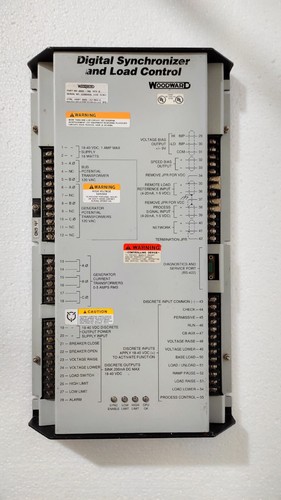
The WOODWARD 9905-796 is a DSLC Digital Synchronizer and Load Control unit designed for three-phase AC generator applications. It combines generator synchronization, load sensing, and load-control functions in a dedicated controller for paralleling and power-generation systems. Woodward’s DSLC documentation describes the family as microprocessor-based controls for three-phase AC generators.
The 9905-796 is a legacy/reduced-function DSLC configuration. Available technical references identify a 120 VAC nominal sensing input, Open Delta PT configuration, and +3.0 VDC speed-bias output. This configuration is intended for applications where the additional power-factor and process-control functions of some DSLC versions are not required.
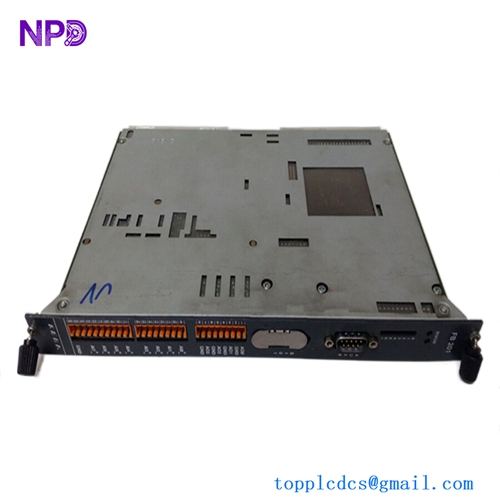
The referenced marketplace unit is listed as Used / Runner Takeout, so the actual condition should be confirmed from the individual unit, including terminal condition, enclosure, display/indicators, and functional test results.
📋 Product Datasheet
| Parameter | Specification |
|---|---|
| Brand | Woodward |
| Model | 9905-796 |
| Series | DSLC |
| Product Name | Digital Synchronizer and Load Control |
| Product Type | Generator Synchronizer / Load Controller |
| Nominal Input Voltage | 120 VAC |
| Sensing Voltage Range | 65–150 VAC |
| PT Configuration | Open Delta |
| Speed Bias Output | +3.0 VDC |
| Operating Temperature | -40 to +70 °C |
| Storage Temperature | -55 to +105 °C |
| Dimensions | Approx. 460.65 × 264.16 × 58.42 mm |
| Weight | Less than 7 lb / approx. 3.18 kg |
| Application | Three-Phase AC Generator Synchronization and Load Control |
The above specifications are based primarily on Woodward documentation and technical references for the 9905-796.
🔧 Operating Standards & How to Use
The 9905-796 should be installed as part of a properly engineered generator paralleling or synchronization system.
🔹 Confirm the exact part number and revision before installation.
🔹 Verify the PT configuration. The 9905-796 uses an Open Delta sensing arrangement.
🔹 Confirm the sensing voltage is within the specified range.
🔹 Connect the generator and bus voltage-sensing circuits according to the Woodward wiring diagram.
🔹 Verify the speed-bias connection to the compatible engine speed control.
🔹 Confirm generator phase sequence before commissioning.
🔹 Verify all CT/PT polarity and wiring.
🔹 Configure synchronization and load-control parameters according to the generator application.
🔹 Test the controller with the generator unloaded before performing live paralleling.
⚠️ Incorrect PT/CT wiring or phase-sequence configuration can cause incorrect synchronization and potentially serious generator or switchgear problems.
▶️ Startup Sequence
- 🔍 Verify the 9905-796 model and hardware revision.
- 🔌 Inspect all power, PT, CT, and control wiring.
- ⚡ Verify the controller supply/sensing voltage.
- 📊 Confirm generator and bus voltage measurements.
- 🔄 Verify phase sequence and phase relationship.
- 🛡️ Confirm breaker interlocks and protective functions.
- 🧠 Verify synchronization and load-control settings.
- ▶️ Start the generator according to the engine-control procedure.
- 🎯 Allow the DSLC to establish synchronism before breaker closure.
- ⚡ Close the generator breaker only after all synchronization permissives are satisfied.
- 📈 Monitor generator kW, load sharing, frequency, and voltage during operation.
Woodward’s DSLC documentation describes synchronization, automatic generator loading/unloading, load sharing, and dead-bus closing as functions within the DSLC family.
⏹️ Shutdown Sequence
- Reduce generator load using the programmed unloading sequence.
- Open the generator breaker when the load-transfer procedure permits.
- Confirm the generator is electrically isolated from the bus.
- Allow the engine to complete its normal cooldown period.
- Stop the generator.
- Isolate controller power for maintenance.
- Apply lockout/tagout procedures where required.
- Verify absence of hazardous voltage before working on PT/CT or switchgear circuits.
⚠️ Never remove PT/CT wiring while the generator or switchgear system is energized unless the applicable procedure specifically permits it.
📘 Product Usage Instructions
The 9905-796 is typically used in a generator synchronization arrangement such as:
Generator → PT/CT Sensing → 9905-796 DSLC → Speed Control / AVR / Breaker Control → Generator Bus
The DSLC compares generator electrical conditions with the bus and provides control signals to achieve synchronization. After synchronization, it can participate in generator loading and load-sharing functions.
The 9905-796 uses an Open Delta PT configuration, with the sensing arrangement associated with A-B and C-B phases in the applicable switchgear configuration.
The unit’s reduced-function configuration does not provide the power-factor and process-control functionality available in certain other DSLC versions.
🛠️ Installation & Maintenance
🔹 Inspect PT and CT wiring regularly.
🔹 Check terminal screws for looseness.
🔹 Verify phase sequence after major switchgear modifications.
🔹 Inspect the enclosure for corrosion and contamination.
🔹 Keep ventilation openings clean.
🔹 Check the speed-bias interface with the engine governor.
🔹 Record DSLC configuration parameters before replacing the controller.
🔹 Confirm generator synchronization after replacement.
🔹 Perform a controlled load test before returning the generator to normal service.
❓ Common Questions & Answers
Q: What is the Woodward 9905-796?
A: It is a DSLC Digital Synchronizer and Load Control unit for three-phase AC generator applications.
Q: What is the nominal input voltage?
A: The 9905-796 is specified for a nominal 120 VAC sensing input, with technical references giving a 65–150 VAC sensing range.
Q: What PT configuration does it use?
A: It uses an Open Delta PT configuration.
Q: What is the speed-bias output?
A: The 9905-796 is specified with a +3.0 VDC speed-bias output.
Q: Can it synchronize generators?
A: Yes. Synchronization is one of the principal functions of the DSLC family.
Q: Can it perform load sharing?
A: Yes. DSLC systems support generator loading and load-sharing functions, depending on the configuration and connected control system.
Q: Does 9905-796 provide power-factor control?
A: Available references identify this as a reduced-function configuration that does not include power-factor or process-control functions.
Q: Is 9905-796 obsolete?
A: Woodward’s manual lists 9905-360 as an obsolete part number replaced by 9905-796 in March 1995. The 9905-796 itself is now a legacy DSLC model.
Q: What is the operating temperature?
A: The published range is approximately -40 to +70 °C.
Q: What is the storage temperature?
A: The published storage range is approximately -55 to +105 °C.
Q: Can 9905-796 be directly replaced by another DSLC model?
A: Not automatically. PT configuration, voltage sensing, speed-bias type, control functions, wiring, and application requirements must all be matched.
Q: What should be checked before purchasing?
A: Confirm the complete 9905-796 part number, revision, PT configuration, terminal condition, physical condition, and available functional test results.
⭐ Recommended Woodward DSLC Related Models
- 9905-795 — DSLC Digital Synchronizer and Load Control
- 9905-796 — DSLC Digital Synchronizer and Load Control
- 9905-797 — DSLC Digital Synchronizer and Load Control
- 9905-798 — DSLC Digital Synchronizer and Load Control
- 9905-799 — DSLC Digital Synchronizer and Load Control
- 9905-603 — DSLC Digital Synchronizer and Load Control
- 9905-708 — DSLC Digital Synchronizer and Load Control
- 9905-355 — DSLC Digital Synchronizer and Load Control
- 9905-367 — DSLC Digital Synchronizer and Load Control
- 9907-007 — DSLC Digital Synchronizer and Load Control
⚠️ These are related DSLC models, not universal drop-in replacements. Woodward’s documentation shows that different part numbers can have different PT configurations, input voltages, and speed-bias outputs.
📦 Replacement Identification
For purchasing or maintenance records, use the complete identification:
WOODWARD | 9905-796 | DSLC | DIGITAL SYNCHRONIZER AND LOAD CONTROL
For a used or surplus unit, request clear photographs of the nameplate, terminals, revision marking, enclosure, and any available functional test report before shipment.